
Two Razumovsky Quartets on BIS
Absolutely to the high standard of the Chiaroscuro's previous Beethoven releases
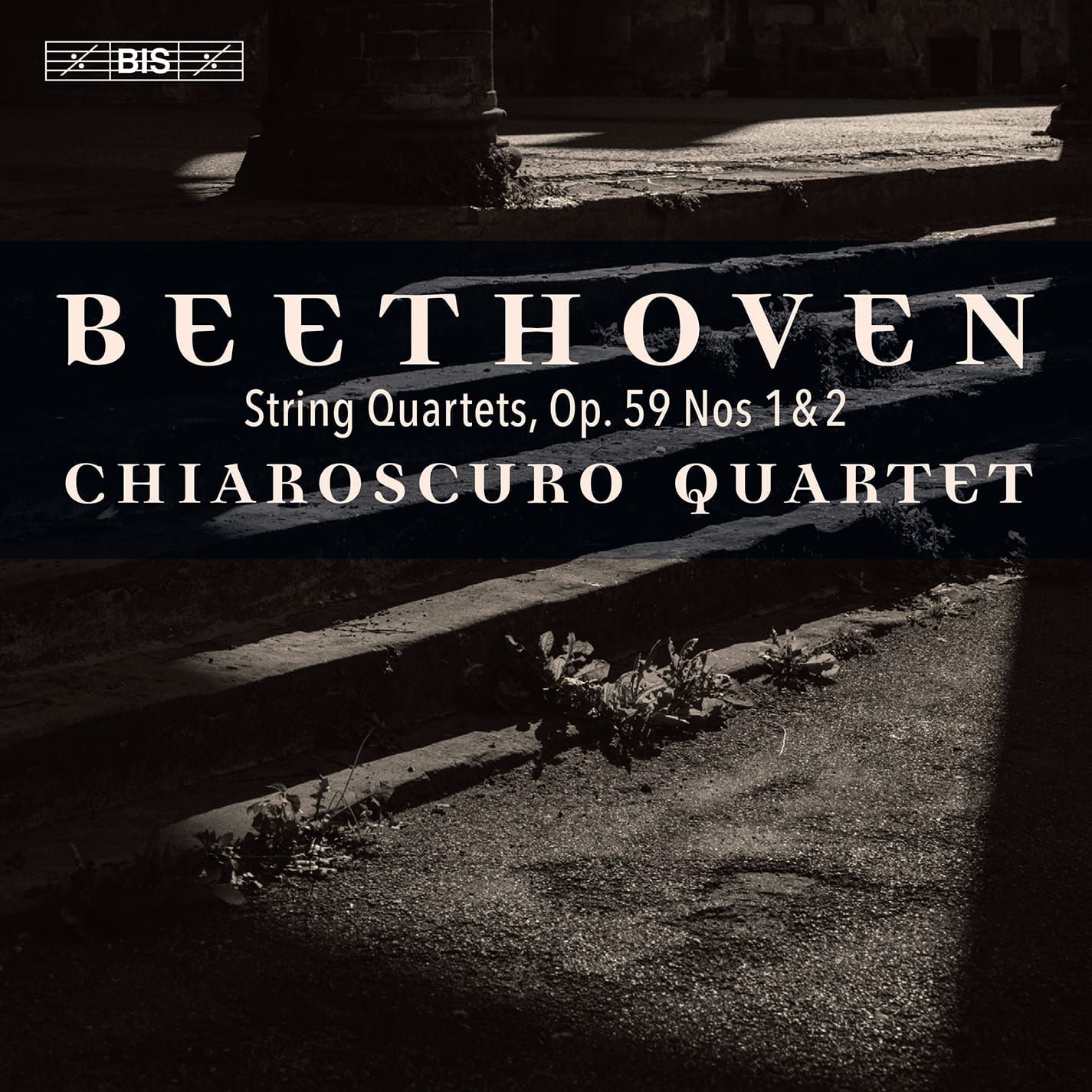
This is the fourth instalment of he Chiaroscuro Quartet's ongoing complete recording of Beethoven’s string quartets. This is our eighth post of his group's activities: previous Beethoven posts include quartets from Op. 18 and Opp. 130/95.
This latest release spotlights the first two of the three Opus 59 quartets, known as the ‘Razumovsky,’ named for their patron, the Russian ambassador in Vienna, Count Andrey/-eas Razumovsky (1752-1836), who maintained a house quartet in his palace. When a violinist complained of their difficulty, Beethoven retorted: “Oh, they are not for you, but for a later age.”
Beethoven's Op. 59 was a mainstay of the last Geneva String Quartet Competition (introducing the NOVO Quartet as a major force in the string quartet arena. And for all of their excellence (they won), there is something about hearing the piece with a.combination of technical perfection and interpretative depth; and this is just what he Chiaroscuro Quartet offers.
The F-Major less opens, more unfolds. Witten in 1806, the excellent booklet notes are surely right to posit that, at the time, this must have ben the longest quartet ever composed. And how the Chiaroscuo Quartet has the measure of the first movement. The marking is simply "Allegro," and it is indeed fast here. But it also conveys Beethoven's expansiveness of invention:
"Sempre scherzando" is part of Beethoven's instruction for the second movement, and how the players honour that here. The sheer exuberance is off the scale. There is is a formal exuberance, too: this is one of Beethoven's most experimental movements, and the Chiaroscuo Quartet captures this spirit to perfection:
In this performance, one can hear the depth of sadness Beethoven poured into this movement: an early sketch says "a willow or acacia over my brother's grave," and wha a beautiful, perfectly balanced elegy the Chiaroscuro deliver, four equal voices united in mourning. Thee are clear anticipations of the composer's late period:
The Count's commission stipulated either an actual Russian theme, or a faux one. The finale is indeed a "Thème russe". The Chiaroscuro project all the joy of the piece in full. It's a terrific performance, full of life:
The second quartet of Op. 59 includes the "Boris Godunov" theme-to-be (it's the same melody in both). But first, how bold the opening, and how beautifully contrastive the response (nice to have the repeat to appreciate it twice, too!). Probably in no other movement of any of the quartets the Chiaroscuro have presented on disc does one hear better why they are so named: the interplay of light and shade in this movement is extraordinary:
The slow movement is, to quote Richard Wigmore in the booklet, "luminous". It does point way forward, and this is a stunning performance, Beethoven's fragile textures revealed in all their vulnerability:
The control of all four players in that slow movement is just exceptional; It is the third movement that contains the Russian theme (in the "Maggiore"); but first, wonderfully shifting, restless rhythmic patterns. Perhaps Alina Ibragimova's violin is just slightly spotlit in the balance? But how the Maggiore's scamperings around that theme are delivered: little balls of energy unravelling.
The finale is marked "Presto"; here, arguably more Allegro vivace. As Wigmore reminds us, this is the only Beethoven quartet to actually end in a minor key:
Absolutely to the high standard of the Chiaroscuro's previous Beethoven releases.
This Hybrid SACD, in eco-packaging, is available at Amazon here.