
Pappano’s mixed "Tristan" at Barbican
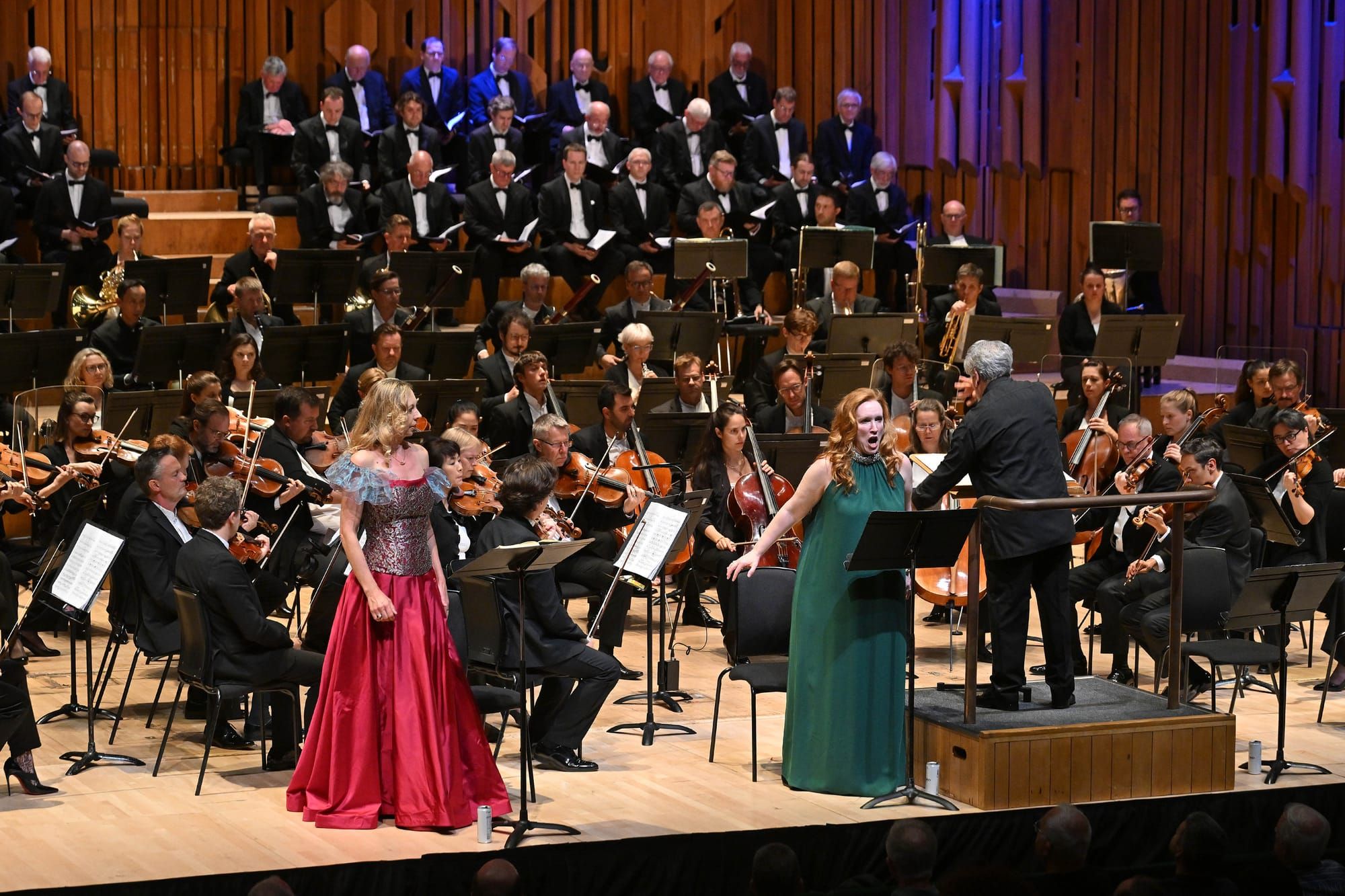
This is surely Sir Antonio Pappano’s “Wagner period”: his recent Siegfried, the latest instrument of an ongoing Ring at RBO revealed, to my ears at least, his finest Wanger to date. He has, of course, recorded Tristan und Isolde with Domingo and Stemme (and a cast that includes Ian Bostridge, Olaf Bär and Villazón). Here, in a broadly concert performance at Barbican, Pappano led a performance of mostly highs, and when it was good, it was very, very good.
The orchestral detail was incredible, with laser-clear textures and some stellar playing (interesting that the horns changed principal for the central act, with no shift in quality). Leitmotifs rightly took on lives of their own, their characters shapeshifting through Wagner’s myriad, mostly tormented, emotional states. Pappano is not one to dawdle in Wagner, which allowed the piece definite momentum throughout; the downsides were that occasionally singers had to gabble somewhat - not to mention the challenges of vocal turns requiring virtuoso technique - and that the occasional moment of magic suffered (Isolde’s “Er sah’ mir in die Augen,” in particular, felt under-appreciated, if not plain neglected) Against that was Isolde’s moment of “Tod uns beiden,” the orchestral tutti chord visceral in its finality, like a sabre to the heart; and the fact that if there is one place momentum works, it is at the close of act 1 - and it did, crowned by the Gentlemen of the London Symphony Chorus.
Pappano did honour the differing “feels” to the three acts, too: the trajectory to the imbibing of the love potion in the first act and to the astonishing choral ending against which the lovers stand, confused and dazed; the sensually intoxicating lovefest of the second; the slow death, and then transcendence, of the third. And how the subtle highlighting of a timpani roll in act 2 could bring such a feeling of foreboding, how the deliberate heaviness of the opening of the final act created just the right leaden atmosphere. Just that little bit more space will allow Pappano’s reading to really cut deep.
There are some players fully deserving of mention: prime among them are Drake Gritton and his cor anglais solos, so vital in the establishment of melancholy and as prime generator of excitement at the arrival of Isolde’s ship in the final act, and bass clarinettist Ferran Garcerà Perelló’s phenomenally controlled playing.
The performance might be described as “semi-semi-staged,” with mostly non-concert garb, and generous use of spatial placement (Brangaene’s warning through the choir’s central door, the cor anglais way at the back of the hall at one point). The action, though, was in the music, and Pappano realises that the orchestra is so much more than the engine of the drama.
Three singers stood out, none of whose roles are in the music drama’s title. The Brangaene of Marina Prudenskaya was vocally stunning, a voice of incredible strength and projection, the singer completely inside her role, faultless, her act 2 Warning delivered with infinite potency. Then there was Hungarian baritone Gyula Orendt’s spectacular Kurwenal, of massive stage presence and granite-firm voice, every phrase carefully considered, its dramatic import ever honoured (he sings mid-run of Debussy Pelléas, taking the title role, at Berlin’s Staatsoper unter den Linden, and they are lucky to have him). The third stand-out was experienced bass Franz-Josef Selig as King Marke, absolutely imperious in his long monologues, devastated at Tristan’s betrayal, and of infinite sadness via a simply staggering depth of sound at “Tod denn alles”.
But what of the two principals? This is Sara Jakubiak’s role debut as Isolde. It is always good to have an Isolde whose voice is well-differentiated from that of the Brangaene, as was the case here. This was a strong interpretation, if still in progress, Jakubiak’s voice capable of huge strength when required, not least in the final ‘Verklärung,’ which was rightly the transcendent climax of the evening: but was the feeling that she was saving herself for this.
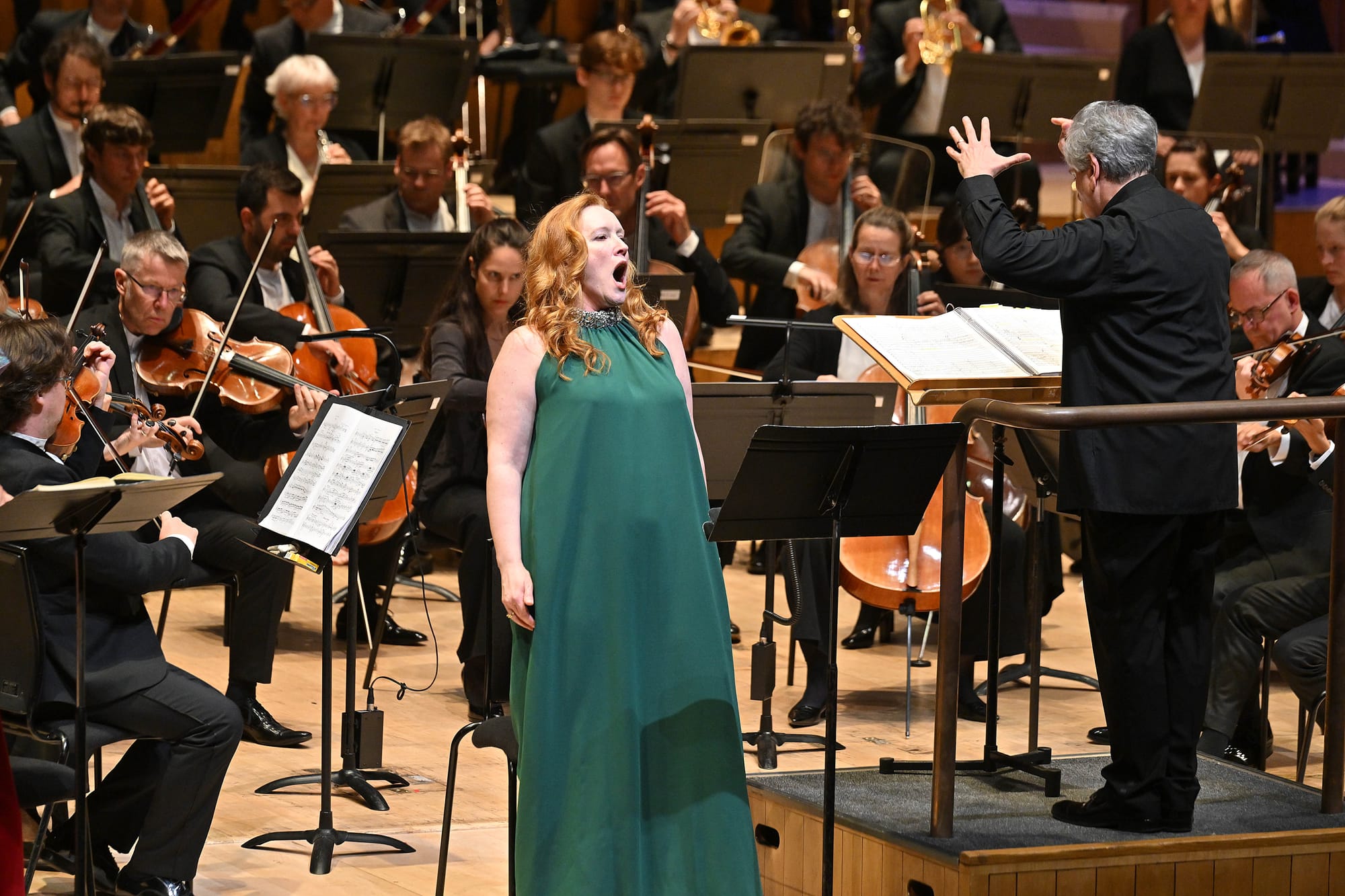
There is no doubting that Clay Hilley is a Heldentenor, although surely few singers if any alive can rival Andreas Schager for the true embodiment of that title (the latter’s Siegfried, seen recently at Covent Garden, was unforgettable). If Hilley is not the finest actor, his voice is tireless, his long stretches in the final act a convincing portrayal of a man determined to stay alive until his beloved arrives. He ‘died,’ motionless in a chair, exhausted. We, the audience, should be exhausted, too. If that was not quite achieved, in the manner of Melchior (try the Met performance of March 25, 1940) or Vickers (Böhm, Orange, 1973), for example, this was impressive nonetheless.
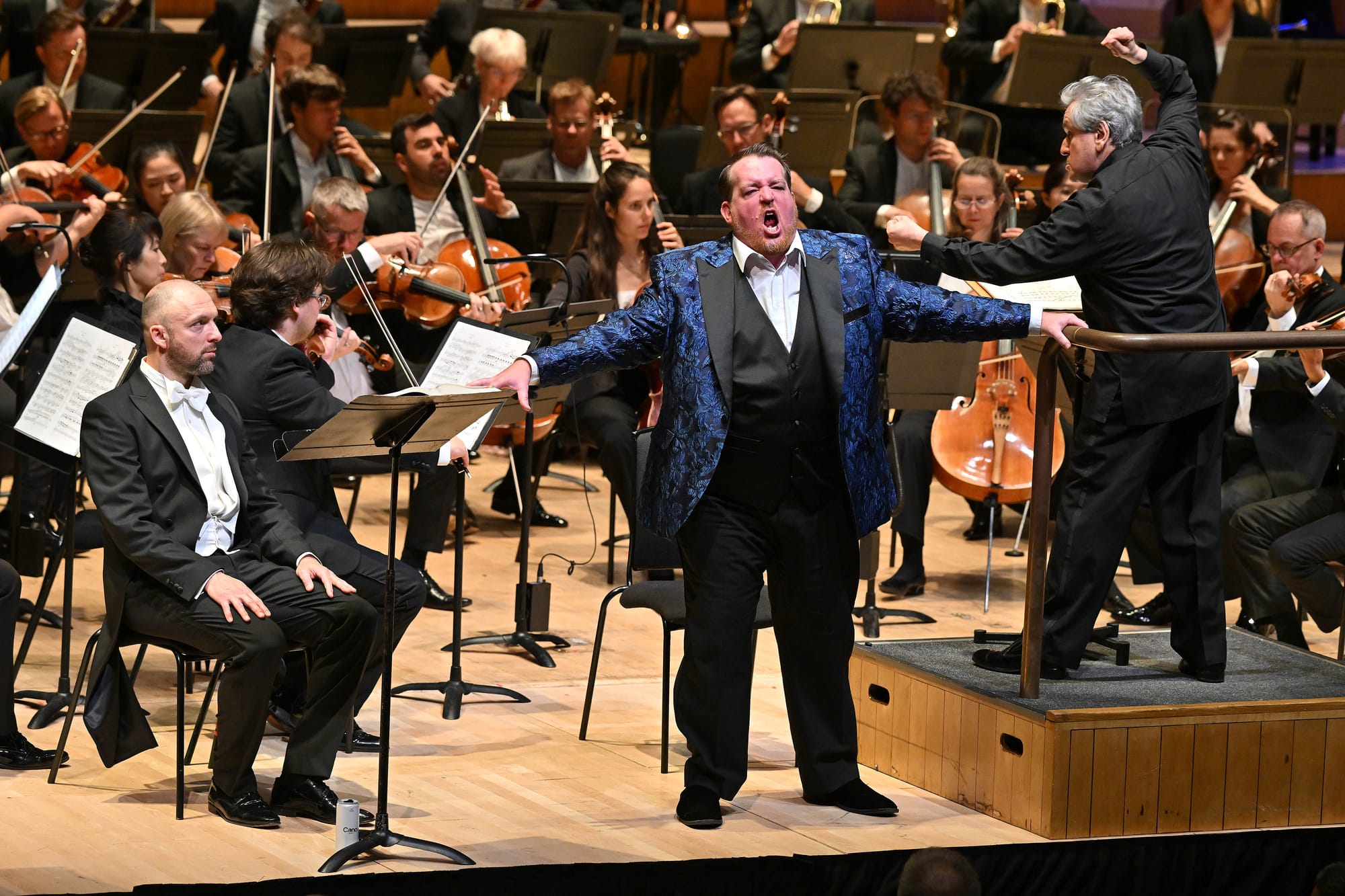
Together, Hilley and Jakubiak gave an impressive act 2 ‘O sink’ hernieder, Nacht der Liebe,’ finely prepared for in the orchestra (again, the level of detail everywhere apparent), and equally well supported and prolonged by Pappano - his awareness of Wagner’s timbral machinations, especially via double-bass tremolo, made the passages around “So sterben wir” and Brangaene’s “Gabet acht” buzz with foreboding and excitement.
As Melot, Neal Cooper seemed to find dramatic alignment with his colleagues as his contributions moved on; both Michael Gibson (Sailor/Shepherd) and James Emerson (Steersman) excelled in the smaller roles.
Tristan und Isolde can hardly fail to make an impression and its status as superhuman compositional achievement remains. The performance was almost there as a representation of Wagner’s genius, just not quite.
Intriguingly, these performers take only Act 3 to Baden-Baden, Germany, on July 5 (which saves on the expense of a chorus), with Beethoven’s Violin Concerto in the first half with soloist Vilde Frang, and then return to Barbican for another full performance on Sunday July 12 (note the start time of 5pm).
Tristan und Isolde
Music & libretto: Richard Wagner
Cast:
Tristan - Clay Hilley; Isolde - Sara Jakubiak; Brangaene - Marina Prundenskaya; King Marke - Franz-Josef Selig; Kurwenal - Gyula Orendt; Melot - Neal Cooper; Michael Gibson - Sailor/Shepherd; James Emerson - Steersman
Tenors & Basses from the London Symphony Chorus; London Symphony Orchestra; Conductor - Sir Antonio Pappano
Barbican Hall, London, 1 July 2026