Horn trios and a 'trio' on Chandos: Brahms, Ligeti, Mozart, Schumann
The Brahms and Ligeti are both exceptional
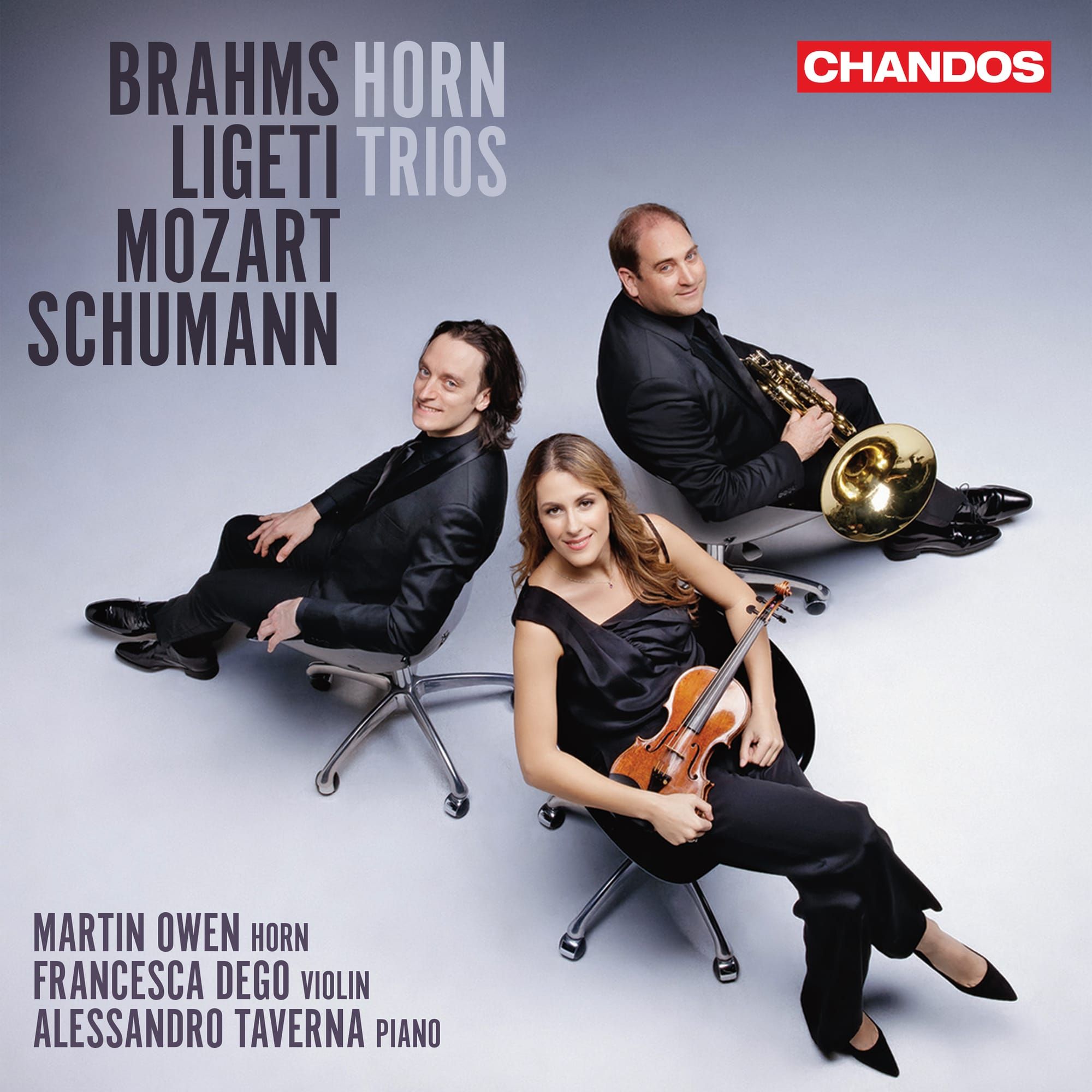
The Brahms Horn Trio is probably the most famous of this genre. Martin Owen is a fin ehornist, and Fancesca Dego needs on introduction, and neither does Martin Owen. Alessandro Taverna is new o me, though, and matches the other two in quality. The first movement of the Brahms is warm in temperament, but detailed in delivery and with a fine sense of direction. The recording is perfect:
Brahms’s Horn Trio in E flat, Op. 40, an early example of this combo, is a masterpiece Brahms said the inspiration came to him while walking in Nature (woodland, specifically) and of course the horn's links to forests in Germany's Romantic period is steadfastly imbedded, culturally. Just think of the opening of the finale to Brahms' First Symphony and the two horns' dialogue/echo. Listen, here, to how the three players dialogue how the piano's warm sound here is perfect for Brahms, how Owen and Dego's personalities match so beautifully.
The Scherzo is dynamic at first, but the Trio sections link back to the yearning of the first movement here. Brahms' characteristic metric play is finely etched here, too:
In this performance it is the slow movement that impresses so much: the barrenness of the lines is remarkable: the players reflect both the desolation of mood and the daring of Brahms' writing perfectly - like few other performances, surely:
No missing the hunting elements in the finale, a breath of fresh air, Owens' staccato popping away
Ligeti’s Trio, “Hommage à Brahms.” pays a huge debt to Brahms’s Trio, but one can also hear unsurprising influences of Bartók and Hungarian folk. The pianist Eckhart Beech mentioned Brahms' Trio in conversation to Ligeti ...
As soon as he pronounced the word ‘horn’,somewhere inside my head I heard the sound of a horn as if coming from a distant forest in a fairytale, just as in a poem by Eichendorff.
As with Brahms, the first section is lyrical:
A scherzo follows, jittery, with Ligeti's characteristic ascending scales against rhythmically disjunctive, angular activity (one need only think of the piano etudes). Vivacissimo molto ritmico says it all. All theee players are superb - maybe I'd welcome just a little more energy to those scales from Taverna.
There are some very Bartókian moments here, too. And all creit to Owen for the screamers!:
There are moments of real magic in the “alla marcia” achieved by the simplest of means, and moments of hornish muscularity, too, but horn less as hero more as vocal conscientious objector to the violin and piano's activity:
The seven-minute finale is glorious stasis, closing in a diminendo into nothing. There are moments on the violin where there is a real sense of Rückblick to Romanticism. Dego is spellbinding here:
The Horn Trio broke a period of compositional inactivity after the completion of the opera, Le grand macabre.
Ernest Naumann (1832-1910) arranged Mozart's Horn Quintet for piano trio. I'm not sure the replacement of the strings' chuggings against horn melody works too well, but how delightful the ornamentation the players add on exposition repeat Owen plays this on a modern, valved horn but he does roughen his horn somewhat in imitation of a natural horn (but we don't get the colour of an open instrument). The most magical moment is the occluding at the opening of the development, and its counterpoint:
The slow movement is extraordinary, principally thanks to Dego, whose expressivity level is perfect, her sound just astounding:
The finale is ornate of line, and Owen negotiates this beautifully. Contrasts are well drawn, too:
If this does rather wear its "arrangement" status on its sleeve, that's hardly the players' fault, and there's no doubting it's worth hearing.
In the final piece, Schumann’s ‘Duett’ from the Op. 88 Phantasiestücke of 1842, the horn simply replaces the original cello part. It is a lovely “encore,” warm-toned and full of Schumann's glorious cantabile, an instrumental song of the first order. The horn can sing, too, here in its middle voice:
A fine record, then. If the Mozart is more of an interesting addendum and the Schumann a lovely experiment, the Brahms and Ligeti are both exceptional.
The disc is available at Amazon here (affiliate link). Streaming below: