More Kalevi Aho: Concertos
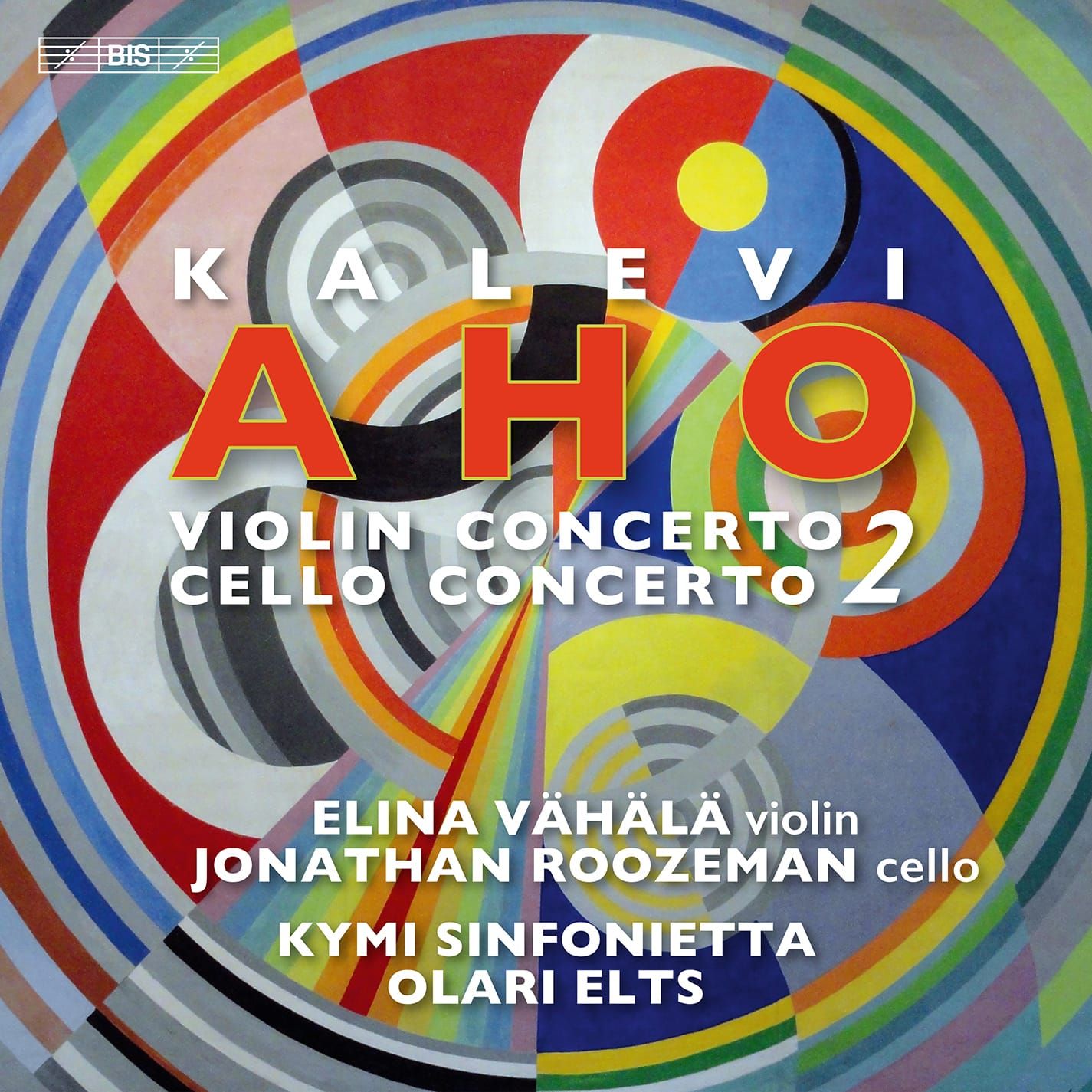
This is the second post on music by Kalevi Aho (born 1949): we reported on the Stenhammar Quartet's recording of String Quartets Nos. 1-3 here. There should be more, and will doubtless be. Aho is a major voice in Nordin music, andi n music in general.
Violinist Elina Vähälä was intimately involved with the creation of Kalevi Aho's Second Violin Concerto. The composer broke off work on it in 2012 when the first "dedicatee" fell through; Vähälä contacted him about it, and job done. The orchestral part, too, has a direct link to this recording as it was written for the Kymi Sinfonietta, and so it is aimed firmly at smaller orchestras in its scoring. The sunonietta is consucted by Baltic music specialist, Olari Elts.
The Second Concerto dates from 2015; Vähälä plays it on a Guadagnini of around 1790. Extensions and, in particular, a plethora of double-stopping creates a unique sound from the soloist. It is true the sound is dominated by the soloist, but there is a grittiness to the orchestra that places the work in distinctly Nordic, post-Sibelian territory. The cadenza is muscular even in its quieter moments, the return to the impassioned, roiling orchestra seamless. Later in the music, Aho's orchestral writing is incredibly complex and yet so transparent everything comes through (I'm sure Olari Elts had as much to do with this as Aho's own scoring!):
The central Adagio is beautiful in a sort of Nordic-frozen way, while recontextualising material from the first movement. The music appears at times on a sort of slow revolve that gathers momentum until the gnarly, grating climax:
I love the almost folky, whispered opening of the finale. Marked "Vivace, leggiero," the music is a sort of dark Mendelssohn: light in rhythm, occluded in harmony. Aho has a genius, too, for taking a simple gesture (say, as here, a descending scale) and imbuing it with huge meaning. Over around nine minutes, Aho creates whole worlds; the darkness ofthat opening is what stretches out towards a brief cadenza and disjunct dance:
... and so to the Cello Concerto No. 2 (2913). Jonathan Roozeman was the youngest winner of the International Tchaikovsky Competition in 2015.
The concerto is cast in five movements played without a break; the last section holds a spellbinding cadenza. It begins, though with a Berceuse, its songful line delivered with sweetness and poignancy by Roozeman:
There are moments of exquisite quiet in this Berceuse in which Aho concentrates on harmonny and colour: it's like holding the bare bones of Aho's world in your hand and examining it. The Presto that follows is in a slightly discomobulating 5/8, the music itself shadowy and yet clearly virtuosic. Roozeman is superb:
The music moves so smoothly into Adagio, you need to hear the disc (excerpts can't do that). Aho calls this "cadenza-like" movement "the heart of the concerto" and it is certainly its emotive core. "Cadenza-like" refers to the freedom of the solo line while set against orchestral grumblings and comments:
The gossamer Allegretto, given short shrift by Aho himself in his notes ("The comes a fairly short Allegretto") seems to exist in some liminal ungraspable state couched in pianissimo; the music finds ground in the powerful Epilogue, almost filmic in its grandeur:
You can purchase this disc from Amazon here.