More Than a Vampire: More Marschner
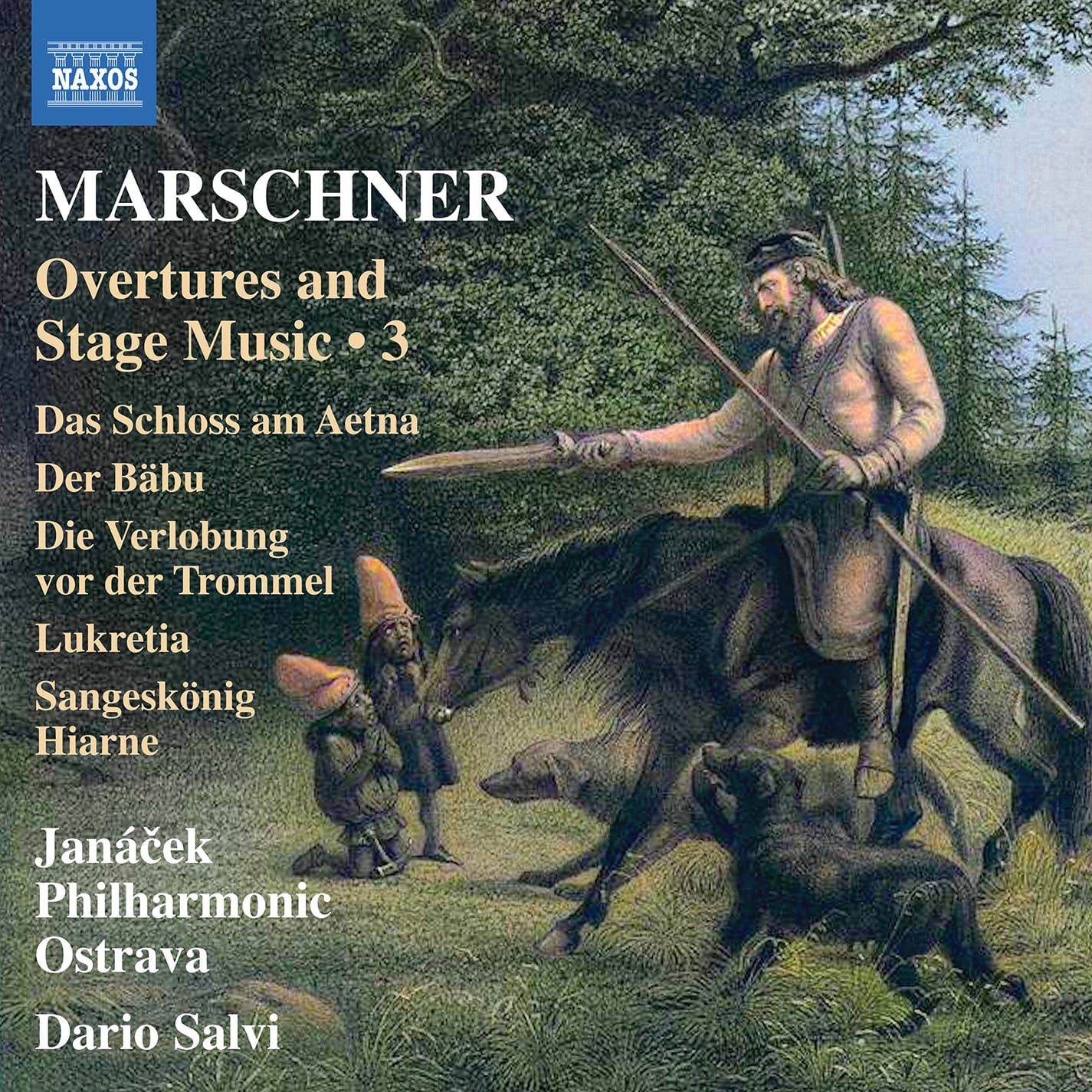
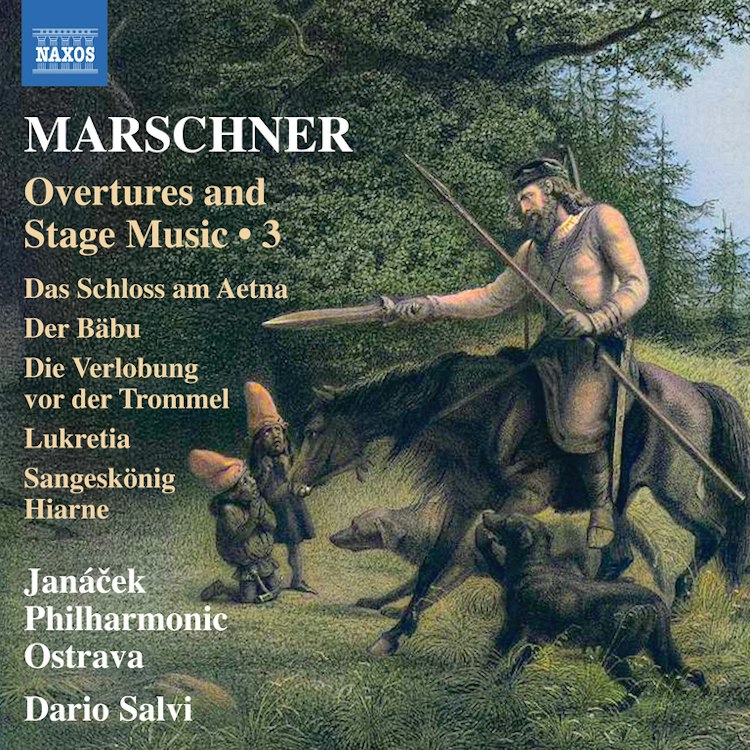
Dario Salvi and the Janáček Philharmonic return for volume 3 in their series of Overtures and Stage Music: Volume One was covered here, while we covered yet another Naxos release, the Piano Trios with the Gould Trio, here.
The new disc begins in highly dramatic fashion with the Overture to Das Schloss am Aetna (The Castle at Etna, 1830-35 - the number of the entire opus is 95). Marschner obviously had a predilection for the supernatural: after Vampyr, here we have Faustian themes of dissolution of the soul. It comes complete with the "mysterious stranger" the Marchese d'Orco, who is able to exert dark influence on others (specifically here Adelheid). As a snippet of the shenanigans, the "betrothal ring is fetched at midnight by a raven amidst thunder and warring apparitions," as the Naxos synopsis has it.
The 11-minute Overture is wide-ranging and dramatic with real shades of Weber diminished sevenths. The playing is superb, as is the recording - the sheer immediacy of the opening contrasts with some delightful woodwind solos later on.
There are five excerpts fro act 1, beginning with a ballet, “Allgemeiner Tanz” (General Dance), at a banquet. The music now fizzes, heard here with a delightfully light touch. The "Più moderato" that follows holds us in the same space (and features some particularly suave lower string playing) followed by the suave Grazioso. Not all of the "con forza" is forceful - there's a lighter melody that follows leading to a grand "Coda" to Act 1; but excerpts from Acts 2 and 3 are included in the sequence, too (one each);.
The delightful masked dance of the Italians occurs during a ball in which a contract in signed in blood is required, leading to the clear dramatics of the third act (Ballettmusik), in which the Marchese is revealed as the Ddvil in disguise, who rides off through the air with Adelheid to his Castle on Mount Etna, a gateway to Hell. The music darkens before a "Totenritt" (death ride) to Etna.
If you like Weber's Freischütz, give this a try. There is a lot of overlap of harmonic language
Here's the entire sequence as one YouTube:
Just two excerpts from Lukretia (1821-26), first staged in Danzig in 1827. This is indeed the story of Lucretia and Tarquinius, familiar from Britten's opera. Marschner's wife Marianne sang Luctretia in the opening production. The reference point here, musically, is Spontini - Marchner had sung in La Vestale when young.
The Overture to this is available elsewhere in the Naxos Kingdom - on Marco Polo, here (alongside that of Lukretia, amongst others; and is Der Goldschied the only opera set in Ulm?!):
The second excerpt on the new disc is interesting, the lead-in to a “Triumphant March,” which appears as the natural outcome of the preceding stress. The ending is a big over-emphatic though, on Marschner's side:
Next up is Der Verlobung vor der Trommel, oder Der Mutter Ungedenken (‘The Betrothal before a Drum, or the Mother Unremembered’), a vaudeville premiered in 1843, composed in the wake of Donizetti's La fille du régiment. There are elements of the preceding Triumphal March that seem to presage this, rather nicely. It takes elements from another composer's overture, Le roi d'Yvetõt by Adolphe Adam:
The writing in the excerpts from Der Babu, Op. 98 (1817), Marschner's first opera. The setting is India, and there are distinct Orientalist elements and an individuality of writing that sets Marschner firmly apart as his own man in this, the march of the dwarves (Marsch der Zwerge - led by a Chinese dwarf):
The "Babu" of the title is a cunning slave of a Sultan - the cast includes Muslims, Hindus and - get this - even English people. A dance of the dwarves ("Komisches Ballett der Zwerge") cedes to an Entr'acte from Act 2 that is a "dream scene" (‘Traumszene’). It's a highly atmospheric piece of writing:
Finally, Sangeskönig Hiarne, oder Das Tyrsingschwert (‘Hiarne, the Singer King, or The Tyrfing Sword,’ 1857/8), with a libretto based on Nordic legend. Here we have the Overture and single excerpts from acts 1, 2, and 4. There's even a magic sword (not called Nothung, though). The Overture is extensive and dramatic (12"51) but listen to the lovely "Verwandlung und Tanz" from Act 1 Scene 7:
Let's close, as the disc does, with the "Friedebrand Marsch" - Marschner does seem to be good at these (perhaps the clue is in the name, literally!). Some lovely grinding dissonances here, and a real sense of darkness. No doubting its a march, though:
This disc is available at Amazon here. Streaming below.