More Poppe: Körper & Gold
A rather specialised, but very special, release
We have enjoyed the Modernist music of Enno Poppe (born 1969, Hemer, Germany) before - The Music of Enno Poppe (Fett, Ich kann mich an nichts errinern), Prozession, and as conductor in Berlin (music by Clara Iannotta, Xenakis, Liza Lim)
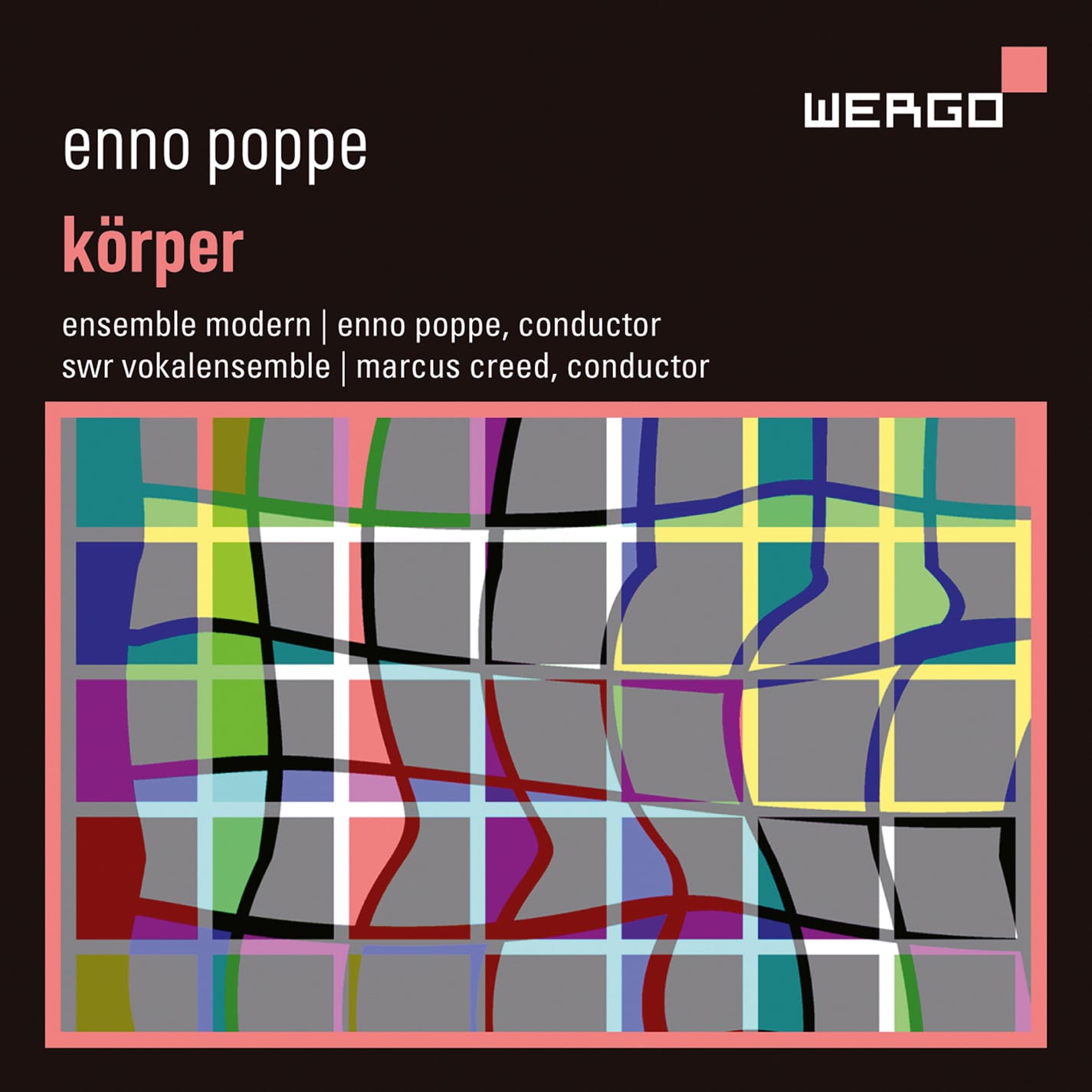
This disc takes one of only two works for chorus by Poppe - Gold (the other is Der Wechsel menschlicher Sachen of 2020 for mixed choir, to a text by Quirinus Kuhlmann) - and couples it with an ensemble piece. Instrumental ensemble is Poppe's forte, and here, in Körper, he opts for wind band/jazz band (brass, saxes, wind) along with a smaller contingent of strings (one violin, one cello, one double-bass). "Körper" can mean several things - a body of sound ("Klangkörper") but also a body in the biological sense, and much of this music does indeed seem to "breathe" (the restrained second movement especially) ad perhaps therefore reaches back, ideologically speaking, to a more Romantic conception of organicism.
Each of the work's four movements has its own “flavour”: the chaos of the first, tate slow "breathing" of the second, the electronic imitations and jazz of the third, and the quiet buzzing of the fourth. The final panel is where less becomes more, in stark contrast to the maximalism of the first.
This type of music is bread and butter for Ensemble Modern, and under the composer's baton, this becomes an auhoritative recording.
Körper lasts some 47 minutes; Gold, 22.5. Here, Poppe uses words by the poet Arno (Hermann Oskar Alfred) Holz (1883-1929), who in his short life was nominated for the Nobel prize for literature some nine times! It opens with "Moderne Walpugisnacht," from the experimental drama, Der Blechschmiede (The Tinsmith). All four poems on the page celebrate the central margin, offering a "column" of words that seems to branch outwards. The SWR Vokalensemble under Marcus Creed is exceptional. We have met this choir and conductor once before, in a vey different (although perhaps apt, given the season): a DVD/Bluray of Weihachtskonzerte (Christmas Concerts). There is such energy to the SWR performance of "Walpugisnact," repetitious driving home. No matter how complex the textures, get, too, everything is clear.
The first movement is written for 16-voice choir; the second, "Silber" (Silver) is for two solo sopano voices (solo or choral) and is an astoishing catch-me-if-you-can of glissandos. Thr finale, "Notturno," for 16 solo voices and eight-voice choir, Creed finds such beauty in Poppe's dissonances; parts seem to be post-Bartókian night music of insectile bent. The music also seems to "beat" a times. This was recorded in the SWR studio and so is caught in a tight, almost dry, acoustic; one wonders whether this would work better in a church/or a cathedral acoustic, where the gestures can resonate, or even hang in the air (think of the high, silvery sopranos).
Here is an alternative performance by the SWR choir, not his time under Creed, but under Stephane Parkman:
This rather specialised, but very special, release is available form Amazon here. Streaming below. To explore more of Poppe's music, all with scrolling scores, follow this link.