
The Berliner Philharmoniker at the Proms: Elgar & Tchaikovsky
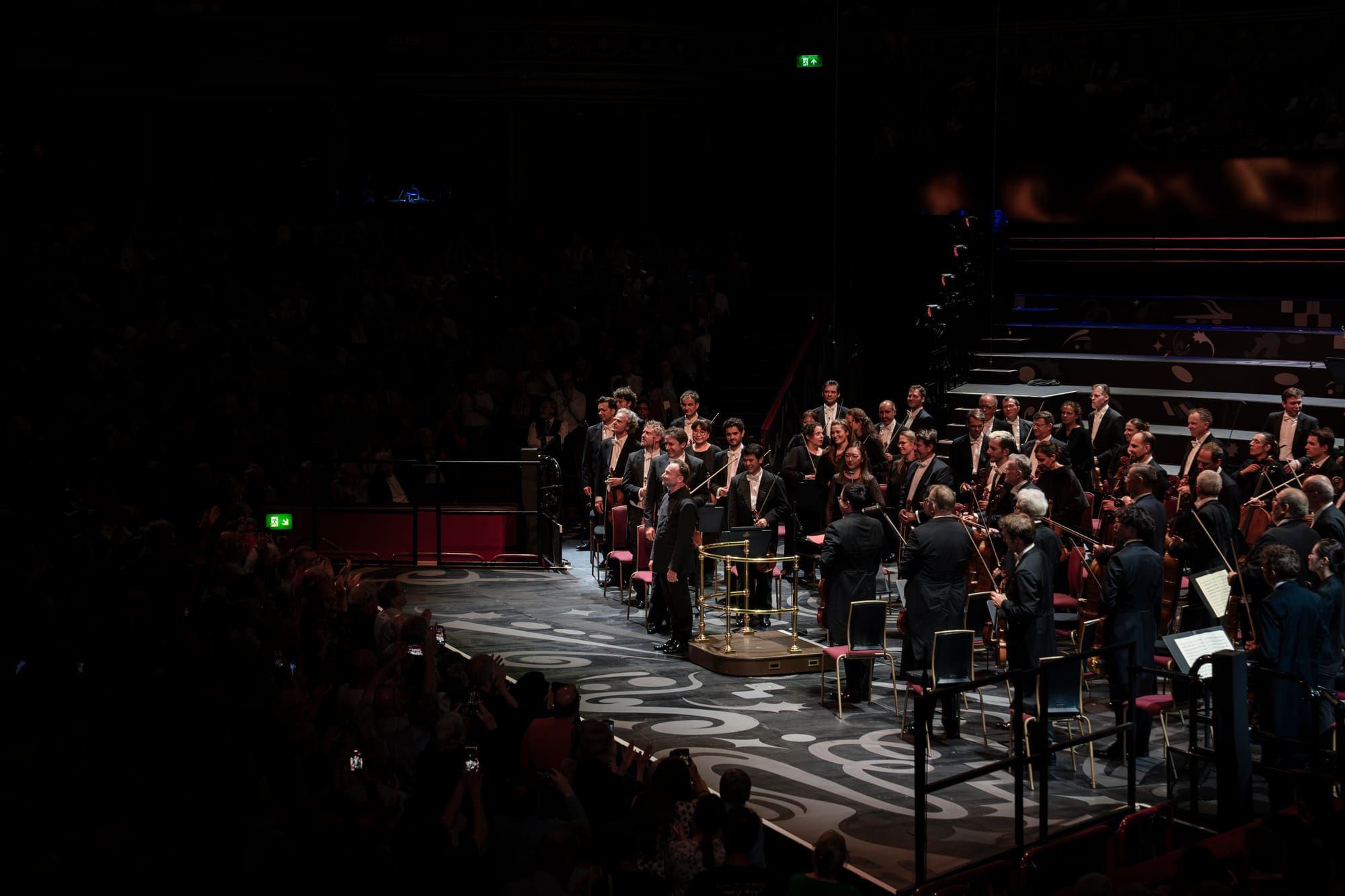
Elgar Variations on an Original Theme. Op. 36, ‘Enigma‘ (1888/9)
Tchaikovsky Symphony No. 4 in F minor, Op. 36 (1877/8)
Elgar and the Berliner Philarmoniker? Well, there is precedent of the orchestra in English music in the sense that Karajan famously recorded Holst’s The Planets with them; and Rattle conducted the orchestra in the ‘Enigma’ Variations, to pick a couple of examples.
Fun fact: although Petrenkp first conducted the Berliner Philharmoniker in 2006 (Bartók/Rachmaninoff), his earliest concert preserved on the orchestra's Digital Concert Hall is from May 2009 and coupled Beethoven's Piano Concerto No. 3 (with Lars Vogt) and Elgar's Symphony No. 2.
The primary characteristics of Petrenko’s Elgar in London was translucency and detail. The gentleness of the string chords against the delicate theme, the almost imperceptible entrance of the clarinet: both hinted at an intimate performance. Strings had both clarity and depth, though (a depth particularly notable later in the fifth variation, ‘R. P. A.’). Variation 1, ‘C. A. E.,’ which follows on from the theme, flowed in so smoothly, its swell perfectly calibrated.
One tends to take technical excellence for granted with this orchestra, but somehow they still astonish, as was certainly the case with ‘H. D. S.-P.’ (Variation 2). With such a super-instrument to play with, Petrenko was not risk-averse: the bassoon opening of “R. B. T.’ was not a million miles from Petrushka, while waterfall-like swirling strings later on were certainly bracing.
Solo string contributions were spectacular, too, with Noah Bendix-Balgley as leader (and impromptu baton-retriever in the Tchaikovsky) and Hunan-born Diyang Mei as principal viola on this night. But the over-riding impression was that Petrenko’s micro-attention to detail was born out of love for the score, from the myriad variations of timpani attack (ultra-hard sticks in Variation 7, ‘Troyte’) to true pianissimi, to the perfect unanimity of the lengthening of the first of each group of four semiquavers in woodwind, to the gestural effervescence of Elgar’s portrait of a dog (Variation 11, ‘G. R. S.’) to an almost Mendelssohnian lightness. Petrenko found a fine sense of Elgarian nobilmente, too, without any over-egging.
As refreshing and enlightening a performance of Elgar’s ‘Enigma’ Variations as one is likely to hear, then, culminating in a finale not too far from the spirit of Cockaigne, and with the theme intoned in almost Wagnerian fashion on the brass. The cheers of the capacity audience at the end were more than justified.
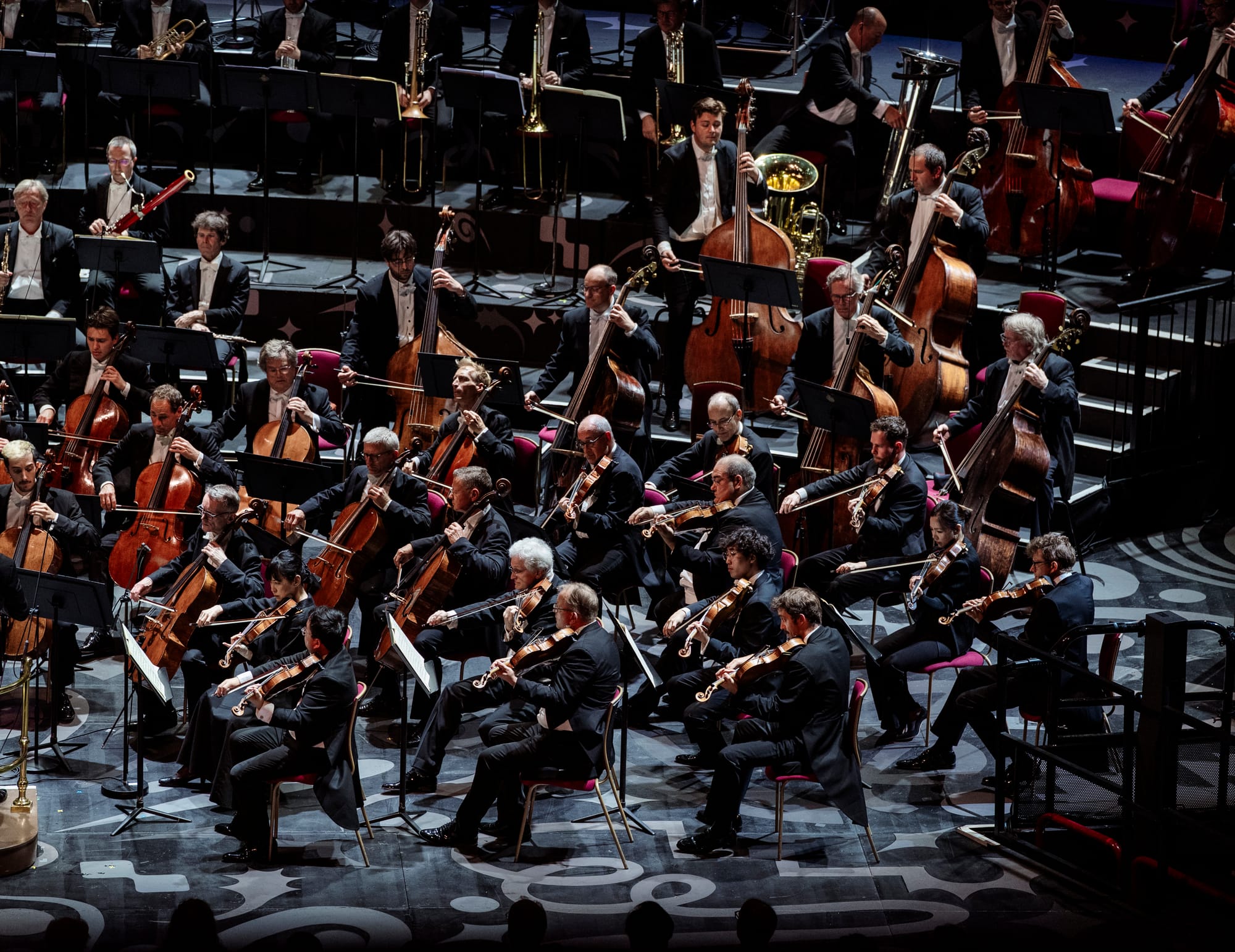
Perhaps the Tchaikovsky Fourth was not quite so exalted, but it was never less than fascinating, and with all the ‘i’s dotted and the ‘t’s crossed.The opening brass salvo was perfectly balanced; what happened then was to define Petrenko’s account, a foregrounding of the music’s debt to the dance and to ballet, which seemed to echo throughout the entire symphony. Again, there was so much detail, and everything was hyper-accurate. But the first movement flagged a little, occasionally tending towards the literal in the strings.
The oboe solo that launched the Andantino in modo di canzona was glorious, answered by maximally eloquent lower strings. Here, Petrenko’s refusal to over-emphasise the bass-end often strings paid off, with a luminosity of texture. The pizzicato ostinato that is the scherzo was an absolute masterclass of unanimity, the contrasting woodwind surely one of the most beautiful-sounding sections in the world, brightened by Egor Egorkin’s super-rapid piccolo piping. The finale entered with a blaze of light, fast and just a touch relentless. Undeniably exciting, though - it was impossible not get carried away with the current.
No encore, presumably because of the later Prom (this was a 630pm start). The Berliners returned the next night with the Beethoven Violin Concerto (soloist Augustin Hadelich) and Scriabin’s Third Symphony, ‘The Divine Poem’. And I bet there were encores …