Lully's Proserpine - the jewel in Rousset's cycle
Proserpine contains the essence of Lully: : dances, Prologue, Gods, Goddesses, Elysian Fields, spectacle, and much more
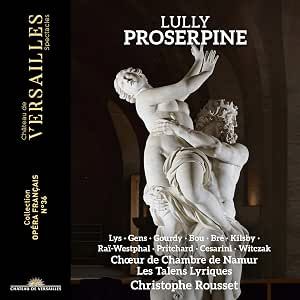
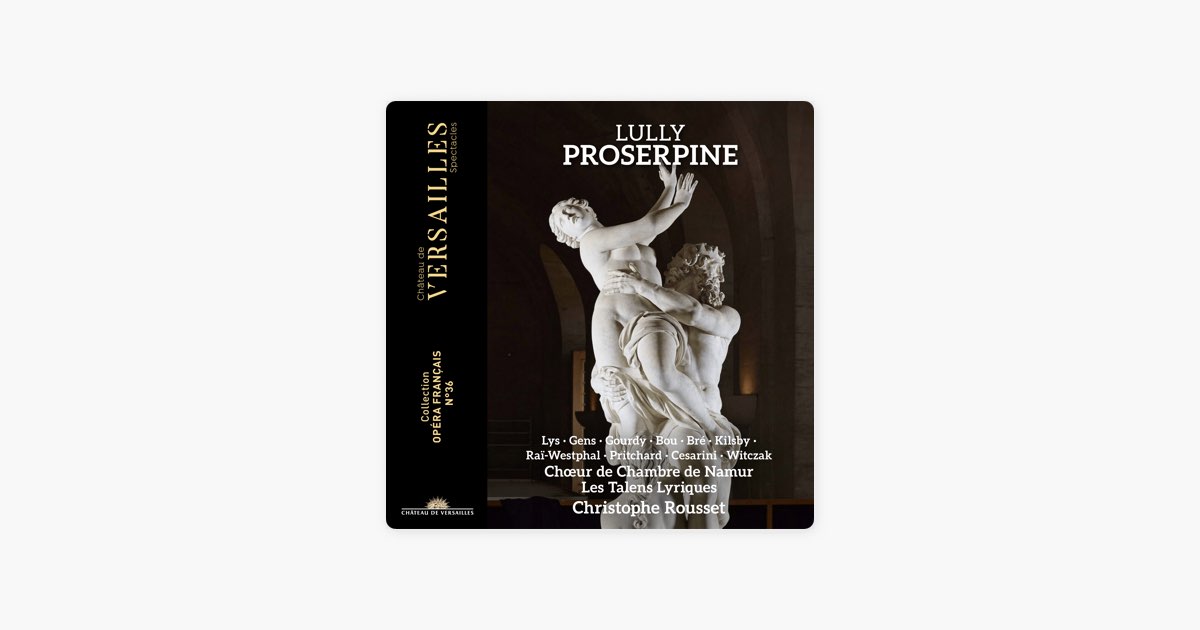
Lully's opé ra Proserpine LWV 58, certainly seems to have it all, ancient Gods and Goddesses, plots, sub-plots, earthquakes, and an exploding volcano. It also contains some of Lully's most sublime music.
Here's the promo video, in which Rousset introduces what is so unique about this opera (Lully challenging his own created norms, especially in the overture). He also discusses its (heavenly) length and its challenges - not least, diction:
Proserpine (first performed 1680 at Saint Germain - it made it to Antwerp in 1682) has a libretto by Quinault based on Ovid's Metamorphoses and centres around Pluton's abduction of Proserpine; sub-plots include Cérès' love for Jupiter. This recording comes some 17 years after Hervé Niquet's with Le Concert Spirituel.
It is surely luxury to have Ambroisine Bré kick the opera off in the Prologue as "La Paix". Dolorous music, here; the choir (Chœur de Chambre de Namur) is as superb as ever. Discord is taken, perhaps a little less assuredly, by Jean-Sébastien Bou, after an active dance that reminds us of Les Talens Lyriques' perfect accord with Lully's vernacular. This sequence is the opera in miniature: a perfect blend of French Baroque states.
Marie Lys is "La Victoire," in brilliant voice; as is Apolline Rai-Westphal as “La Félicité” - when she sings together with Véronique Gens (“Abundance”), the result is simply beautiful. It is Rai-Westphal that the rounds off the Prologue, though, fresh voiced, absolutely part of the dance going on in the orchestra:
For Act 1, Véronique Gens opens leading to the most delicious ensemble (“Goutons dans ces amiable lieux’ ... I'm not entirely taken by Nick Pritchard's Mercure, though):
The nymph Aréthuse, is taken by Ambroisine Bré, who is charged with the care of Proserpine (Ceres' daughter). Bré is in fine voice (see her previous contributions to Monteverdi's Ritorno on the same label, and at The Mozartist's celebration of Jommelli). Scene 4 is Bré alone (Aréthuse's ritournelle, “Vaine, fierté, faible rigeur"). This is an astonishing piece with very fragile accompaniment - so powerful:
Laurence Kilsby is good as Alphée, but it is the ensemble effort that makes this so special, as we become immersed (and therefore convinced by) concepts such as Cérès singing from her chariot pulled by winged dragons (Act 1 Scene 7):
One has to acknowledge the excellence of Rousset throughout all of this and Les Talens Lyriques, so immersed in Lully's vernacular. The way Rousset keeps the drama moving gives the whole a remarkable dramatic thrust.
As Crinise, Jean-Sébastien Bou is amazing; and listen to the lovely harmonic sequence to represent Alphée's unsettled heart. Kilsby as Alphée (tenor) is just as impressive. What beauty to hear them together!
Olivier Cesarini (as Ascalaphe) the epitome of a Baroque bass:
Olivier Goudy is Pluto(n), who returns to his kingdom and who recounts his back-story with Proserpine to Asclapius so well.
Listen to the lightness and airiness of Proserpine (the superb Marie Lys) and her chorus (female) singing to happiness: Lully only uses high pitches really:
There's been a descent to the Underworld for Act 3, and here the drama (and pitch) shifts. The music is brilliant there's been a descent to the Underworld. The chorus calls for her - very powerfully - at the opening:
Kilsby comes into his own in Scene 2, moving, vocally brilliant.
There is magic in this act thanks to Gens' Cérès: listen to her air with chorus, scene five: Gens is in perfect voice, as is the choir - surely this is the highlight of the set so far:
This is intense stuff: eventually, Cérès "loses her voice and is now a stream," which on paper sounds silly but in context, of course, is incredibly touching. Another highlight is the seventh scene, Gens again, and how Gens and Rousset propel it forwards, nuanced, reacting so carefully attuned to Lully's harmonic-dramatic shifts. Here's the end of the remarkable opening to scene seven:
An air Gens has also recorded separately in except for Alpha, Passion, by the way:
The final disc presets the last two acts. We find ourselves in the Elysian Fields for the fourth act, beautiful pastoral pipings opening this part (“Air de flùtes”):
This is the act of temptations: Pluto tries to tempt Proserpine with "a beautiful infernal entertainment". When Asclaphus pleads for Pluto, Proserpine turns him into an owl, which is par for the course, after all, for tales such as this. But it is how Lully explores the dynamics here, and once more shifts the overall feel of an act, here towards the dark. Pluto is Olivier Gourdy, stalwart, strong. If I hear a slight dramatic drop around the fourth scene, listen to the extraordinary intensity, of Scene 5, Pluton's “Que l'on suspende ici”:
I just want to give Les Talens Lyriques a chance to remind us of their excellence: this is the fast yet so accurate “Premier Air" from this final act - and listen to the contrasts:
The final act presents the problem - Pluto is determined to keep Proserpine - Jupiter declares (through Mercury's voice) that Proserpine will divide her time between her husband, Pluto, and her mother. As the synopsis has it, "the opera ends with an apotheosis of the celestial and infernal deities". Both Gens and Rousset "place" the feeling of this act - indecision, liminal space prior to resolution- perfectly, as we can hear in the second scene, “Déserts écartés, sombres lieux”:
David Witczak is Jupiter, who dominates the final scene (scene 6), as trumpets and drums begins to move us towards the opera's conclusion:
Lully's characteristic contrasts add profundity to this end: the "Premier air" that follows is infinitely tender, lifted by the "Second Air". The opera's close is a resplendent chorus: "May we forever chain discord and war in the underworld ... All must enjoy eternal peace". A wonderful intent to end on!:
Why Proserpine remains relatively unknown amongst Lully's operas is beyond me - the New Grove article mentions it only in passing, less than a handful of times. And yet it contains the essence of Lully: dances, Prologue, Gods, Goddesses, Elysian Fields, spectacle, and much more. More, especially, in the sheer depth of some of the music. Lully can be astonishingly touching, especially when heard at this exalted level of performance. Rousset assembles his casts with great care, and it shows.
A magnificent release, available at Amazon here.
 Libretto: Philippe Quinault