
Elisabeth Leonskaja's Barbican recital
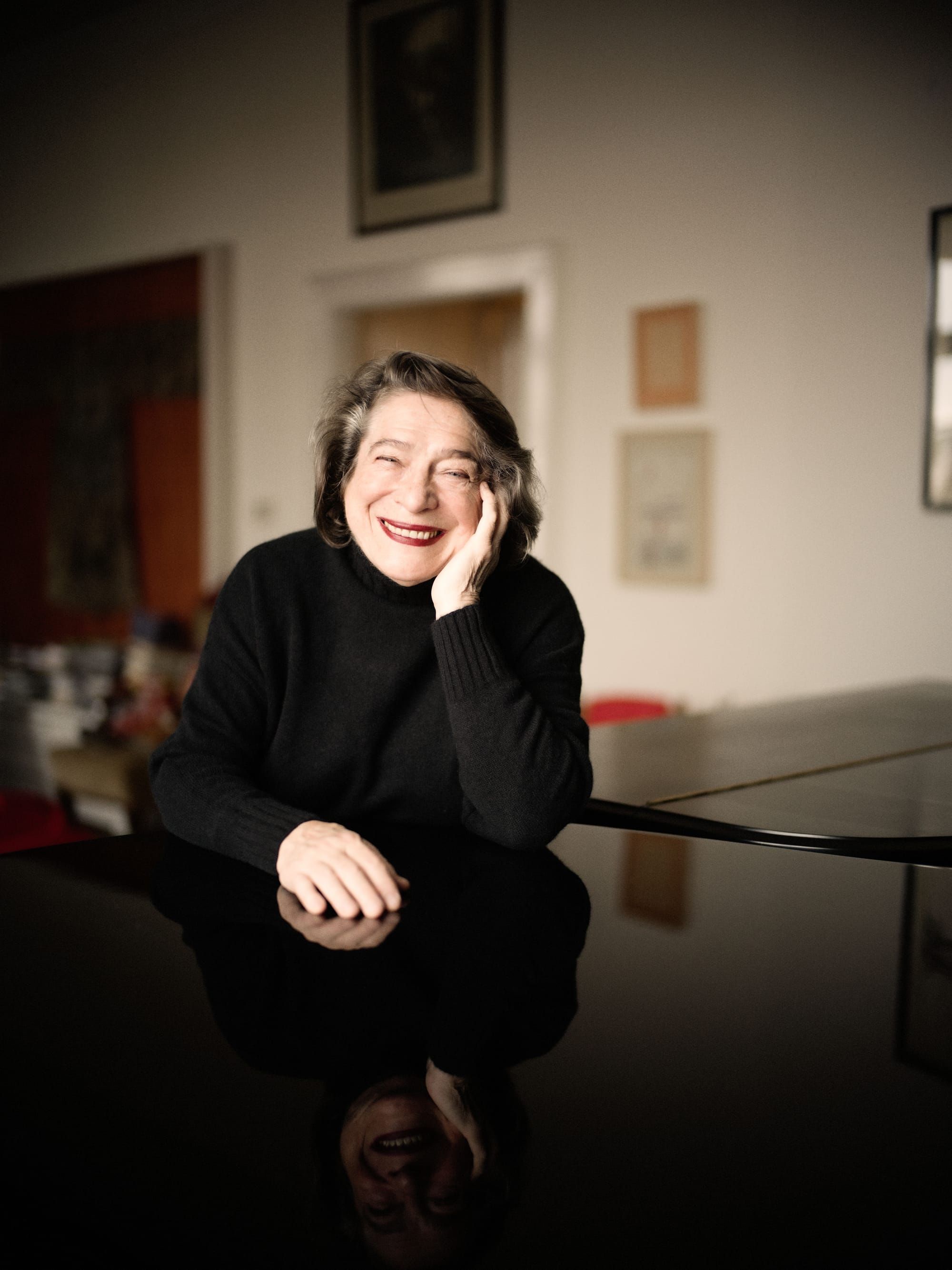
Elisabeth Leonskaja In Recital Barbican Hall, London, 24.06.2026
Mozart Piano Sonata No. 18 in D, K 576 (1789)
Beethoven Piano Sonata No. 32 in C minor, Op. 111 (1821/22)
Schubert Piano Sonata No. 15 in B flat, D 960 (1828)
In September 2024, Elisabeth Leonskaja performed the last three piano sonatas by Schubert in one evening at Wigmore Hall. Now, she performs three last sonatas - but by different composers - at Barbican: Mozart’s K 587 (July 1789), Beethoven’s Op. 111 (1821/22, very much the product of his third period), and Schubert’s D 960 (like that composer’s Ninth Symphony, of ‘heavenly length’ ).
Leonskaja’s Mozart is the product of a lifetime of deep immersion, and from that perspective, and in its non-HIP but full of character demeanour, the closest parallel seems to be the late recordings of Claudio Arrau. Talking of recordings, Leonskaja recorded a complete cycle of Mozart Piano Sonatas in the studio (on Warner) at Bremen’s Sendesaal in 2021. While all the traits of her playing are there, the superlative technique, the respect for the music, the evident care, one really needs to hear her live to experience what makes her Mozart truly special.
The opening arpeggio fanfares were perfectly judged. An interesting point of Leonskaja’s concert demeanour is that it is completely no-nonsense. It was sit down, straight in, no fuss. A touch faster than her recording, the music felt more animated in the exposition, while the development was more of a fantasia - a stroke of genius on Leonskaja’s part, a fantasia held within clear sonata form boundaries. The Adagio was without doubt an Adagio. Purists might argue it could be faster, but the whole was beautifully rapt. Leonskaja’s realisation of dialogue in the music, between the hands, was perfect, hands of absolute equal voice. The Allegretto finale opened gently, the left-hand scamperings a pleasant surprise (and how even they were). An awareness of Mozart’s use of gesture completed the picture.
Leonskaja’s Beethoven is similarly magnificent - here, recordings can tell the story, as her “Emperor” with Schonwandt on Warner proves. The late C-Minor Sonata was positively titanic at its opening here in the Barbican. Her performance of the semiquavers in octaves passages was instructive, like a Beethovenian Bach Toccata. There was a crispness to this, especially the left-hand, but most of all there was a majesty. Peonskaja never, ever rushes, so the music finds its own means of momentum that is utterly inexorable. Technically, this was a masterclass, not least in the power of her bass trills (of which more later) and the late diminuendo over a series of chords, each perfectly judged against the last. The great set of variations, the Arietta, was launched exactly as Beethoven asks, simply, song-like and slow (Adagio molto, semplice e cantabile). The music opened out organically: Leonskaja chose to concentrate on the structural picture rather than dally on detail, and the experience was all the more profound because of it. Instability was held within a larger envelope, a trajectory to the ineffable peace of the end. The famous “jazz” variation was no such thing here, but a natural, eminently Beethovenian way station towards Elysium. The high trills were so beautiful, and so perfectly controlled, an integral part of a drama that included perfectly calibrated inner-voice drama. Rarely have I heard such a fine performance of this piece.
The Schubert D 960 was extraordinary, the opening so gentle, so very vocal, the bass trill taking the baton from Beethoven’s Op. 111 and relocating it into a field of transcendence. This was supreme piano playing: the weight of every single chord had been carefully considered, as had the relations between hands at all times. Parts sounded almost modern: Leonskaja rethinks everything, there is never any sense of the learned interpretation, and nowhere is that truer than in this D 960. Expressive yet without recourse to extreme tempi, this was truly great playing. As was the Andante sostenuto, the difference in touch between the main line and its harmonies, and the cross-handed commentary exquisitely judged. Arguably this was more Adagio than Andante sostenuto, a trip to the netherlands of Schubert’s dark psyche, the Scherzo the perfect contrast scampering, as Schubert asks, “con delicatezza”. The Trio here provided the contrast, the displaced bass accents crisp biting. Those octaves of the finale, initially annunciatory, took on an anchoring function in Leonskaja’s hands in a movement that roves far and wide emotionally. There was beauty here, but also infinite detail. This was as fine a D 960 as I suspect I will ever hear.
One encore, the slow movement of Piano Sonata No. 16 in C, K 545 in an exquisite performance, brought us back full circle to Mozart. The concert taken as a whole was a staggering achievement; Leonskaja’s concerts are to be treasured.
Any negatives? Well, as with the AAM Handel Serse last week, the arrival of latecomers was intrusive: Leonskaja did not actually go offstage between the Mozart and Beethoven, but walked to the back of the piano (thus shielded by the lid) and back again, and so audience members were taking their seats as she started the Beethoven.
Photo © Marco Borggreve