
Anastasia Evsina: Benediction
A fine release
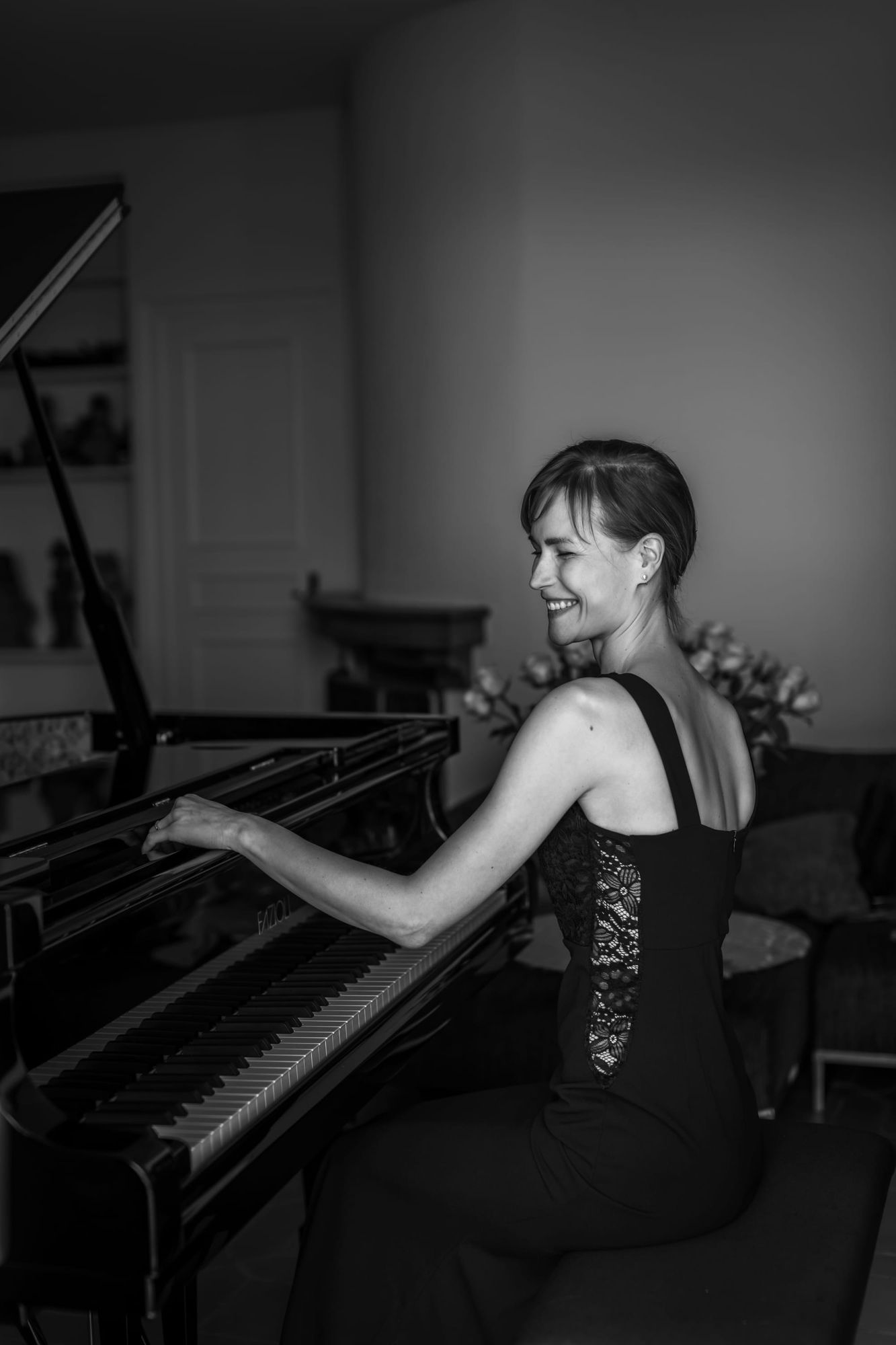
This is an ambitious album, released on the Prima Classic label and subtitled, “From The Shades to The Light,” built on statements such as,
Why not reflect on art as a benediction of life, finding in it a redemption for our struggles, emotions, and imperfections? Art can help us survive the hardest moments. It grants us the power to act and the patience to wait, the wisdom to accept and the optimism to rejoice
Evsina expands:
... we are no longer truly alive when the soul dies, and the soul dies where art ceases, even if the body still endures. I reflected on this through the music of Liszt and Brahms and it felt like a meditation on transcendence that leads to benediction.
I love the idea that the soul dies where art ceases; how true it is, and also how firm a statement it is of just why music is so important, particularly in such (globally) troubled times.
Anastasia Evsina currently resides in Brazil (where this disc was realised, at a private location). The recital opens with the last four of Liszt's Transcendental Etudes (the Études d'exécution transcendante): No 9 is the first, "Ricordanza," a piece full of those typical Liszt solo lines, like a piano in recitative. Evsina plays beautifully: there is a real sense of narration. The balance between melody and accompaniment is perfectly judged; more, Evsina priorities cleanliness of articulation and clarity. This is the lyrical side of an etude: something at the heart of the Chopin Etudes, but rarely given the acknowledgement it requires in Liszt. For her instrument, Evsina uses a Fazioli F 212, which allows for just that clarity:
No. 9 is cast in A flat-Major; the next shifts to the relative minor, F-Minor: "Appassionata". There is huge detail here; the electricity is lower than some, as Evsina thinks on the larger-scale. Cleanliness of execution remains Evsina's priority:
One of the most famous of Liszt's Etudes is "Harmonies du soir," S 139/11. The breadth of Evsina's approach and its sense of it being lit from within reminds me of Arrau's classic Philips version. Evsina offers a magnificent performance; listen to how the spread chords near the close are weighted so that the subtleties of Liszt's harmonies really "speak":
Finally, "Chasse-neige," more nuanced than most, the right/left hand dialogues as if two people were speaking. Evsina's tone is rich and broad:
There is more Lizst at the end of the album: the wonderful "Sonetto 104 del Petrarca" from the second book (Italie) of the years of travel. Those right-hand, Bellini-like melodies recall the opening work of the recital. The "Bénédiction de Dieu dans la solitude," S 173/3, is almost a prolongation of that, a festival of cantabile, perfectly paced, its structure laid bare, inner voices a joy, the final pages incredibly sweet-toned:
Finally, the "Bénédiction dans la Solitude" from the Harmonies poétiques et réligieuses. The placement of these two Liszt pieces after the Brahms variations is genius: the sheer sense of endless melody Liszt presents is as balm to the soul. And the sense of growing ecstasy is medicine for the depths Brahms escorts us, the listeners, to.
Liszt asks much interpretatively here: some gestures need to be stated simply and with an awareness of their inner spirituality. Evisna has a fine handle on this. Evisna's performance borders on greatness, and I look forward to much more from this promising pianist.
In between is the Schumann-Variations, Op, 9, by Brahms, not repertoire that gets out too much in the concert all, in my experience; but which very much should. The reason is probably the wistful, reflective, melancholy mood, which we hear straight away in the Theme. The piece was written in 1854 (mainly May/June, with Variations X and XI added in September).
Evsina links the Schumann Variations to the album concept here:
The theme is introspective and haunting;Brahms transforms it into 16 variations that explore a wide range of feelings: simplicity, melancholy, exuberance, rebellion, before settling into a serene, almost prayerful conclusion. This progression from darkness to light parallels the notion of a blessing as a restorative force. Brahms once wrote: “Music is a language that speaks where words fail. It is a benediction to the soul.”
The Theme is taken from the fourth of Schumann's Op. 99 Bunte Blätter, surely not coincidentally, the theme Clara Schumann had chosen for her own Op. 20 variations.
Here's Florian Uhlig in the Bunte Blätter original, part of his superb Schumann cycle on Hänssler:
... and here's the Clara Schumann Op. 20 Variations, in a performance by Veronica Jochum, which features rolling score:
Evsina's sixth variation offers exceptional prestidigitation, and also textural awareness, set in maximal contrast to the almost static No. 7, which Evsina plays with a beautiful awareness of that plateau's structural function.
Originally labelled in the MS "Florence and Heliotrope," Variation 10 is a song without words, Evsina providing a glorious bath of D-Major (again, another quote - now at the finale cadence, a "theme by Clara Wieck" on which Schumann based his Op. 5 Impromptus). Evsina's voice-leading is perfect here, Brahms' striated layers laid bare:
I do like Evsina's staccato - fully-formed in tone, as Variation 12 proves, leading nicely to the 13th variation toccata (delivered with an almost Bachian touch). Brahms' sense of textural bareness in the 14th Variation is itself very Schumannesque and perfectly projected - which throws the rich 15th Variation (a slowly-unraveling canon between treble and bass) into focus, before a coda (the final variation) of extreme profundity.
How beautifully Evsina honours this work's greatness. Although YouTube only offers individual variations, there is a complete performance by Evsina there, taken live in Brazil (16/05/2023 Belo Horizonte, Brazil) that allows for a clear conception of Evsina's vision (Audio by Eduardo Avellar , Video by Luiz Malta Produções):
00:00 THEME; 01:21 VAR I; 02:33 VAR II-III; 04:03 VAR IV; 04:44 VAR V; 05:39 VAR VI; 06:32 VAR VII; 07:25 VAR VIII; 09:47 VAR IX; 10:25 VAR X-XI; 13:44 VAR XII1; 4:30 VAR XIII; 14:57 VAR XIV; 16:00 VAR XV; 17:44 VAR XVI
A fine release. This album is available for streaming at Amazon Music here; iDagio here.

