Bruckner's Symphonies 8 & 9 from the Archives (expanded post)
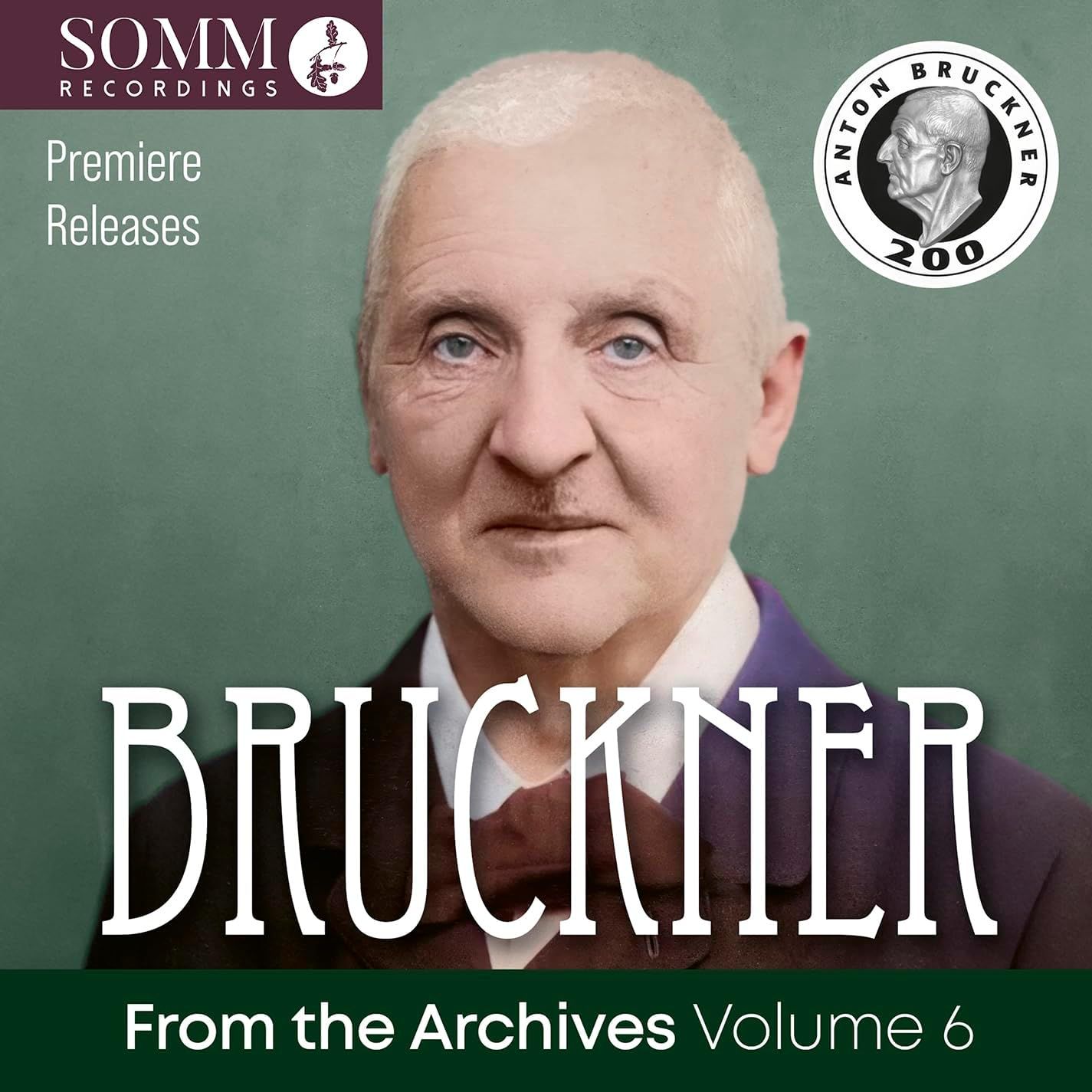
This is Volume Six of Somm's Bruckner series; we looked at Volume One here.
This contains the monumental Eighth Symphony. If there is one orchestra the seems perfect for Bruckner, with its rich tradition, its creamy brass, its lush strings and its individualised woodwind, it is the Bavarian Radio Symphony Orchestra, heard here under the great Brucknerian Eugen Jochum.
The piece is heard in the Novak edition and the provenance is interesting: it is a live Air Check run-through from 1957. Jochum actually made the first commercial recording of the Eighth (1949, which used the Haas edition; the Novak had not yet bee published). But as a performance, this SOMM is compelling: if ever you have felt intimidated by the Eighth's stone edifice, go here, as Jochum offers a more variegated canvas the most. Yes, the recording is of its time, but the strengths of the Bavarian RSO certainly come through, as does the inner luminosity of the slow movement:
Around this is the powerhouse Scherzo and the remarkable, magisterial, blazing finale. There is a young man's energy and vigour about this performance:
The first movement has momentum right from the off. Themes slide and slither; Jochum's Bruckner maintains the structure but is flexible, and this seems the ideal combination of the two:
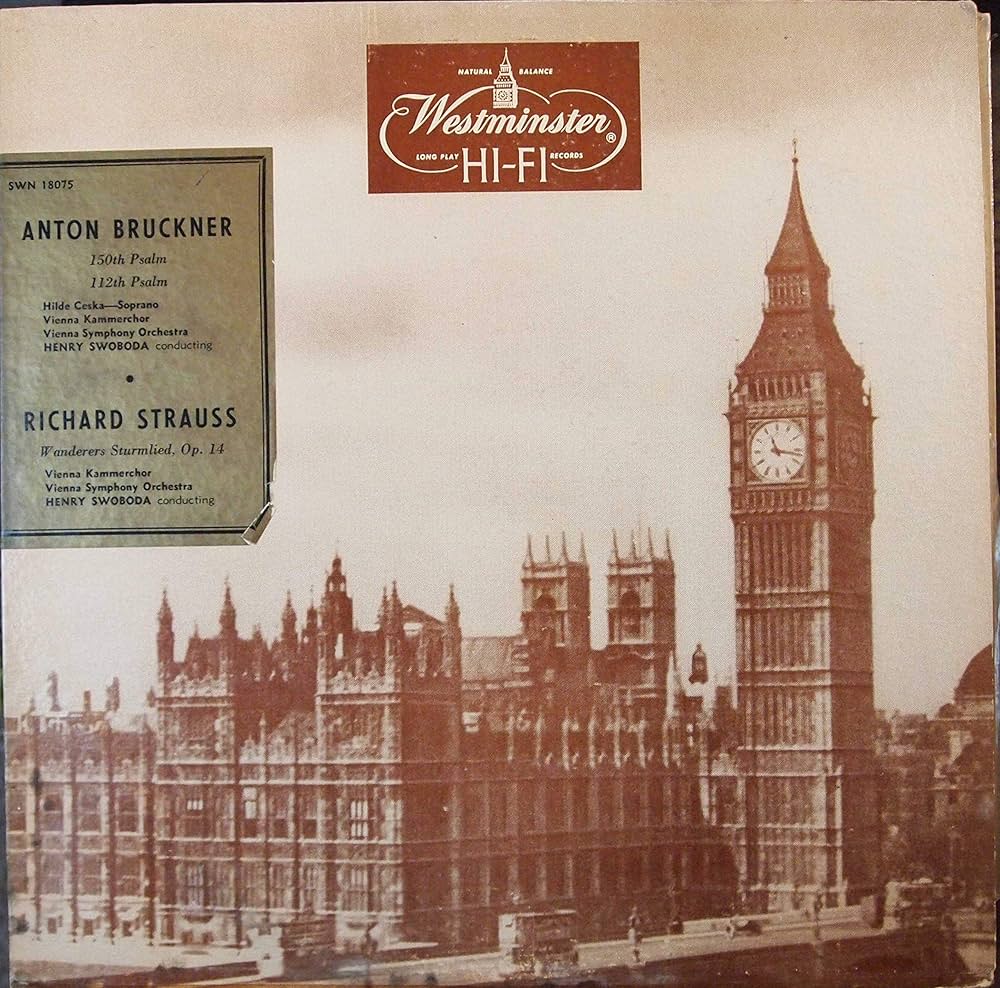
As with Volume 1 reviewed recently, Volume 6 includes a choral work, here.a piece contemporaneous with the final two symphonies: the Psalm 150. The forward-facing choir is certainly involving: Henry Swoboda conducts the Vienna Symphony Orchestra with Hilde Česka as soprano soloist in this November 1950 account first released on the Westminster label (LP collector's will surely remember his excellent label with affection). Certainly this is bracing stuff:
The Ninth is a timely release, given the recent Carlos Païta performance on Le Palais des Dégustateurs - an utterly remarkable performance unlike any other I have heard, almost a derailing of faith than an affirmation of faith. Here, we have Wolfgang Sawallisch, a great conductor in his own right, with the Vienna Symphony Orchestra. Sawallisch's way is exciting (although not on the same scale as Païta!) - if Giulini is at one end of the scale (the late VPO performance) and Païta on the other, Sawallisch is just off-centre, but closer to Païta. He keeps the first movement moving well, but its the combination of Pastoralism and fluid approach to tempo that allows for fenced climax that is so compelling:
The second movement's journey from post-Mendelssohnian frolic to full-on Brucknerian pounding via a Weber forest is expertly tracked by Sawalllisch. True, there's the odd scrappy moment as the music hurtles towards its conclusion (but nothing in comparison to Païta!):
It is the "finale" though that is so effective: grand, awesome, broad. True, we might not hear the drum rolls as acutely as they were in the Musikverein (this was an ORF - Österreichischer Rundfunk - broadcast), but this huge unfolding up there with the best. Yes, Giulini with the VPO on DG ascends to Heaven like no other in this final movement, but do hear Sawallisch:
I mentioned Giulini and Païta's Ninths: another worth mentioning is Sir Simon Rattle's with the Berliner Philharmoniker (part of the 45-CD Warner set, The Berlin Years. One of only two Bruckner symphonies on that set (the other is the Sixth), Rattle includes the unfinished finale in the Samale/Philllips/Cohrs/Mazzuca “conclusive revised edition 2011”. (The four musicologists, Nicola Samale, John Phillips, Benjamin-Gunnar Cohrs and Giuseppe Mazzuca, are sometimes known by a composite initialising of surnames: SPCM.)
Frankly, parts of this finale do sound as if they are simply performances of Bruckner's sketches; it is no fitting finale after that astonishing Adagio. But, it is interesting musicologically, and to have the Berliner Pihlharmoniker in the hotseat is luxury indeed:
There will be more Bruckner from SOMM as we go forwards. Here, I cherish the Eighth and Ninth for different reasons: an Everyman Eighth that tames the beast without sacrificing power, and a Ninth of such incredible understanding and naturalness.
Brucknerians should not hesitate.
The twofer can be purchased from Amazon here, at 12% off (the lowest price for 30 days, apparently). Streaming below.