
Vache Baroque 2026: The Tempest
This was a true company effort, and any caveats melt into insignificance
Vache Baroque and Out of Chaos at The Vache, Chalfont St Giles, Bucks.
I thoroughly enjoyed Vache Baroque’s UK premiere of Campra’s Le Carnaval de Venise last year in the lovely setting of the Chiltern Hills (a short coach ride from Chalfont & Latimer station, at the extremity of the Metropolitan line): review. Campra’s piece was quite the extravaganza, including circus artists and mobile musicians. Here, they team up with innovative theatre group Out of Chaos to create a fascinating experience, one less immediately lavish but no less involving.
Interestingly, Campra’s piece pits the supernatural (the Goddess Minerva) against muggles; we have something similar here. This was a ‘semi-opera’ staging of Shakespeare’s The Tempest, surely the most magic(k)al of Shakespeare’s plays. It is a masterpiece, of course; and it is good to know Vache Baroque did it justice.
Sets were basic: an indication of a shipwreck and some ‘rocks’. But how well the actual performance space itself was used, including around the audience.
The genre of the semi-opera is somewhat liminal, existing betwixt play and opera (the use of the term ‘music-drama’ is simply too semantically laden for use here). But, in performance terms, maybe it is coming back into focus, remembering a performance of Purcell’s 1692 The Fairy Queen at the 2024 Thaxted Festival by the Armonico Consort and Players, with Oz Clarke as narrator. This Tempest took inspiration from a 1674 production of The Tempest, including music by Pelham Humfrey, Locke, and Draghi). While the 1674 production departed from Shakespeare, this one sticks to the Bard hard, Vache Baroque’s version uses music from that earlier production, expanding it to the likes of Kapsberger, François Couperin and Marin Marais (his ‘Tempête’ from Alcione). Of the purely orchestral music, it was possibly the ‘Curtain Tune’ from Matthew Locke’s Tempest, with its excruciating dissonances (each one relished to the full here) that impressed the most.
Here's Il Giardino Armonico and Giovanni Antonini in just that Locke, on the Alpha disc, Serpent & Fire:
The two halves of this performance differed in that there was substantially more music in the second part, including a music-filled masque. Or was there? The ensemble, led from the harpsichord by Jonathan Darbourne, often added music for atmosphere in part one; and then there is the inherent music of Shakespeare’s play itself, of course.
Voices were amplified, which meant everything vocally was audible, but perhaps they were a touch too foregrounded. There were ambient sounds, too, via Dan Samsa (who specialises in 360-degree sound effects), all of which were created by the present performers.
Unlike last year, the audience could see through one side of the tent, allowing the woodland without to add to a sense of natural magic, of enchantment. Wood from local trees is used within the production (the booklet points out that in 1611, when The Tempest was written ‘there was already concern about the deforestation of England’). But like Le Carnaval de Venise, this was a triumph; minor gripes remain exactly that.
The acting was generally very fine. Leah Halle as Miranda was the star of the actors, innocent with a power-station smile from the heart (it is no surprise to learn she has performed with the Royal Shakespeare Company); her beau, Prince Ferdinand of Naples, taken by Tré Medley, was rather more stilted. I never quite believed he loved her as much as he said he did (or as much as she loved him). Tim Delap had authority and stage presence as Prospero, but a tendency to over-emote surfaced from time to time.
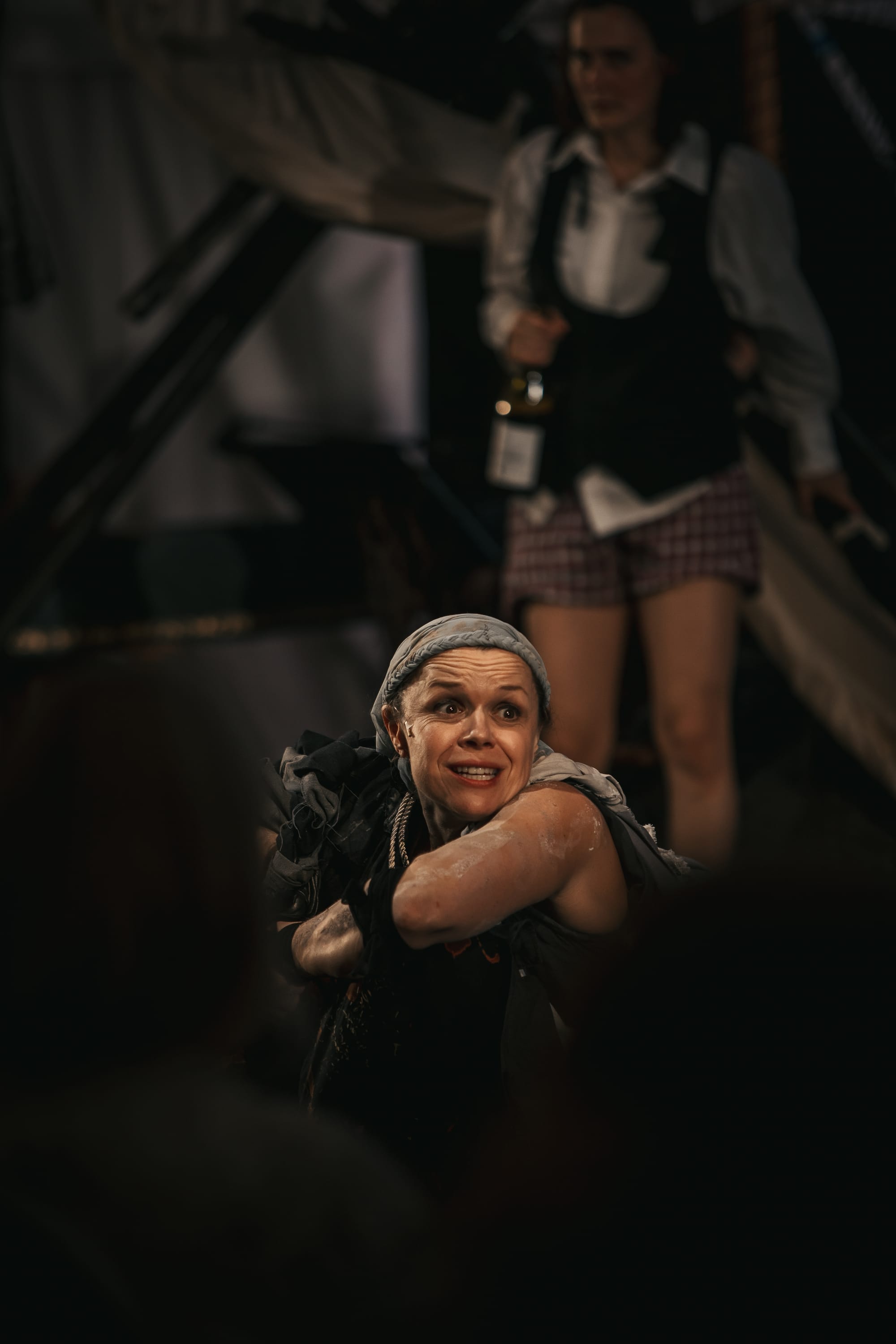
Caliban, played by a brilliantly costumed Hannah Barrie (again an RSC actor, as well as Globe), was superbly done; think Papagena Zauberflöte, pre-retransformation but retaining her youth. It was an entertaining and absorbing take.
It was also a rather nice touch that MD Jonathan Darbourne doubled as Gonzalo. His work at the harpsichord was exemplary, too, his chosen band of nine superbly disciplined and stylish; a special word for violinists Naomi Burrell and Christiane Eidsten Dahl, who were particularly mobile around the stage.
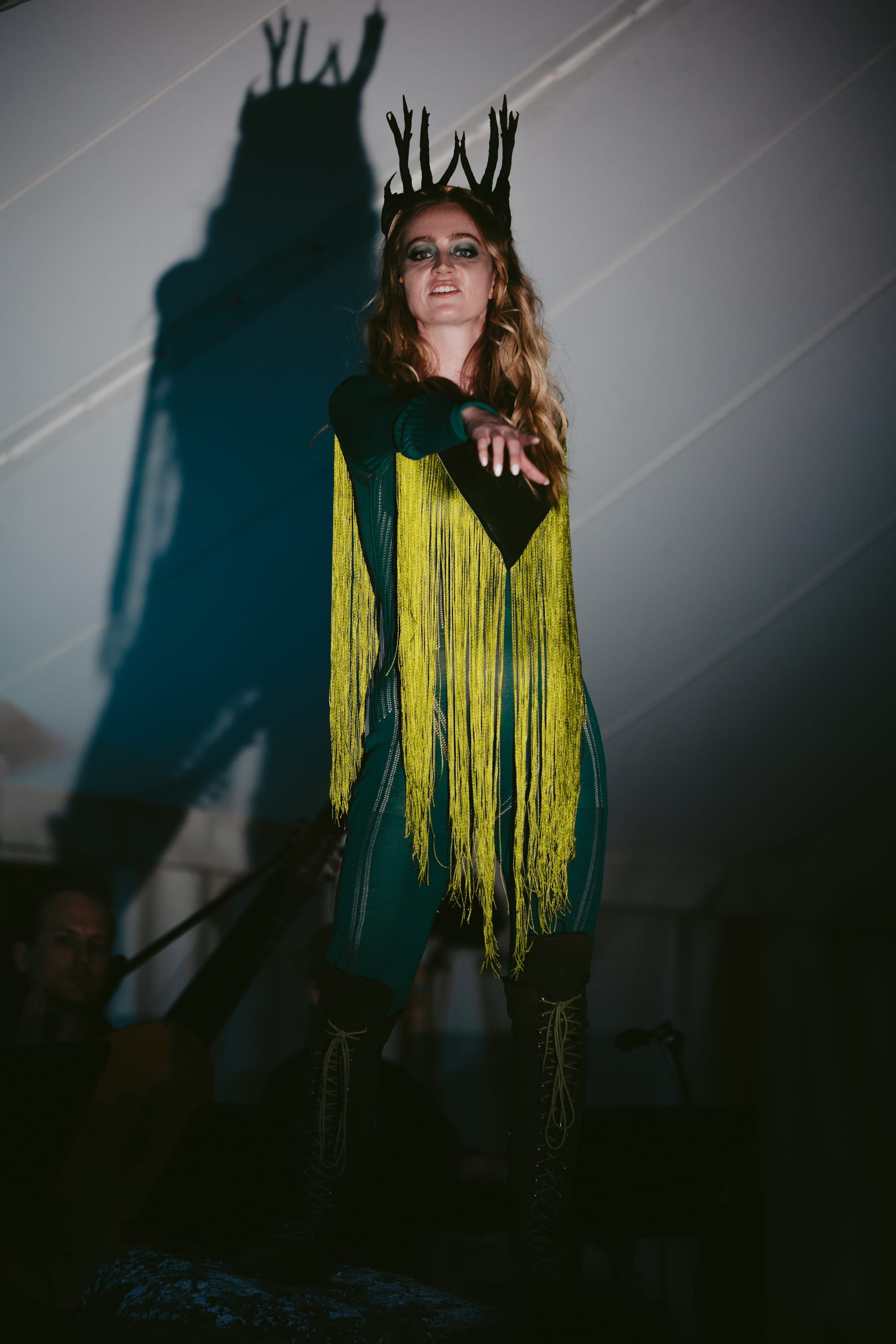
Of the singers, it was soprano Stephanie Hershaw as Ariel/Cupid who seemed beyond criticism, her voice clarion clear and yet never shrill. An alumna of the Opera Studio at Detmold, Germany, she is now a member of the company at Oldenburgisches Staatstheater (since 2024) and numbers Governess (Turn of the Screw) and Sophie (Werther) among her roles. Her Purcell ‘Come unto these yellow sands’ (Act 1, Scene 2) was an absolute joy, a real highlight, the ensuing ensemble ‘I hear the strutting chanticleer’ the perfect riposte. Her lines include ‘Full fathom five,’ here heard in a setting by Robert Johnson II (the ‘II; indicates he is the English Robert Johnson, c. 1583-1633, not the Scottish one) and ‘Where the bee sucks’ (the wonderful and under-rather English composer Pelham Humfrey).
Conor Prendiville was in fine tenor voice (with no sense of strain) as Stephano, while the soprano and mezzo voices of Isabelle Peters and Camilla Seale were well-matched; baritone Ross Cumming took the roles of Trinculo and Bacchus.
When the voices sounded together, the result was often beautiful, perhaps most poignantly in Dowland’s Say, Love, if ever Thou didst find (a sort of much milder version of John Donne’s Song: ‘Goe, catch a falling star …”). It comes from Dowland's 1603 Third Booke of Songes. Here's The Consort of Musicke and Anthony Rooley:
Director Paul O’Mahony and Designer Caitlin Mawhinney did the concept proud - colour, props and use of space all came together triumphantly. Really, this was a true company effort, and any caveats melt into insignificance. It was a privilege to experience this Tempest. Next year’s production is eagerly awaited.
Production:
Director - Paul O’Mahony
Designer - Caitlin Mawhinney
Choreographer/Movement Director - Anne-Lunnette Deakin-Foster
Lighting designer - Ben Pickersgill
Sound Artist - Dan Samsa
Costume Supervisor - Charlotte Murray
Cast:
Prospero - Tim Delap
Miranda - Leah Halle
Caliban - Hannah Barrie
Ferdinand - Tré Medley
Ariel/Cupid - Stephanie Hershaw
Stephano/Chorus - Isabelle Peters
Antonio/Chorus - Conor Prendiville
Trinculo/Bacchus/Chorus - Ross Cumming
Gonzalo - Jonathan Darbourne