
Toshio Hosokawa: Two World Premieres on Naxos
A remarkable disc
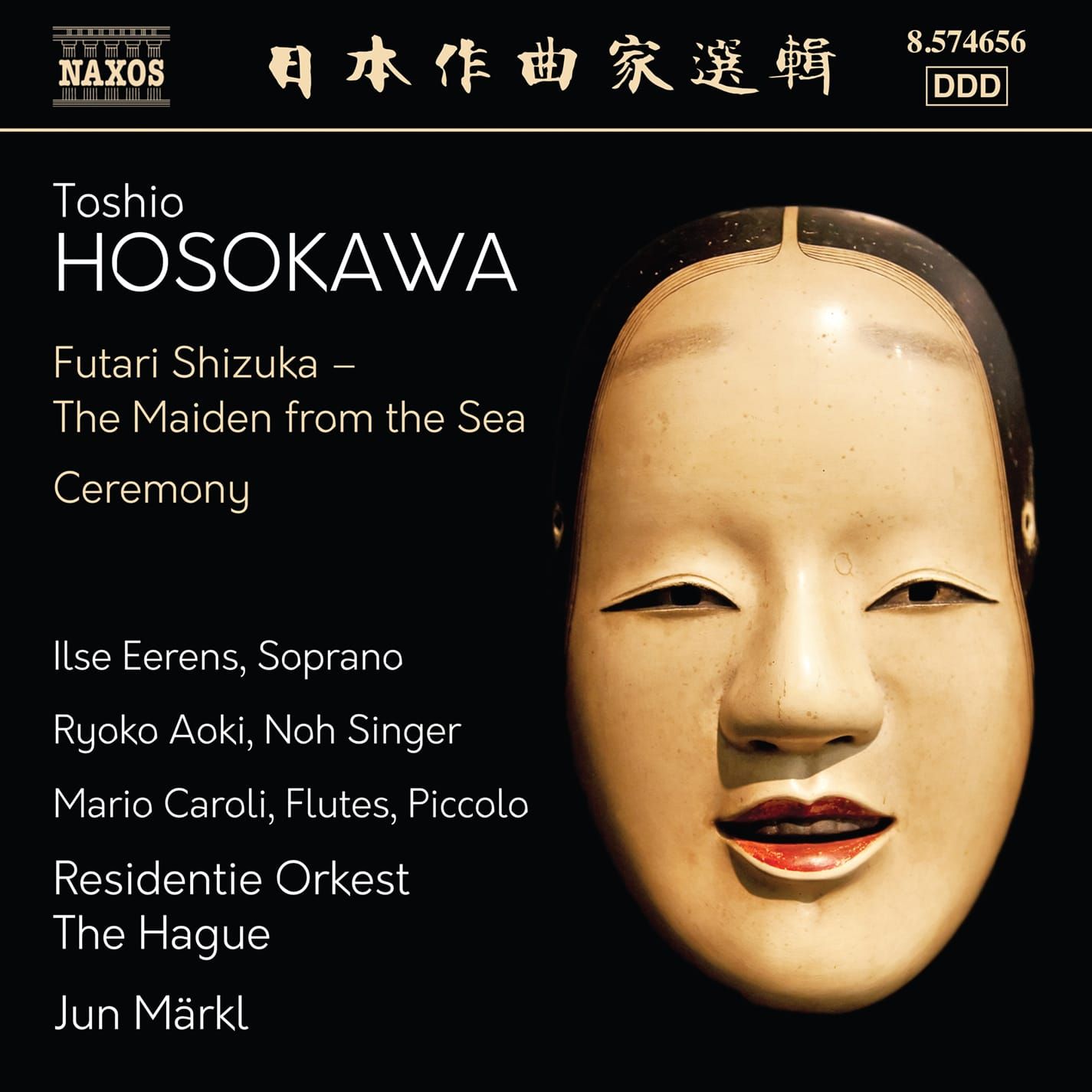
We first met Japanese composer Toshio Hosokawa (born 1955) via another disc in the Naxos series of his music, again conducted by Jun Märkl: Orchestral Works, Volume 4; there followed a BIS disc of guitar music performed by Jacob Kellermann, Awakening.
Here's a promo video from Naxos around the present release:
Ceremony (2021/22) is scored for flute and orchestra and was written in 2021/22. Premiered in 2022, with Emmanuel Pahud and the Tonhalle Orchestra Zurich under Paavo Järvi, the piece received an ecstatic reception. It continues a trend in Hosokawa's concerto output that the soloist represents a 'person' while the orchestra represents the Universe and Nature. Here, teh soloist is almost shamanic in demeanour. The shaman's breath (via the flute) calls forth supernatural forces
I believe that music arises from the shamanistic rituals (ceremonies) of animism (Toshio Hosokawa)
Meanwhile, the flute by its very nature reminds us of Spirit: it is activated by “breath" the Greek work pneuma, meaning breath, also means wind and spirit.
The sound of the flautist's breath echoes like the winds of Nature, and becomes a song to awaken the spirits.
The piece is subdivided into five parts, but presented as one 24-minute track. The first is an “Introduction,” an incantation,” a song to awaken the spirits; a melody is repeated that rises in pitch, towards the heavens. Then, in Part II, a descending melody takes us to the darkness of the Underworld (here, an alto flute is used). A struggle ensues in the third part, “a fight against the real world”; this uses piccolo and flute; a violent part of the piece. The shaman's solo song is an extended cadenza (superbly given by Maria Caroli - after Pahud, she has big shoes to fill, and does so with aplomb). The fifth part is labelled “Final Chapter - Purification,” where, “the flute melody melts into the sustained sound of an F note”. They then “become part of Nature, at one point transforming into a bird”.
Intended also as a prayer at the end of the pandemic, this piece was composed duuring the last pandemic itself. The performance here is stunning, sensitive, dynamic, hypnotising. The recording, too, is superb, capturing everything from teh lowest murmour to the highest, silvery twinklings.
Written just a few years earlier, in 2017, Futari Shizuka - The Maiden from the Sea (2017) is classed as an “opera in one act” and is based on the Noh play of its title. Hosokawa describes Noh as:
... a form of theatre in which the deep sorrows of human souls are purified by the performers who sing, narrate and dance. In many Noh stories, the spirit of a deceased person returns to the world and possesses the body of a living person, and through their body, tells a story of his/her deep sorrow.
The libretto was written by Oriza Hitata. The story is that of the Two Shizukas and is set in modern times. Here, the departed spirit is Shizuka Gozen (Lady Shizuka), who possesses the body of a young beautiful refugee girl, Helen (who was washed up on the shored of the Mediterranean). Helen is sung by soprano Ilse Eerens; Shizu, lady Shizuka Gozen, is sing by Noh Singer, Ryoko Aoki.
Lady Shizuka was not only a beautiful dancer, but a lover of a 12th-Century ruler; their baby was killed by an adversary (the ruler's older brother). So we have two overlapping stories: a modern-day refugee against an ancient tale of over 900 years ago. In Hosokawa's score, the two voices become one.
A highly atmospheric Prelude (“Sorrow Sea”) leads to her song (Where do I come from? ... I was floating on the sea), lyrical, and also including Sprechgesang. Linking the two pieces, a flute is prominent:
Ilse Eerens is staggeringly good: the vocal line is incredibly difficult (including the very lowest soprano register), and her sense of line is incredible. Sometimes she has to juxtapose modes of delivery siddenly; Eerens' ability to do so is exceptional Hosokawa's scoring is exceptional, too: delicate, glistening, modern.
The two voices are heard together in the next few segments. Ryoko Aoki is the only performer who was present at the World Premiere (Ensemble Intercontemporain; the soprano on that occasion was Kerstin Avenno; the conductor was Matthias Pintscher). The difference between the two is marked, to say the least: Aolki low, like an Earth Mother, a Japanese Erda against Eernes' flying lines:
The piece includes a “Dance,” where wind again take the lead. The music itself is disjointed, not a dance in the traditional sense:
It is Helen's reappearance (“I was with child ...”) that brings with it searing intensity. The final stages seem to imply a searching, the title incredibly poignant for our time now: “Where do I come from? ... Far across the ocean, there is war ...”. Here's the work's close:
Intended as a complementary work to Hosokawa's 2014 opera The Raven, Futari Shizuka is a remarkable work. Here's a film to complement the Naxos performance by the premiering artists, from 2017:
... and here's Naxos' performance of The Raven:
Charlotte Hellekant Conductor: Kentaro Kawase Ensemble: United Instruments of Lucilin
A remarkable disc. It is available at Amazon here; The Raven is available here.