
Telemann's Donnerode: Late Church Music
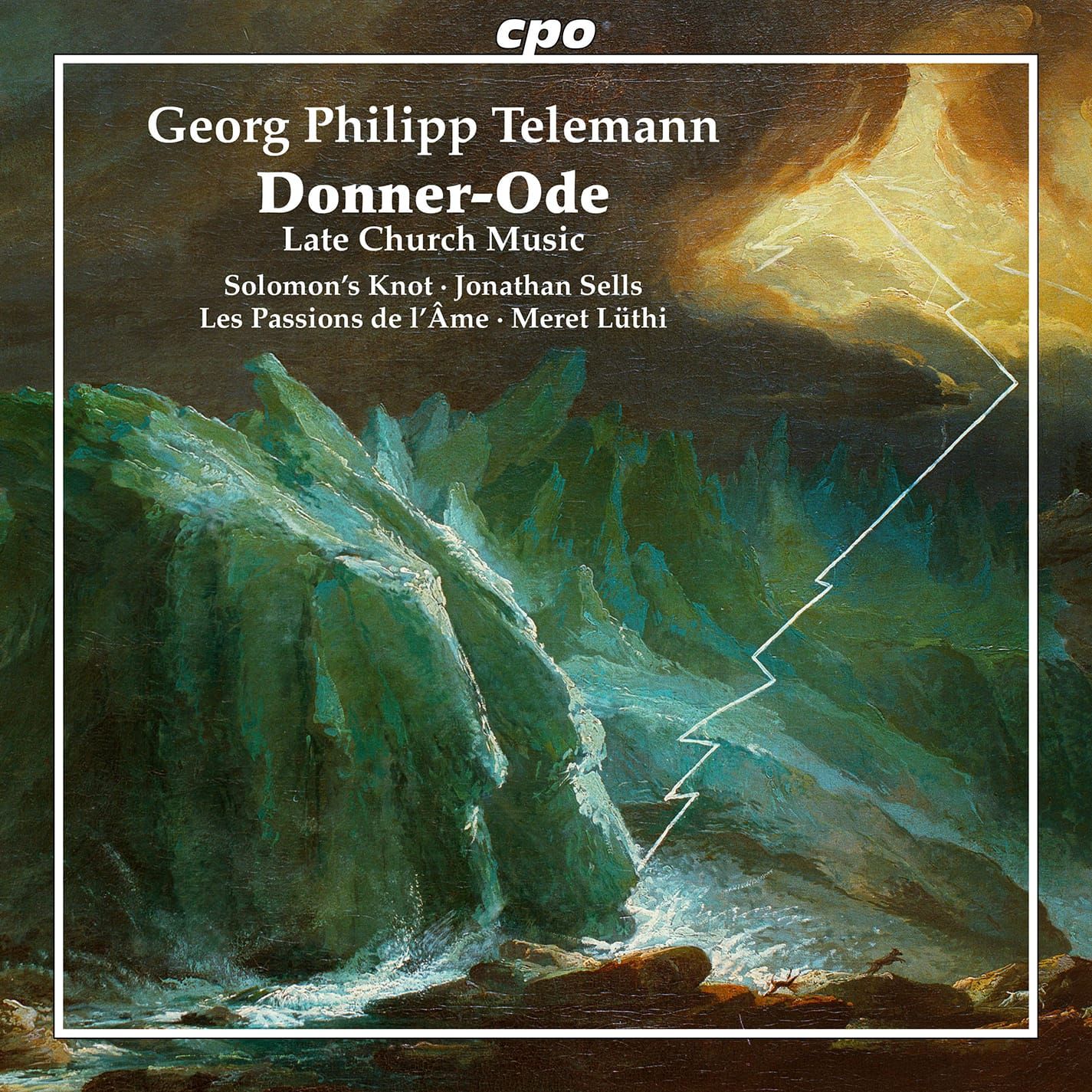
Solomon's Knot and Jonathan Sells join forces with Les Passions de l'Âme (The Passions of the Soul)) for this celebration of late Telmann sacred music,
Ton Koopman waxed lyrical to me once about Telemann's Donnerode, just after he conducted a performance in the vast church of St Astier, France with his band, the Amsterdam Baroque Orchestra.
The acoustic here has similarities, but much more clarity These performances were part of the famous Magdeberger-Telemann-Festtagen, from the Gewandhaus Magdeburg in March 2022.
So we begin with Dich rühmen die Welten, TWV 1:329, one of two World Premiere recordings here. The opening aria (same title as the cantata) is gloriously sung by soprano Zoë Brookshaw of Solomon's Knot, but listen too to how the trumpets blaze.
A bass accompagnato is entitled "Die Andacht" (The Pryaer), sung by baritone Johannes Wellrab (again of Solomon's Knot). The tenor aria, “O wie sich DunkelheitenÚ (Oh, how the darkness / Surrounds my path”) is in total contrast to the soprano aria, dark, shaded by the woody timbre of a solo bassoon Sung by "The Christian," and tenor Andrew Tortise (Solomon's Know) excels. There are fabulous chromatic descents in the vocal line, shadowed by orchestra:
The bass aria, "Etwas geschwind" is dynamic and trumpet-gilded. The cantata ponders on two aspects of the Christian God as represented by his angels: on the one hand protecting, on the other, damning and punishing. To work with this, a mid-cantata Lutheran chorale acts as a plea: "Mitten wir im Leben sind" (In the midst of life [we are in death]), beautifully sung here.
An alto aria depicts the will to join God's chorus of angels, here mezzo Kate Symonds-Joy in spectacular form (when is she not?: see Wild Arts' staged Messiah, and with Solomon's Knot at Wigmore Hall in the music of George Jeffries). "An angel gives me the lute / That shall forever lift you on high" she sings. It is rightly emotionally climactic. Not virtuosically so, but it offers the natural, and powerful, conclusion, leading naturally to teh final chorale (the 14th verse of the hymn The True God and Son of God) to another Luther (now baptismal) hymn. A glorious piece - and we're not even at Donner-Ode yet!
The first part of the 1756 Donner Ode, “Wie in dein Name so groß” (How excellent is your name, TWV 6:3a) opens with a glorious chorus, perhaps slightly, and surprisingly, low in energy here. The piece was written after the Lisbon earthquake of 1755 which, apart from its appalling devastation, influenced writers, philosophers, and thinkers for years after. The piece also hails the Christian God, though, as one can hear in that opening chorus:
An aria to give honour to the "King" follows, Hilary Cronin in fine form against a bassoon obbligato (Les Passions de l'Âme's Ingo-Maria Klaucke):
It is counter-tenor Michal Czerniawski who sings the alto aria, "Fallt vor ihm hin" (Bow down before him). Beautifully; the tenor's lot is more taxing, though, in "Die Stimme Gottes" (The Voice of God) but nothing can prepare one for the effects of the bass aria (Wollrab: "Sie stützt die stolzen Grebirge": He reduces the proud mountains to rubble), followed by that rarest of things, a bass duet ("Es donnert": He thinders, and here's the famous timpani):
The weather clears for the hymn of praise that follows (a bookeinding: "Wie ist sen Name so groß").
The programming is clever: separating the two parts of Donner-Ode is the gentle strains of Wie lieblich sind auf den Bergen (How beautiful opon the mountains [are the feet of Him, TWV 3: 61b, 1764]). There's a "b" in the catalogue number as this is only the second part (the first has not survived, alas). It is an installation cantata (for a pastor in a church). There is no drop in inspiration in this insertion: the tenor recitative is gripping (Andrew Tortise):
A stately bass aria contains a timely reference to thunder (and therefore brings in more timpani). Wollrab is superb, and listen to how the strings' way with gesture works so perfectly in response:
Nothing, thoug,h can prepare you for the shadowy world of the alto aria, "Jesu, gib, daß deine Herde" (Jesus, grant that your flock, Czerniawski with the low flutes of Anne Parisot and Rebekka Brenner). There is a bit of a case for "come for the Donner-Ode, stay for the "Jesu, gib, daß deine Herde" about this. There's even and underlying sense of dark dance about this:
Again, just a touch more jubilation in the final chorale would have sealed the deal, but what a great piece, and a fabulous inserted cantata.
So to the final part of Donner-Ode, beginning with a riotous chorus ("Mein Herz ist voll," My heart is full), the initial trumpet explosion balanced by the most lovely, inventive counterpoint. Zoë Brookshaw is the pure-toned and perfect of pitch soprano for the aria " Schönsten von allen Geschlechten" (Most beautiful of all nobles). There is much delicacy here, and Telemann's orchestrational invention is at its height:
We are back in thundery territory for the bass aria, "Girt an dein Schwert!" (Gird your sword). Ther eis something rather primal about this:
.. .leading to a second, highly active bass aria. Lots of angular lines nefore a chorus with soprano solo and obbligato violin. It is fabulously written, and brilliantly performed:
The final aria is for tenor, "Deines Names" (Your name, your glorious name), graced here by the tenor of Andrew Tortise and a pair of trumpets. Its beauty leads naturally to the final chorale.
The total timing for this single disc is over 80 minutes. A couple of minor gripes aside, this is fabulously nourishing music, well performed. Vocally, it can't be bettered.
Available from Amazon here; iDagio here.