
"Un ballo in maschera": Verdi's Gustavo III
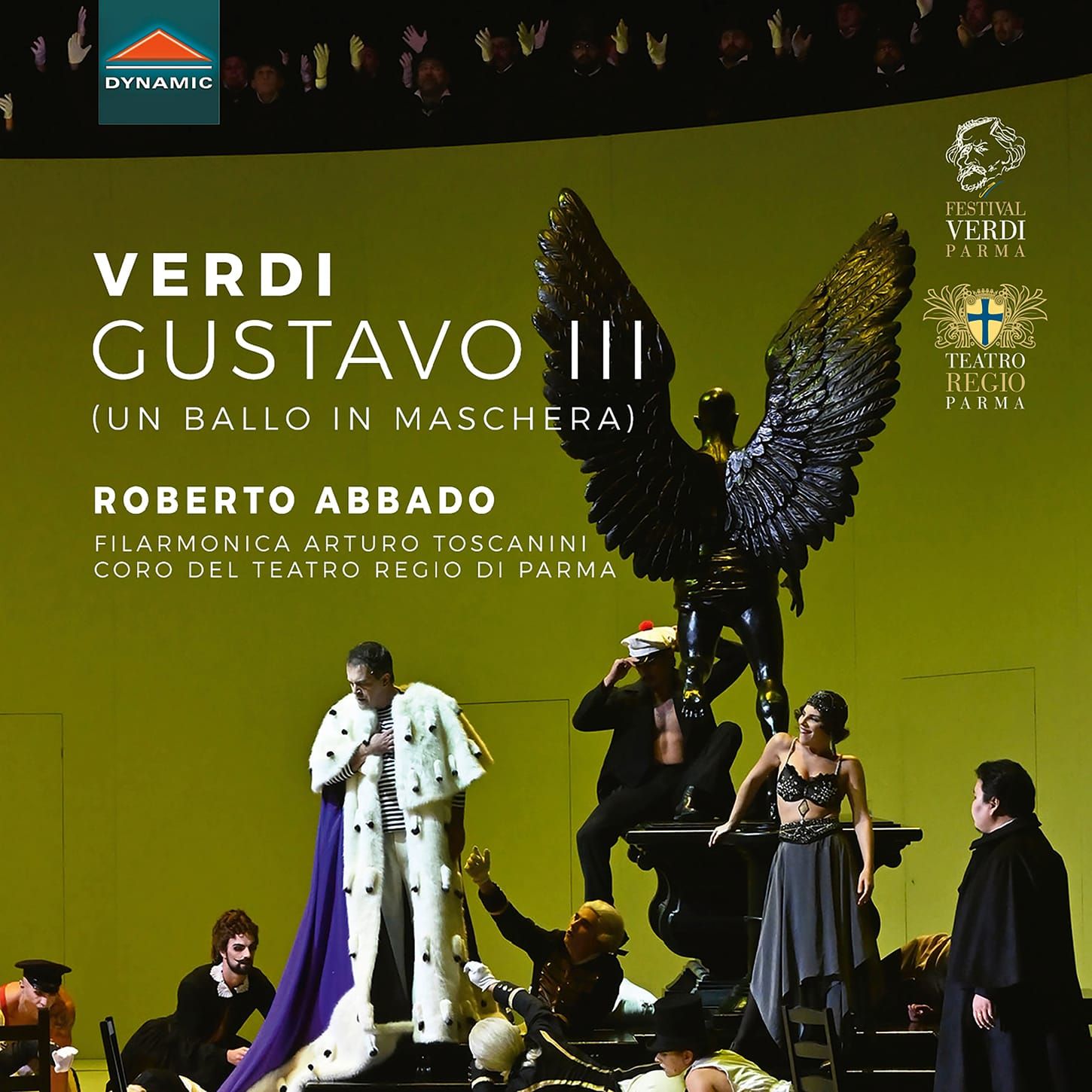
Gustavo III was written for the Teatro San Carlo in Naples. Gustavo III by Eugene Scribe was the chosen subject (1833), a play about the assassination of the King of Sweden in 1792 by noblemen led by Jacob Anckarström. But the theatre's censors didn't half censor - and Verdi broke his agreement.
Further censorship racked an attempt at Rome, but it debuted there, eventually, in February 1859.
Un ballo in maschera marks the end of Verdi's self-styled "galley years". What we have here is an attempted reconstruction of the original via the skeleton score Verdi took to Naples, as well as an earlier sketch (called Gustavo III). The preludes to the first two acts, and the baritone aria in Act III differ, but much is the same as the score we know and love. The reconstruction was done by Philip Gossett and Ilaria Narici. Basically, the libretto of Gustavo III in its Roman form is superimposed on Un ballo in Maschera, to highlight the original Swedish setting. There are various modifications, too. As Gossett says,
The theatre is a place for playing, in the highest sense of the word. Therefore, allow us to play
Conductor Roberto Abbado puts it differently. This is ...
... the fruit of a philologically supervised operation, where the integral text of the first libretto presented by the composer in Rome is 'inserted' in the score of “Un ballo in maschera,” in the critical edition by Ilaria Narici
So 100% of the orchestral part is intact; 99% of the vocal. It is therefore the opera Verdi wanted Rome to hear.
Gustavo III is a "starker and harsher libretto," in Roberto Abbado's words. The staging is from the Teatro Regio di Parma as part of the Verdi festival there. It was to have been Graham Vick, but his death in 2021 meant it was Jacopo Spirei who took over, with designer Richard Hudson. A tomb-like statue is prevalent, perhaps a pre-echo of Gustavo's death; colours are muted throughout.
Here's the promo video, which gives an idea about the staging:
Jacopo Spirei talks about his production here (Italian-only) .
The production does include references to Gustavo III's homo/bi-sexuality, both in the chorus and via the trouser role of Oscar (the King's page, brilliantly sung and dramatically convincing by Giuliana Gianfaldoni). But what of the singing?
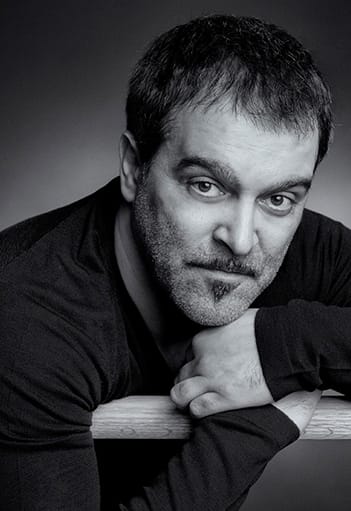
The star is Anckarström (given on the documentation as "Ankaström"), the Mongolian singer Amatavshin Enkhbat, absolutely commanding, especially in the third act, where the staging (two singers, facing outwards) belies the emotions within.
His aria, "Alla la vita che l'anide" is beautifully done. Here's the sound-only version:
Anna Pirozzi's big scene at the opening of the second at is superb (she debuted this role in Turin, and sings with real authority here). Here's a video of this from her YouTube site, but obviously it is much better on the DVD/Bluray:
Amelia's prayer is beautifully done, too.
It's Prozzi vs Pretti though - tenor Piero Pretti as Gustavo III, an assumption I find better than some of the critical reception I have seen for this performance. He has a sweet top that can open out nicely, and the agility for the role, too. Yes, there is the occasional sense of strain, but overall, it works for me.
Anna-Maria Chiari's Ulrica is deep and resonant; try “Re dell'abisso”; this is clearly Ballo/Gustavo's Azucena, beyond doubt.
Roberto Abbado conducts commandingly - and pliably, when required. He is markedly dramatic in the opening of the second act, just as the music demands. And he is superb at ensembles, which tend to be well-staged (try :Ogni cura"). A pity there is a moment of the Ministry of Silly Dances in the party chorus, though.
For all the small quibbles, this remains fascinating, the performance fully saturated in Verdi's world.
Opera Holland Park's first revival of their 209 production of Un ballo in maschera opened yesterday (July 25); a review will follow next week.
As a parenthetical excerpt, here's Zdeněk Otava in 1955. This is from a 2 CD + DVD set on the Czech Arco Diva label, and it's "Eri tu" sung in a Czech translation by Otakar Smrčka. The Prague Radio Symphony Orchestra is conducted by Rudolf Vašata. Some of the other opera excerpts are not as fine (but there is much Czech repertoire on the set that is valuable), but this is worth hearing for Otava's lovely sound and clear understanding of Verdi:
;
The DVD contains a sheaf of supplementary excerpts, a photo gallery and a pdf file.
This Gustavo III can be found on Amazon on CD here; on DVD here; and on Bluray here (there is only 2p difference between bluray and DVD in price!). The Supraphon Otava set is available here.