
Pairings: Sacred Works by Michael Praetorius and Schütz
A remarkable disc: don't hesitate if this repertoire appeals!
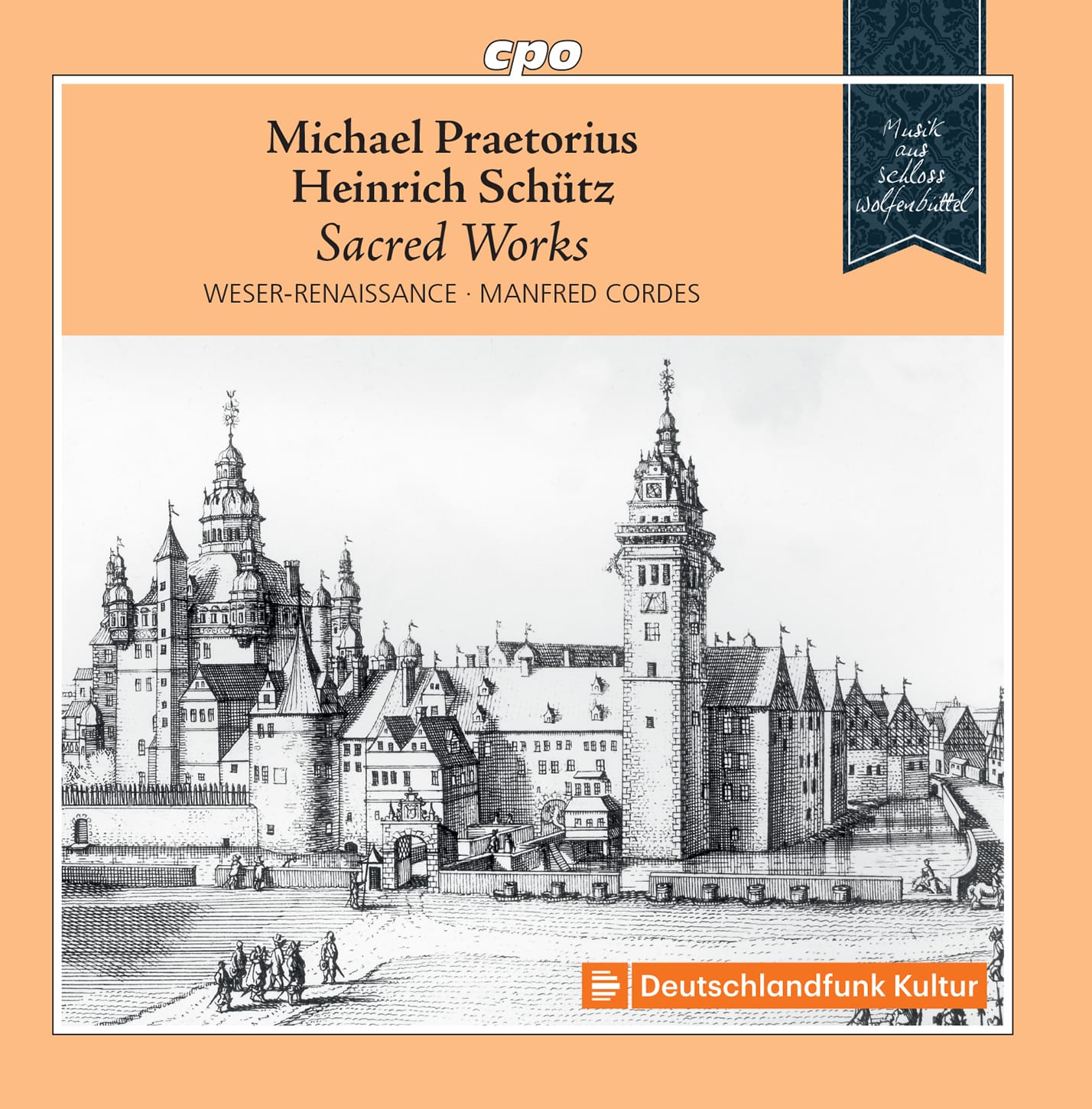
This is Michael Praetoius (157101621), by the way, not Heironymous. Settings of the same text are juxtaposed against each other throughout, one by Praetorius, one by Schütz.
Praetoius and Schütz's parallel setings of the penitential psalm Ach, mein Herr are first up. Praetorius' dates from 1619. It shows evidence of the Italian style in its fluidity (although Praeorius never actually went to Italy, the musical currents were filtering across), nd moves towards Affektenlehre in its gestural demean:
The two settings of Psalm 6 have "text by" the composes, so are slightly different (as one can see by the lines "Ach mein Herre, mein Herz" as against "Ach Herr, ach Herz, straf mich nicht in denim Zorn"). Three sopranos chase each other in Praetorius' setting above, which enjoys a spatial aspect (the sopranos here are Jessica Jons, Magdalena Podkoscielno, and Erika Tandiono). . The passages in similar motion are just as impressive as the coutrapuntal ones, though; and Paetoius evens in sudden tempo contrasts as well as textual ones. The addition of brass to the final stanza makes for a climactic effect.
Schütz's response to the text (SWV 24) is explicitly polychoral: this composer very definitely visited Italy, and was influenced by the music at St Mark's, Venice. The effect is more heiratic, more sombre; Praetorius emerges as more joyous. Here's Schütz:
Once the ball is rolling, cpo present two works by each composer after each other, one in response to the previous piece, one seting up the next juxtaposition. So after Schütz's Ach Herr, we have Das ist mein lieb (from Psalm 116), followed by Praetorius' settinsg. Both come from the Großmann collection (1623), which contains some 16 settings of this psalm. The booklet notes ae right that in its fluidity and exuberance of imitation, Schütz's SWV 51 sounds like a sacred madrigal. It is performed here by five solo voices, superbly, enabling dissonant clashes to register with full effect:
These ae by some way the longest woks on the disc: 12"11 and 14"34 respectively. Praetorius' score allows for optional strings, which are utilised hee in stark contest to the bare vocal sonoities of the Schütz. It is consistency beautiful, Praetorius 'imaginaion seems to know no bounds:
Praetorius's turn to go first, with Aus tiefer Not schrei ich zu dir (after Psalm 130). There is some beautiful close imitation between voices, and the addition of instruments to the texture is most effective0). Clarity is perfectly maintained; in contrast, Schütz's setting (SWV 25) is maily homophonic, with some wonderful. scrunchy dissonances. The fabulous arrival at "Israel," and its repetitions is most memorable. The setinngs are as day and night, each highly beautiful in is own way:
Praetorius' Nun lob mein Seel den Herrn is from POLYHYMNIA (1619). Weser-Rennaissance employs an instrumental "choir" (a choir is an option sanction by the score). The performance her is one of real grace:
Including the insurmenal layer, Schütz's setting of the same stenches o full 18 parts. Thr result is more of a tapestry of lines, with the instruments adding a "glow" to the chorales. In contrast, there are buoyant hymn passages, the whole a nice complement to the Praeorius:
Finally, Verleh uns Frieden gnädiglich. The first setting is from Schütz's Geistliche Chormusik and was written during the Thirty Years War. There is a battaglia-like note repetition at the line, "Der für uns könnte streit" ((Who can fight for us). Praetoius' setting, which ends the disc is markedly more hymnic: presented in a 17-part texture, the chorale is heard against single-line statements of the upper line (here, sopranos). Fittingly, this was re-used in Praetoius' Erhalt uns Herr bei deinem Wort, a "martial hymn" that placed the tune in combination with another that traditionally ended a church service. Here, the "Amen" closes the disc: and what a disc!.
The fuller setting ws eroded by the present rites, also on cpo, on the disc Michael Praetorius: Lutheran Choral Concerts. Here it is:
A remarkable disc: don't hesitate if this repertoire appeals!. The disc is available at Amazon here;