
NYO Collide: film, ballet and opera
Joe Hisaishi Howl's Moving Castle: Merry-go-Round + Cave of Mind
Wagner Tristan und Isolde: Prelude und Verklärung
Prokofiev Romeo and Juliet: excerpts
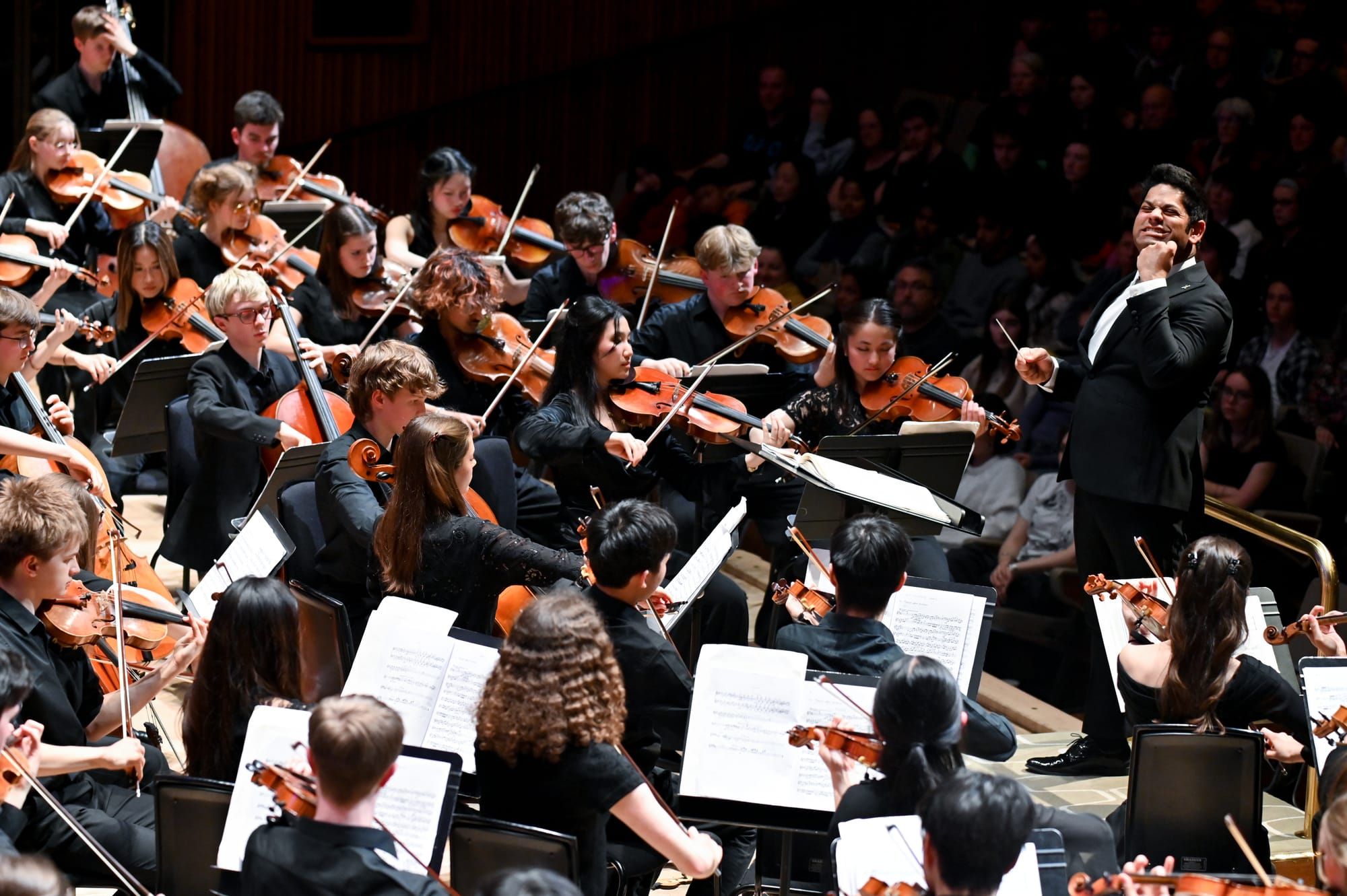
The National Youth Orchestra's Festival Hall concert (following on from the Bridgewater Hall in Manchester two days earlier) brought fascinating programming and the orchestra's characteristic cornucopia of talent.
But actually none of that drew me to London's Southbank: the appeal was actually the conductor, Alpesh Chauhan (OBE), whose Tchaikovsky recordings on Chandos have been so uniformly impressive. He did not disappoint, and neither did his players.
The posts on Classical Explorer are here (includes The Tempest and Francesca da Rimini) and here (includes Fatum, Hamlet, and Capriccio italicn)
Each piece was introduced by a member of the orchestra. After a highly choreographed walk-on (to Raye and Chaka Khan, apparently, balanced by Jacob Collier's Something Heavy as encore),the inspired idea of Japanese film music by Joe Hisaishi: the Symphonic Variation, "Merry-go-Round and Cave of Mind" from director Hayao Miyazaki's 2004 film, Howl's Moving Castle. Howl is a wizard, one of two main characters; the other, Sophie, falls in love with Howl, but appears for much of the film (under a spell) as an old woman. Shades of Zauberflöte?
Here's the trailer for the (animated) film:
The NYO's performance was appropriately bright and garish. The main impression, though, was the sheer discipline of the performance. The music takes in both dance and introspection (and a wonderful moment for piano solo, here by Jerry Liu). Some of this music does sound as if it should as if it should be scored for military band, admittedly, but there are also some real felicities of orchestration in here: and some fine trumpet work in this performance!.
Here's the RPO:
Wagner is a big ask for young people, but one the NYO has never shied away from. And a rather nice parallel: just as the Hisaishi takes music from the film's opening (the waltz, “The Merry-go-round of Life") and the end (the finale, "Cave of Mind"), so the Wagner makes beginning and end of his huge Tristan und Isolde: the Prelude and.... well, the end is given as "Liebestod" here, although it is better really described as the "Prelude and Verklärung" (Prelude and Transfiguration: remember, Isolde dies, 'verklärt," plus Wagner himself used the word "Liebestod" more as an idea, referencing the concept of "Love in Death"; see also the Norton Critical Score ,New York: W. W. Norton & Company, ed. Robert Bailey).
Rightly starting from silence, the music grew organically. If in the Hisaishi, we saw Chauhan's exact beat, here we saw how that is melded with expressivity, inspiring his players to a maturity well beyond their ages. Chauhan did keep the Prelude moving, that sense of movement defined not just by tempo, but also by linear awareness. String ascents were so together, and yet also beautifully directional. The opera's end had the most beautiful phrasing, brass perfectly balanced at the climax. Again, fairly brisk, but undeniably powerful.
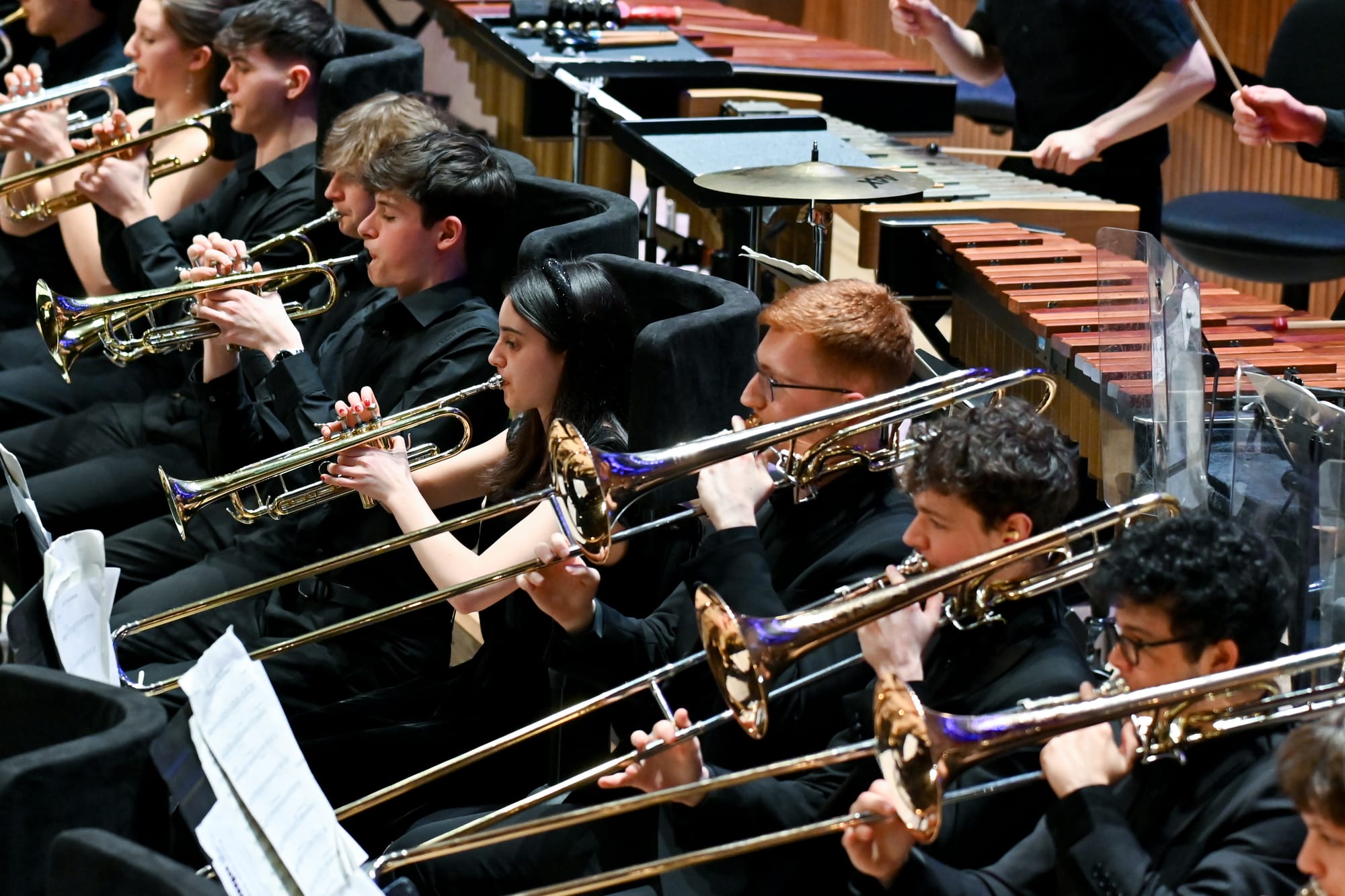
A vast sequence of 16 movements from Prokofiev’s ballet Romeo and Juliet followed the interval, Chauhan's own selection follows the action beautifully.to give a real sense of narrative. The sighs of the opening Introduction (Allegro assai) were beautifully done by the NYO strings. Virtuosity was here in spades, too, while lightness suffused "Young Juliet" and "Public Merrymaking" (themes thrown lightly across the orchestra in the latter). The famous "Dance of the Knights" had real drive, not to mention perfectly-balanced brass.
This wonderful tale held some beautiful moments, too: there is a brilliant principal trumpet here in Chrisopher Gibson, while solo strings were exceptional in Prokofiev’s gossamer strands. Occasionally high strings felt harsh up top (but in fairness, I was placed in the stalls overhang, which blunts the sound, shaving off harmonics mercilessly).
A colour-shifting organ helped the dramatic story-telling (blood red tells its own story immediately), but the drama was all in the orchestra, the "hammer-blows" of Thibalt's death visceral, while at other times menace creepily lay in the shadows. The colours were a nice touch, but it was Chauhan's direction and the excellence of the NYO that mattered, the final intense string writing, a lost cousin to the final movement of Tchaikovsky's "Pathétique" symphony, crowning the concert.
As to Alpesh Chauhan, his own movements are never superfluous: they are for the musicians, they are for the music. The members of the NYO could not ask for a better role model, and the results spoke for themselves. A fine evening.
Photos: Chris Christodoulou