More Wozzeck(s): after Gardner - Boult and Graf
A timely post, after the weekend's Southbank performance of Wozzeck.
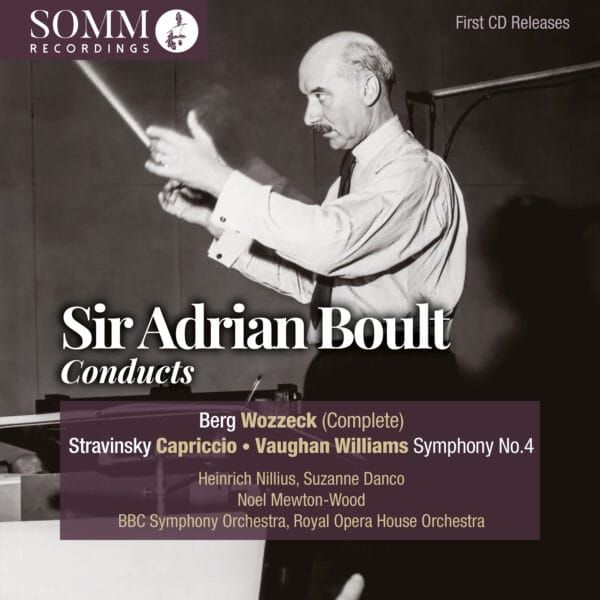
Sir Adrian Boult conducing Wozzeck might certainly cause a double-take. What we have here is the second ever performance of Berg's Wozzeck in the UK - Royal Albert Hall, London, on March 26, 1949 (Boult conducted the premiere 15 years prior to that, again a concert performance). The first full staging of Wozzeck in the UK did not happen until 1952.
After a rather odd beginning (lots of noise, out of which comes the opening orchestral gesture), we hear Parry Jones's fine Captain. After that start, though. there is a laser-detail to the orchestra. But it's low voltage at first - when the very obvious depiction of wind in the woodwind comes in, the music seems to take off - the elemental portrayal finding its echo in the orchestra's underlining of the Captain's image of a "Maus".
It is strange that Boult hurries through the Captain's quoting of scripture (Berg changes the scoring to quasi-ecclesiastical on those occasions) - he moves through Wozzeck's "Lasset die kleine zu mir kmmen," too, . Even "Wir armer Leut''" has propulsive momentum on its first appearance (it recurs as a sort of Leitmotif in the opera_.
The BBC SO is on fiery form, though - the interlude between scenes one and two of the first act is white-hot, and there is some great brass playing in and around Andres' song (Das ist die schöner Jágerei"). The juxtapositiong of the voices of Andres and Wozzeck (Andres singing the folk song, Wozzeck hallucinating about freemasons and more) is stark: Frans Vroons is simply superb as Andres. And how Sir Adrian realises the gesturism of the brass in this second scene; and again brass are superb in the transition between two scenes, where Boult makes an astonishing timbral equivalence between trumpet and clarinet in their "reveilles":
The amazing Suzanne Danco sang the role of Marie, Wozzeck's wife and soon-to-be mistress of the Drum Major. The latter's off-stage band, announcing his presence as he passes in the street, is brilliantly managed. Here, Boult creates an Ivesian cacophany against which Marie lasciviously shouts "Was en Mann! Wie ein Baum" (What a man! Like a tree). If the interactions between Marie and Margret seem srushed, Danco's song of "Soldaten" (and her admiration thereof), is incredibly strong. Boult realises the stark juxtaposition of the Drum-Major and Marie's baby in the room ("Ach, mein Bub); we even hear the notated, slowing horn trill to perfection. It is clear there is, as Berg so beautifully depicts in the Bible reading, a massive struggle going on for Marie; by the time we get to act I scene 5, lust is clearly winning.
If Walter Widdon is not as fully engaged as the Drum Major in the erotic tussle of this scene, there is no doubting Marie's abandon in what is surely Berg's nod to Leonore's big reveal in Fidelio (Wozzeck: "Rühr mich nicht an"; Fidelio: "Sieht heir sein Weib!"). It is Boult and Danco that make the scene dramatically believable. And how Boult understands Berg's "counterpoint" (the relationship of indicated Hapt- and Nebenstimmen). The close of act I is perfect, and a perfect pre-echo of the close of the opera itself:
The second act begins fast, almost flightiily. The scene is Marie's Room, Lust now wrestles with guilt - she starts admiring her earrings (a gift from the Drum Major), but Berg's angular lines indicate disquiet, as do Boult's speeds (that poor solo violin!). The trombone and lower brass canon are more like brass chuckles, as Wozzeck enters. Heinrich Nillius' Sprechsgesang is near-perfect, and how powerful his statement, continued by a wall of brass of "Wir arme Leut'".
The transition is genius from Boult, the BBCSO changing like chameleons as Berg juxtaposes gestures of very different ilks within the space of just a few bars.
The Captain and Doctor are caricatures against the fuller-formed personages of Wozzeck and Marie - but it is Doctor and Captain who sow seeds of doubt in Wozzeck's mind when they encounter him in the street in the second scene of the second act. Otakar Kraus' accuracy is out of this world, possibly the best Doctor I have heard. I'm not sure I believe Danco's "Better a knife," but when Wozzeck repeats it, it is clear the seeds of her own demise have been sown:
The orchestra is superb again in the Espressionist-fantastical move from scenes 2 to 3. Heinrich Nillius's Wozzeck against Danco's Marie is a superb combination here. I wonder who the solo viola was, inviting in the clarinet and bassoon echoes leading into the fourth scene? It's fantastic playing, anyway.
Otakar Kraus really is luxury casting as the Doctor (Herr Doktor); and how Boult has their initations (Wie die Natur kommt) appear as Expressionist licks of flame. The Doctor's diagnosis ("Aberratio mentalis partialis, zweite Spezies! ") is brilliantly delivered:
The final act is a sequence of five "Inventions" on musical parameters (scene 4 is an invention on a hexachord, for example: the interlude between scenes 4 and 5 is "Invention on a Tonality", so is very much of its time). Danco's Bible scene (Scene 1, "Invention on a Theme") is extraordinary, her "Herr Gott!" a real cry from the heart, the strings and woodwind of the BBCSO beautiful, Boult ensuring the part-writing really "sounds".
Scene 2 is the "murder" scene and is an invention on the note B. The tragedy is powerful here, if not visceral (try Mitropoulos in New York - not the most accurate account, overall! - for the most blood curdling murder ever recorded):
Berg's asks for massive crescendos on B - well done here by Boult - before the bawdy tavern scene erupts in maximal contrast, complete with pub piano. This is the invention on a rhythm (Berg uses the idea in Wozzeck, not only of main and subsidiary voices - Haupt - and Nebenstimmen, but also a Hauptrhythmus (Main Rhythm, literally), a rhythm which takes on not only a certain insistence, but also takes on a structural significance. All of this had ramifications further down the century in, for example, Pierre Boulez's integral serialism.
Boult's shaping of the Tavern Scene is superb - the idea of the crowd as a groupthink that turns against Wozzeck is remarkably judged.
That invention on a hexachord is Wozzeck's "mad scene" in which he goes searching for the knife (you hear "Das Messer" a lot); interestingly, Boult brings out dance rhythms to link it back to the previous scene. Berg's creepy ascending lines are maximally effective here; as are the animal impressions of the woodwind as the Doctor and the Captain: mainly spoken Sprechgesang, this morphs beautifully into the Invention on a Tonality, D-Minor (surely not coincidentally, the key of Mahler's Ninth Symphony). The lower brass' statement of the "Wir arme Leut'" theme leads inexorably to the crushing dominant-tonic arrival of D-Minor, itself lifted by a glissando straight int the final scene (Invention on an eighth-note moto perpetuo). The children are exceptional: as are Wozzeck's child's "Hopp hopp" (again to a perfect fourth).
There follows a 9-minute conversation between Boult and Bernard Keefe, insightful about the formation of the BBC SO, about rehearsal time, and more.
The gold continues with Stravinsky's Capriccio and the great Noel Mewton-Wood. The ice-cool BBC woodwind are a joy, too; Mewton-Wood's touch is brilliantly dry and staccato. Boult has the complete measure of this piece, and the BBC orchestra is in fine fettle:
Here's the Presto first section:
The Vaughan Williams Fourth Symphony is actually with the Orchestra of the Royal Opera House, Covent Garden. This is famously the RVW symphony with most punch, a "war symphony"; this performance is from a Prom on July 21, 1965. Given that Vaughan Williams was notably irritated by tis idea of a war symphony, Boult conjectured that this was a reaction to the composer's wife's arthritis and its parlous state.
In context here, the dissonances of the first movement (try 2"30-3"00) seem close to those of Berg, although they proceed in a way that, despite its driven nature, remains intrinsically Vaughan Williams. Boult injects real urgency into the performance:
The Andante moderato is fraught and haunting, the finale full of beauty, separated by a fiery Scherzo (woodwind absolutely glinting!), The transfer is excellent here: one can hear every detail. Here's the Scherzo:
The second disc of this twofer is over 81 minutes (the first is a more standard 66)
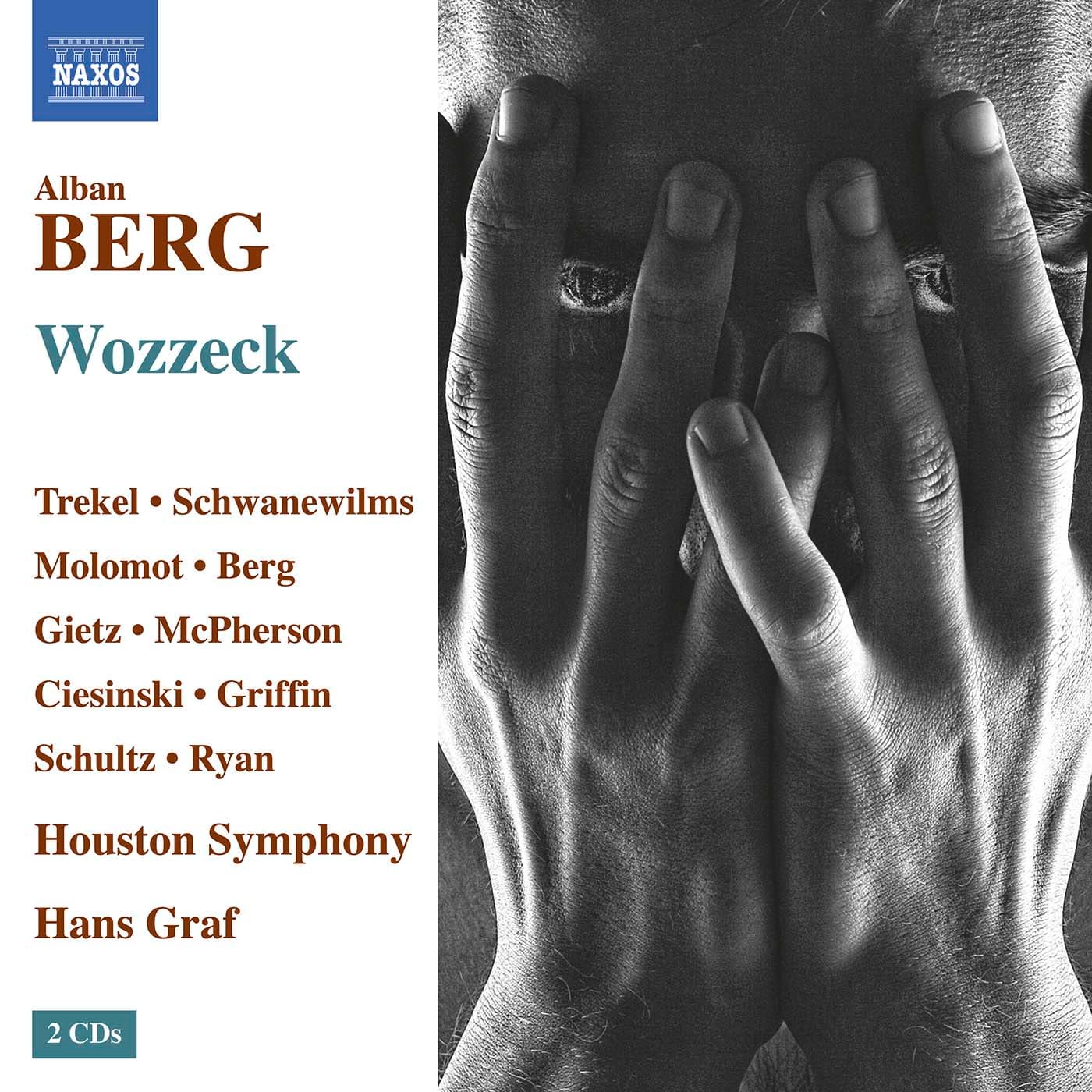
Incidentally, the most recent Naxos recording of Wozzeck, conducted by Hans Graf and from Houston, packs a punch but is beset by balance problems (the off-stage band, the snoring soldiers). But it is worth it for Anne Schwanewilms' Marie, one of the very finest assumptions of this part: powerful, tender, desperate, angry, and so much more. Her voice is capable of infinite shade; against this is a notably nuanced Wozzeck from Roman Trekel (who is also known as a Lieder singer, significantly). Luxury casting to have Nathan Berg as the Doctor, while Katherine Ciesinski is a rightly outrageous Margret (she it is who offers both contrast to Marie and an exteriorisation of her dark side).
The Boult is available here; the Naxos, here (but beware, it is credited with "Carlos Kleiber" as conductor!). Boult iDagio here; Graf iDagio here.