
Dresden's historically-informed Wagner: Musicologist Kai Hinrich Müller in conversation about the Nagano Ring
Authentic Wagner!
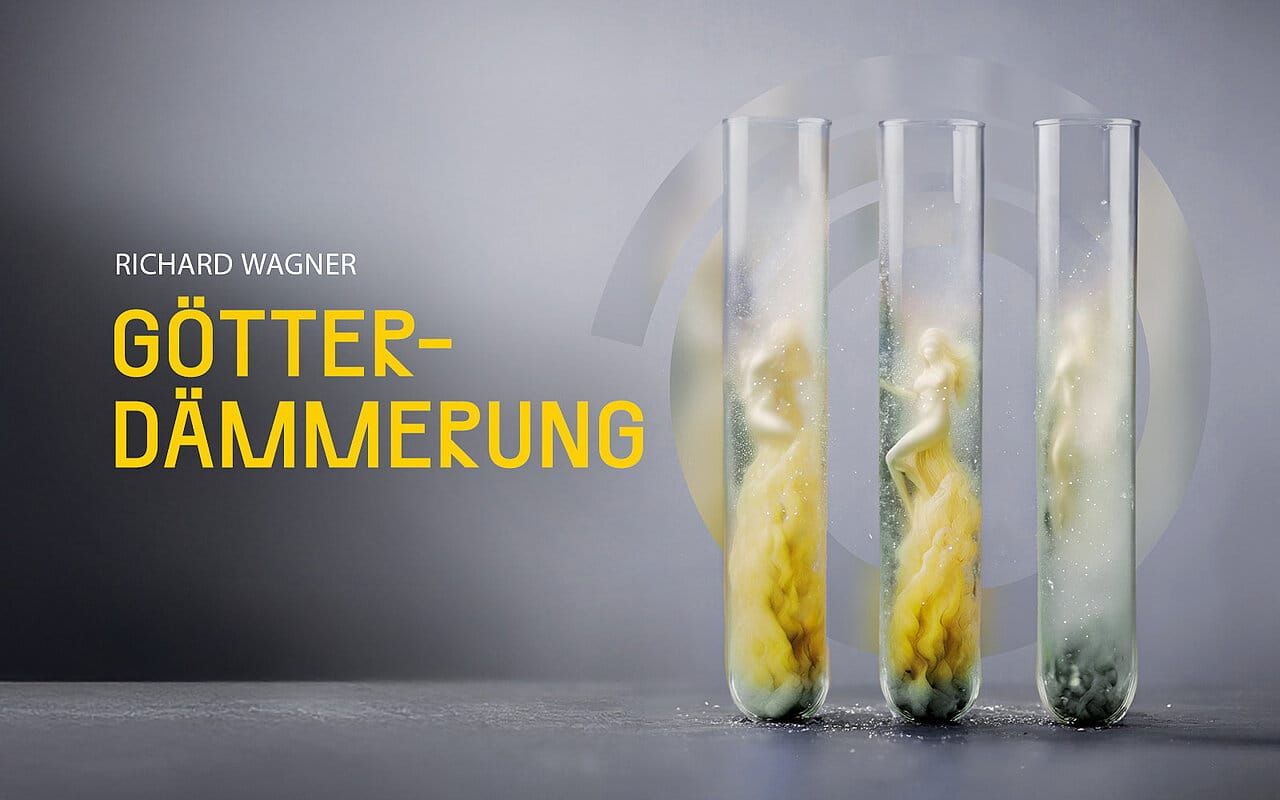
As the end of the world approaches (no, not that one - Götterdämmerung in Dresden, the final part of the Nagano Ring), time to bring out my interview with Dr Kai Hinrich Müller. I will be reporting on the Dresden performance (May 14) for Opera Now.
But first, here's the Dresden Festival's introduction to Götterdämmerung:
This Ring cycle began in 2023 with a concert performance of Das Rheingold and continued in 2024 with Die Walküre, in 2025 with Siegfried is now reaching its grand finale with the Götterdämmerung – a project that is no less than a redefinition of standards in Wagner interpretation. »The Wagner Cycles« is dedicated to a unique collaboration between academic expertise and practice, tackling Richard Wagner’s monumental opera tetralogy. Since 2023, one part of the tetralogy has been re-examined and rehearsed each year in close collaboration with a team of renowned academics and performed in Dresden and on tour through Europe’s musical centres based on an historically informed approach. The result has delighted audiences and critics alike. The concert performance of Die Walküre at the Amsterdam Concertgebouw was highlighted by The New York Times as one of the best classical performances of 2024. The newly-won transparent orchestra sound and the focus on the singers’ treatment of language will also be guaranteed in Götterdämmerung. For the dramatic finale, the specially founded Dresden Festival Choir will add impressive tonal dimensions to this large-scale project.
This is an exciting end to this massive project, of which I have been privileged to see the first three parts. Here's my review of Siegfried.
While in Dresden for Siegfried last year, I was privileged to talk to musicologist Kai Hinrich Müller, who acts as the voice of musicology for the Ring. Müller is saturated in Wagner and the music around Wagner, although as you will read there are other interests there, too!. He was also involved with, as part of the related Musica Non Grata series, performance of operettas at Dresden's Palais im Großen Garten by Amélie Nikisch (Meine Tante, deine Tante) and Rachel Danzinger von Embden (Die Dorfkomtesse): an online pdf of the programme for that event is available here.
I've interviewed many musicians over the years, and this has to be one of the most interesting half hours-or-so I have spent. Dry musicology this isn't - the whole idea of the project is to bring Wagner's music to new life, and the enthusiasm in Dr Müller's full responses is testament to the team's insatiable curiosity.
CC: Could I ask you about exactly what your input to the project is and has been, because you're described as “academic director” of the Nagano Ring and I know your musicological work is centred on Wagner and Musica non grata, from which I remember the Danziger van Embden’s Der Dorfkomtesse and Amélie Nikisch's Meine Tante, Deine Tante. What is your input generally to the project?
KHM: I’m a musicologist, and the whole idea of doing a kind of historically informed performance practice really came, I think, at the end of the year 2017/18. It was Kent Nagano’s idea. I joined the team as a researcher. We definitely need, because it's Wagner, a whole armada of researchers.
I'm the co-ordinator of all the academic work; my habilitation thesis was on Wagner's prose writings. My PhD book is about the history of the early music movement, kind of first historiography of the movement, from the 1850s till year 2010, so about 160 years, starting with Mendelssohn up to guys like Concerto Köln, Akademie für Alte Musik.
And what input did Wagner’s prose writings have on your thoughts?
So we have, at moment, more than 1000 pages published on Wagner performance practice, Wagner's writings and we have also have a speech scientist from the University in Halle, and an expert in the historic way of singing. We also have Clive Brown for all matters of string practice, Frank from University of Bayreuth and Michael from Brown University. We presented a kind of keynote lecture on Thomas Mann and the trouble with Wagner's anti-Semitism. It's how to deal with Wagner in the years 2025/6.
And then listening to Wagner! But I think if you want to deal with Wagner, you have to be kind of schizophrenic. We learned it in the whole Wagner project and in the last three years of the Wagner cycle performances.
[Unfortunately, the monographs thus far to come out of this research are all in German; but who knows what the future will bring!]
And about your Early Music writings? Did the English work in this field (Academy of Ancient Music and so on) factor in?
All of the English-speaking authors were very important for the academic discourse on early music, like Richard Taruskin in the United States concerning a very smart difference between text and the act of performance, and the idea that the sense of historically informed performance practice is to bridge the gap between what was written in the texts, and what you could actually hear. This was one of the main ideas of Richard Turaskin, and also Nicholas Kenyon, or John Butt (his 2010 Playing with History is an amazing book).
This brings to our next question, which is the use of the instruments of the time?
You've got gut strings, smaller-bore brass, wooden flute, and we play at A = 435 Hz, because Wagner owned tuning forks in this pitch. And playing at 435 Hz means a lot for the singers, because it's little bit lower than today.
The big thing that I heard just listening to both Rheingold and Walküre was the increased clarity you can hear so much more. Yes, I hope so, not just because of a sort of lightness from the strings, but also because the wind in particular, are all very individual, whereas on in a very modern orchestra, it tends to be more homogenised.
There are many more colours which fit with the different characters of the protagonists. And I think you can delve much more into the world of psychology, if you use period instruments, but it was very hard to reconstruct them, especially instruments like the Wagner tuba, and we're really lucky that we, more by accident, found this lovely Wagner tuba in an archive, I think in Weimar. And one of our horn players, an instrument maker, responsible for the reconstruction of brass instruments.
Wagner tubas are amazing in and of themselves. Bruckner, of course, used them in the Seventh Symphony. And particularly, you know, mixed in with the brass of the time, it makes much more sense …
… and I think our gut strings make a lot of different. Kent Nagano put it well when he said that if you listen to the strings or the oboe, it’s like speaking with the help of instruments.
This makes it easier for the singers, because they aren't overwhelmed.
In terms of vocal delivery, when one goes against a different ‘type’ of orchestra, can the singers do more because of that?
It's another way. I think we have another approach, to bring the text into the voices of the singer. Wagner developed a very simple didactic model. In the centre is first speaking; and our learning was, if we have this right way of pronunciation of consonants and vowels, it's a bit easier to understand the singers, even if your orchestra is loud. This is why every single singer has to work with Wagner's didactic model, which means, first of all, speaking without music, then speaking with music, and then the last step is singing with the music.
You demonstrated that in a Rheingold Werkstatt (workshop) concert, I seem to remember?
This was Wagner’s model. He developed it during his Tannhäuser time, and there's a very good study by him, published as a pamphlet in 1852, Uber die Aufführungspraxis des Tannhäuser (link), and is found in the fifth volume of his writings, in which he developed a very simple idea. It's all about the text. If the singers aren't able to understand the text intellectually, they aren't able to sing it in the right way. But if you go to modern conservatories, first you sing the melody. And then you say, okay, that you are in the right pitch. Now with text …. And this is why Wagner made it another way around, because he was totally into his texts; they were his intellectual baby.
Which leads us naturally to the quasi-spoken delivery in the performance of Das Rhinegold (where it was much more prevalent than in Walküre). What can we expect from Siegfried? And was this part of how Wagner was sung at the premiere? To have more of that spoken delivery?
Well, spoken delivery, I think, was part of our Rhinegold performance, and we want to showcase different aspects of the foundation of 19th-Century opera. So Rheingold was kind of, let's do it Rossini style, because Wagner was inspired by the Italian opera around that composer. A kind of conversation piece [“Konversatsionsstück” was the word Kai used]. And we have the historical metronome markings from the Dannreuther piano reduction, which is in the Royal College in London [Note: Dannreuther founded the London Wagner Society in 1872]. We tried to take these historic metronome markings (unfortunately, we only have them for the Rhinegold). They are unbelievably fast; the singers really have to articulate. Sometimes, we were only able to do it by speaking, and it fits amazingly well.
In Die Walküre, we wanted to focus on the bel canto idea of the long melodic lines, especially in the Siegmund/Sieglinde aspects, Wagner was inspired by the melodic lines of Bellini, for example. And Siegfried is a little bit more about the idea of song, of Lied: the “Schmiedelied,” for example (Forging Song). You will hear a sort of Kunstlied (Art Song) with the help of the orchestra. But no speaking words.
But nevertheless, we aim to be in the middle way between singing and speaking, with the idea of Sprachgesang, which is a sort of “in-between”; in the end, to sing with less vibrato. It's not non-vibrato; vibrato is a stylistic element, and like Monteverdi’s time. or the Baroque time in general, where there was a kind of vibrato, if you want moments of anger, and so on. Vibrato used to be brought in more like a stylistic element. But that means, in the end, you have to have passages without vibrato, because if you have constant vibrato, the idea of stylistic element doesn't make any sense. We identified a few parts where Brünnhilde can sing without vibrato.
That's really interesting about the tempos that you had them for Rheingold, and you're mapping that idea that going forward, but Wagner interpretation, over the years, has got slower and slower, really, in general, which kind of reached its climax with Reginald Goodall.
It's also getting a little bit more mono-dimensional. If you trust in reviews of contemporaries who wrote about Wagner's own conducting, for example, if he conducts Mozart, Beethoven et cetera, they say every two bars, there is a different tempo. Wagner makes a kind of permanent extreme rubato. And I think our generation, or maybe the post-Second World War way of playing Wagner forgot this way of tempo modification, of constant rubato. If you listen to records of great conductors from the early 20th century, like Mengelberg, you can hear this old world way of dealing with tempo, totally linked to the dramatic action on stage.
[Listen to his Meistersinger act I Prelude (where he is billed as “Prof. Dr. Willem Mengelberg”) with the Conccertgebouw Orchestra (no Royal, yet), recorded for Telefunken]:
You mentioned, Mengelberg, but not Furtwängler. Well, I wonder, the big thing about Furtwängler is that he used "tempo modification," as you put it, and yet underneath it was the understanding of the harmonic basis; he was a great fan of Heinrich Schenker, which is all about the foreground, middleground and background and their interactions.
... or maybe, you can listen to Siegfried Wagner conducting the Siegfried Idyll.
[Siegfried Wagner conducts the LSO on an HMV D discs here and below;]
(one of the commentators on this YouTube stream says that Felix Weingartner is faster still on his Columbia LX “Magic Notes” recording with the LPO, which is here and here):
It's [Siegfried Wagner's] in poor quality, but he has an amazingly good tempo modification. It's fast, it's slow, it's loud, it's piano, it's authentic way of interpreting this music. And Furtwängler is one example, but also the early Karajan [perhaps this 1974 Berlin Holländer Overture: starts at 13 minutes in]. And though, I think all of the conductors who had one foot, maybe, in the 19th century and the other in the 20th century - they they were educated with this way of making music,
It’s interesting you mentioned early Karajan, rather than the later his Ring cycle. That's Wagner, almost arranged Karajan. But earlier on …
One of the best Rings in my opinion, is that by Arthur Bodansky. It's fantastic. And listen to his tempi:
Here’s Bodanzky's complete 1937 Met Siegfried, with Flagstad and Thorborg. Schorr as the Wanderer and Melchior as Siegfried: has that cast ever been bettered?!
We don't have historic metronome markings for Siegfried, but we try to develop a kind of historically-informed tempo concept with the help of the markings of Rhinegold, but also with the help of historic recordings. And if you listen to Bodanzky's Siegfried, it’s the most dramatic, heartfelt and moving Siegfried I ever heard. It’s amazingly fast, it’s amazingly slow. The singers are screaming, shouting, whispering, singing. Listen to Mime (sung in 1937 by Karl Laufkoetter), and it’s amazing.
So, in terms of Siegfried and its place within the Ring ... I don't know about in Germany, but it seems to be the least popular part of the Ring in England. Some people call it the scherzo of the ring. Some people say it's too dark and it's too male voice-orientated. How do you see it?
Personally, I would agree with the English fellows.
.. and when I went to Bayreuth, unfortunately not to hear Wagner (Bayreuth Baroque at the Margravial Opera House, for Porpora’s Ifigenia in Auliide: see my review in Opera Now), I got to do the tour of the opera house at least, and you see all the pictures in the garden, and it's all very open about who was the Nazi sympathiser, the anti-semitism. Everything is very, very open. Is this a German sort of embracing of history and owning it so that you can move forwards as a collective?
Well, I think it's necessary to deal with historical facts, especially in a time where “alternative facts” are around. Michael Steinberg wrote in his fantastic book, which is called The Trouble with Wagner, you really have to deal with the ambivalences, and I think we have to do the same with guys like Richard Strauss, Carl Orff, or even Astor Piazzolla. So, I think it's necessary to deal with the historic persons and figures, not to cancel them, but to bring them in historic context, and to discuss maybe their worst sides, and the impact of that on their music. This is why we do these big programme brochures, and critical essays.
You talked about the contradictions within Wagner. For me, the big, if you like, contradiction, if that is true about the anti-semitism is that Parsifal, which was just done very recently to the time of this interview at Glyndebourne, is to me, sort of super-religious. It's very spiritual in the sense that it takes in it's very egalitarian: it takes in Buddhism; it takes in Christianity; it takes in Hinduism, even, in reincarnations of Kundry (“Herodias warst du,” sings Klingsor; “Gundryggia dort, Kundry hier”). And also Rosicrucianism and Freemasonry, via some of the rituals that are there, and that stands in great contradiction to the depictions of Mime and Alberich and the Nibelungs, the “lesser Volk,” if you like in the Ring, which could easily be mapped onto the Hitler's ideas of blacks, or Jews, or non-Aryans.
Maybe one should also add that Michael shows in his book, there's a change in the Jewish communities from the 19th- to the 20th-century. One of the most popular names for Jewish kids was Siegmund. And even in the Theresienstadt ghetto, I found in autograph books the quotation of the beginning of Parsifal, like in Prague, or, I think in 1904 there was a Yiddish Parsifal in New York [Note: it was Spring 1904, so Kai was right: see this article by Daniela Smolov Levy, Grand Opera for Yiddish Speakers in Early Twentieth-Century America! Who Knew?!], and Cosima Wagner never "allowed" that performance. But in New York City, there was a kind of culture of translating music into Yiddish; and then there was a Yiddish opera performance. It's hard to believe.
Back to the Dresden Siegfried; you're using a boy treble as the Waldvogel (Wood Bird), not a soprano. Where does that idea come from?
We are not the first ones who do so. It’s Wagner’s idea. In the score, he uses a female voice. I think it was a kind of more pragmatic reason, because it's very important to hear that voice, and he hadn't got a very good boy at the time.
What about a staging of this Ring? Or the smaller works? Die Feen (The Fairies) or Das Liebesverbot (The Ban on Love)?
We only do concert performances, but this would be a very good fit for our musical project: something for the eyes, for the ears, and for the heart.
After the Ring, there are many more pieces to be explored, Parsifal, or maybe the early operas, or maybe Richard Strauss - it’s the same world, the same style, so why not start a Strauss cycle?
Why not indeed ...