
Letters from Paris: Alexandra Whittingham's guitar travelogue
there is so much to admire here, not least Whitingham's own excellence
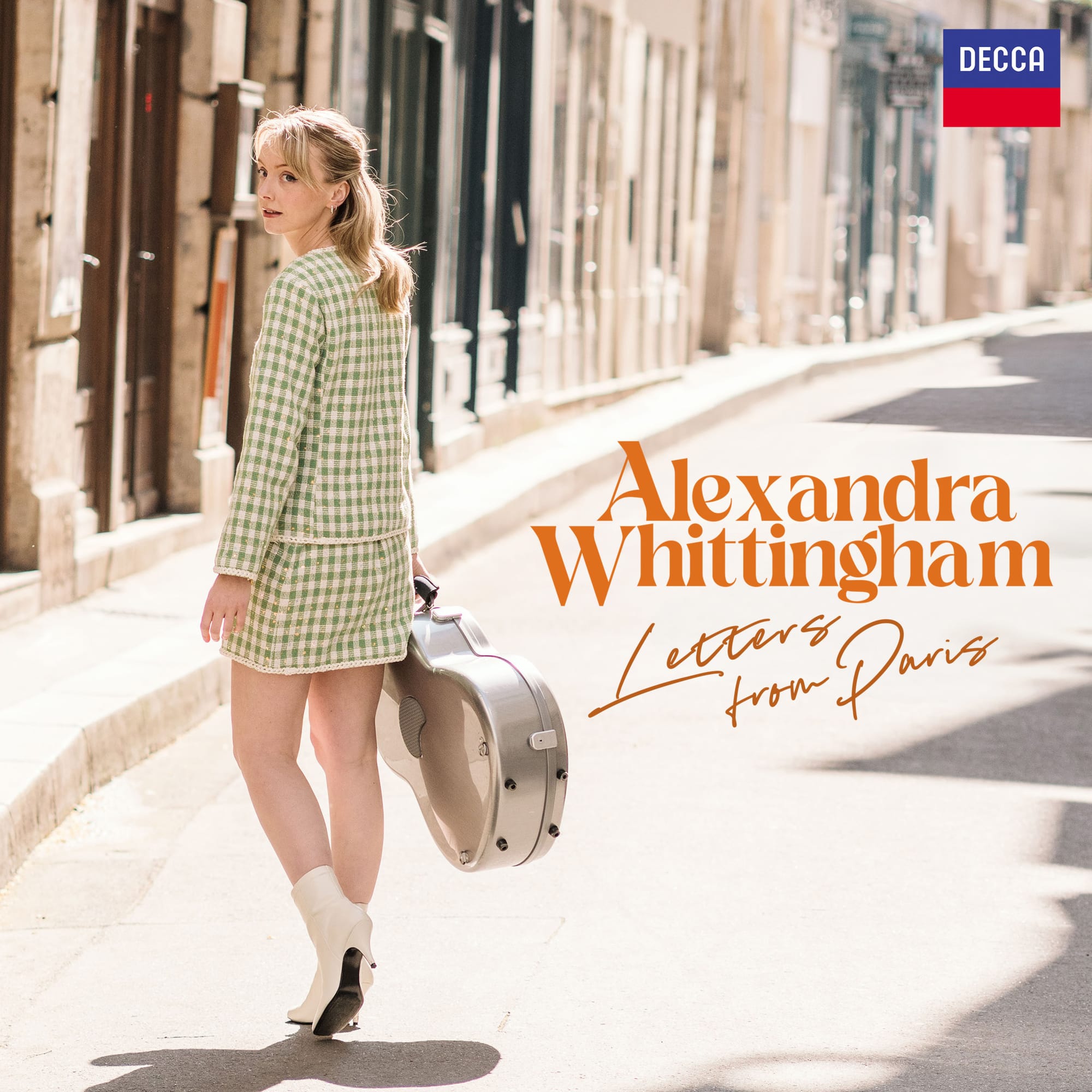
Guitarist Alexandra Whittingham's new album Letters From Paris was released on 3 October 2025 on Decca Classics, a celebration of France and French music.
Very much a young artist of he time, Whittingham has more than 65 million views across YouTube and social media, and is perhaps most famous for her viral video revealing the Classical roots of the Nokia ringtone (viewed over 12 million times on Instagram alone). Here's the YouTube short:
Here on Classical Explorer, we met Whittingham once before, with violinist Esther Abrami in live performance a London's Fidelio Café.
Decca's accompanying notes explain the basis of Letters from Paris:
Alexandra has a strong personal connection to southwest France, where her journey as a soloist began. At 19, she gave her first professional recital at a guitar festival in the village of Puy-l’Évêque. Her parents joined her, and the trip became a special family holiday. They fell in love with the region and later bought the presbytery next to the church where she performed. Since then, Alexandra has spent a lot of time in France and built close ties with the local music community, including the guitar and cello festivals in the Lot region. She recalls: “France is where it all started for me.”
.... and Whittingham herself says:
I’m incredibly excited to release this album. This is a project I’ve had in mind for so long, and it’s been such a lot of fun being able to realise these ideas whilst collaborating with such great friends and musicians. I’ve always loved pairing music by popular household names alongside composers that might be less well-known outside of the guitar world, and this record does exactly that.
The disc begins wi th an arrangement fo guitar of La Foule, which rises nicely, and naturally to a climax. It's also reflective of Whitingham's eminently musical, and clean, playing:
There is a pronunced melancholy to Whittingham's performance of Edith Piaf's La Vie en Rose, which in is texturally sparse induction takes it to.place of emotive desolation:
Debussy's flaxen-hailed girl works surprisingly well, configured to a more fragile space; although on guitar, the spread chords cannot approach a piano's richness. . The disc is most successful in the specifically Paris-centric Mademoiselle de Paris, which seems to capture the sophistication and mystery of this great city, and in which Whitingham is joined by the Carducci String Quartet and Theo Sayer on double-bass (the Carduccis reappear in a rather saccharine arrangement of Charles Aznavour's She later on, which obviously 'as no voice (sorry)):
This is a "Alexandra Whittingham and friends" album: Magarita Balanas joins her in a performance of some Fauré (a song without words, Op. 17/3); but Whittingham seems most at home while playing on her own, able to spin the stories entrancingly. Try Mannat's Hymne d'amour:
.. or the more animated waltz by Hahn: note that Decca's documentation is wrong here in listing it in the singular (“Première Valse”) and then in seeming contradiction stating it is No. 6. It is no. 6, and the Premières valses were published as one set in 1898 by Heugel & Sons:
The most successful of the Whiingham + guest(s) is Hahn's L'heure exquise, in which Jess Gillam's soprano sax sings hauntingly and unforgettably. For me, this is a real highlight of the album:
Satie fits the bill ather nicely (a Gnossienne), perhaps taken just a touch quickly and missing the elusive mystery of this composer of gnomic miniatures. Chopin, too, loses some of his core signature voice in arrangement (the A-Minor Waltz, Op. posth), Far more interesting is Danse rhyhmique, muted in tone, harmonically masterful and beautifully performed. This is by Whittingham's guitar heroine, Ida Presti:
Lutyens' Danse Souvenance is another highlight; a shame the disc ends with Voilà, here for cello and piano, that doesn't quite catch the Gallic light, included in arrangement by Whiingham's former teacher Michael Lewin; the song itself, by Barbara Pravi, won second place in the 2021 Eurovision song contest. Whittingham certainly does not give me the shivers up the spine Pravi herself does:
Clearly an act of love fo Paris from Whitingham, there is so much to admire here, not least Whitingham's own excellence, both musical and technical and the superb Decca recording. Some caveats aside, this is a highly enjoyable release.
The disc is available form Amazon here.