
il Pomo d'Oro Choir at Wigmore Hall: Cavalli's Missa oro Definctis +
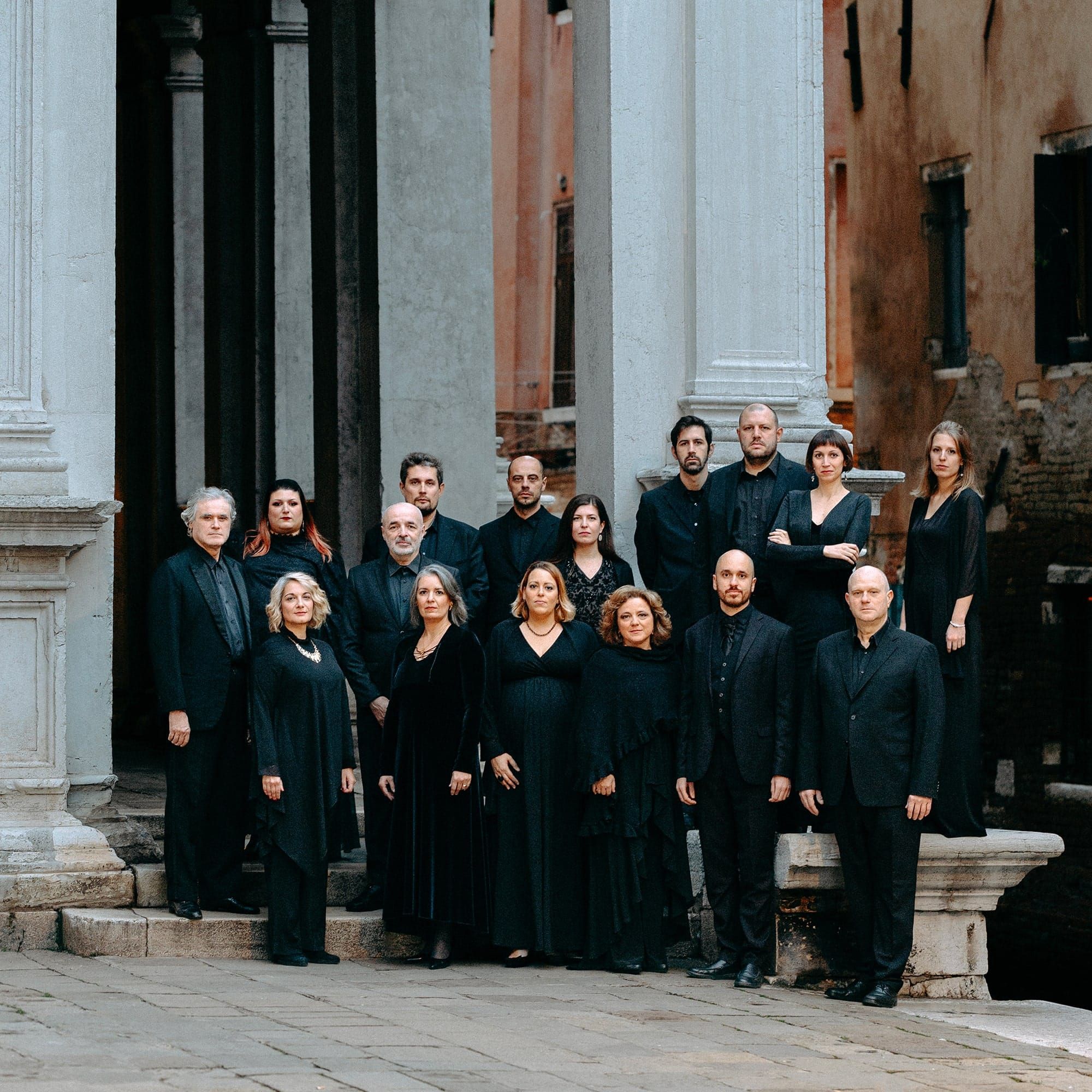
This was a feast of polychoral music inspired by music for St Mark’s Basilica in Venice from the choir of il Pomo d’Oro, to a packed house. il Pomo d’Oro is an interesting choir, fervent all it does with an outward-facing, bright sound. Giuseppe Maletto is a fine conductor and choir trainer: these were most convincing, and cogent, interpretations of this repertoire.
The evening began with solo organ, though: Denial Perer on portative organ for Andrea Gabrieli’s Intonazione del primo tono, a piece that begins chordally and becomes ever more elaborate, and even exultant, so typical of this composer (try also his super-florid Fantasia Allegra from the 1596 print, Canzon ariosa). The Intonazione is from a 1593 volume containing eight pieces by Andrea Gabrieli, and 11 to Giovanni and are short pieces intended for liturgical use (the give the pitch to the singer(s)) and here one can hear how a solemn opening almost morphs into a toccata via passagework exchanged across the hands. Given that Andrea was an organist at St Mark’s, Venice, his expertise in writing is unsurprising.
Seven voices for Psalm seven, next: Andrea’s Domine Deus meus of 1587, performed in a semicircle bookended by sopranos. Performed with organ (it is not always, but it seemed apt after Andrea’s Intonatione), it offers a formal parallel to the organ opener, beginning simply and becoming ever busier; but this time in terms of added lines. Even achieving a certain exuberance in its later stages (an almost sprightly ‘ab inimicis meis’: ‘Decidam merito ab inimicis meis inanus,’ let me deservedly fall empty before my enemies).
It is interesting to hear this piece in various ways: at Wigmore it was with organ, while on Tactus below it is unaccompanied, and on cpo with the Bremen Weser-Renaissance, it takes on an altogether warmer aspect with the addition of wind and brass instruments:
I Cantori di San Marco / Marco Gemmani
Mark Williams · Marnix de Cat · Bernd Oliver Fröhlich · Jan van Elsacker · Bremen Weser-Renaissance · Manfred Cordes
It is good to hear music by Giovanni Bassano (c. 1561-1617) live. He is best known as an instrumentalist, and for his writing out of diminutions, but here we have a rare eight-voice choral piece, O Domine Jesu Christe, published in 1598, performed by double choir of four singers each, a lovely piece that maximises antiphony. The final line, “Sit remedium animae meae” (.. may be a remedy to my soul) is particularly lovely. But it was to two late works by Monteverdi that the final two works of the short first half fell: the powerful Domine, ne in furore tuo using what looked like il Pomo d’Oro’s full complement. Immediately, there was more independence of lines; and more animation (it is a plea for mercy from a rather severe deity) that culminates in the most touching question: “Sed tu, Domine, usquequo?” (But thou, O Lord, how long?). There is some hope, though at the protagonist’s request for healing (“Sana me, Domine”). In contrast, Adoramus te, Christe (6 vv) seems shot through with light, and included some lovely unison arrivals.
Best known for his operas (particularly La Calisto), Cavalli also penned a mass for the dead (Missa pro defunctis) just a year before his own passing. It is scored for eight voices in two choirs. Antiphonal writing is again a feature; so is brevity of individual movement (if not of totality). Structurally, the return of the “Kyrie” at the close is most satisfying, as is within the confines of the first section, the return of “Requiem aeternam” after the remarkable “Exaudi”/
That “Kyrie” is more upbeat, while the “Dies irae” begins with real weight before stark contrasts ensue. We are a long, long way from what is to come, historically (Verdi, Berlioz …) and yet Cavalli’s take works perfectly within its own remit. More important still is the advanced nature of Cavalli’s writing in the ‘Quantus tremens,” a place where the rawness of il Pomo d’Oro’s choral sound was heard to very best effect.
The contrasts encountered in the “Dies irae” return in the “Rex tremendae,” while the scrunchy harmonies of the “Recordare” seemed particularly raw. While each verse is treated separately, it all makes up a greater whole, but more like mosaic than a linear happening, ad Cavalli’s processes become ever more fascinating for it: this approach really focuses the mind and ear on the moment on minutiae, something which requires a chameleon choir, and it was this very element in il Pomo d’Oro’s performance that stood out. The final cadence of the “Confutatis,” for example (on the words, “Voca me cum benedicts”) is a little miracle, for example. Perhaps the odd moment in the “Lacrymosa” felt a touch scrappy, but what a powerful piece this is.
The “Offertorium” really focuses on antiphony, brought fully to life here; its triumph was the concluding, animated (almost bouncy) “Quam olim Abrahae promisisti” (Which of old Thou didst promise Abraham), with gentle waves of rhythm caressing the listener. To the “Sanctus,” this performance brought organic growth and a sense of ever-increasing joy, climaxing at a real sea-change for the tumbling lines of the “Benedictus”. It was left to the “Agnus Dei” to bring us back to a cloud of utter loveliness, at times suspended in the air through silence. The “Libera me”again mixes growth (the additive nature of the opening) with contrast (the arrival of “Tremens factus sum” (I am made to tremble and fear). But il Pomo d’Oro’s true masterstroke was the perfect balancing at the return of “Requiem aeterna” and that simply glorious “Kyrie”.
A triumph of a performance of the Cavalli, and greeted as such by the enthusiastic Wigmore audience. One (seasonal) encore: Mendelssohn’s lovely motet, Weihnachten, Op. 79/1.
Programme:
Andrea Gabrieli - Intonation del promo tono (pub. 1593); Domine Deus meus a7 (1587). Giovanni Gabrieli - Miserere mei Deus a6 (1597). Giovanni Bassano - O Domine Jesu Christe a8 (pub. 1598). Claudio Monteverdi - Domine, ne in furore tuo a6, SV 298 (1620); Adoramus te, Christe a6, SV 289 (1620).
Il Pomo d’Oro Choir / Giuseppe Maletto (director); Deniel Perer (organ).
Wigmore Hall, London, 23 November 2026