A Winner: Ginastera Quartets
Simply superb from every angle
This is only the second disc containing music by Alberto Ginastera (1916-83) that has been considered here on Classical Explorer: previously, Camerata Bern on Alpha included his Concerto for Strings on they release Plaiirs illuminées.
In their 30th anniversary year, the Miró Quartet, recorded Ginastera's complete string quartets of Ginastera. Conveniently, Ginastera's three quartets trace the composer's various "periods" of composition.
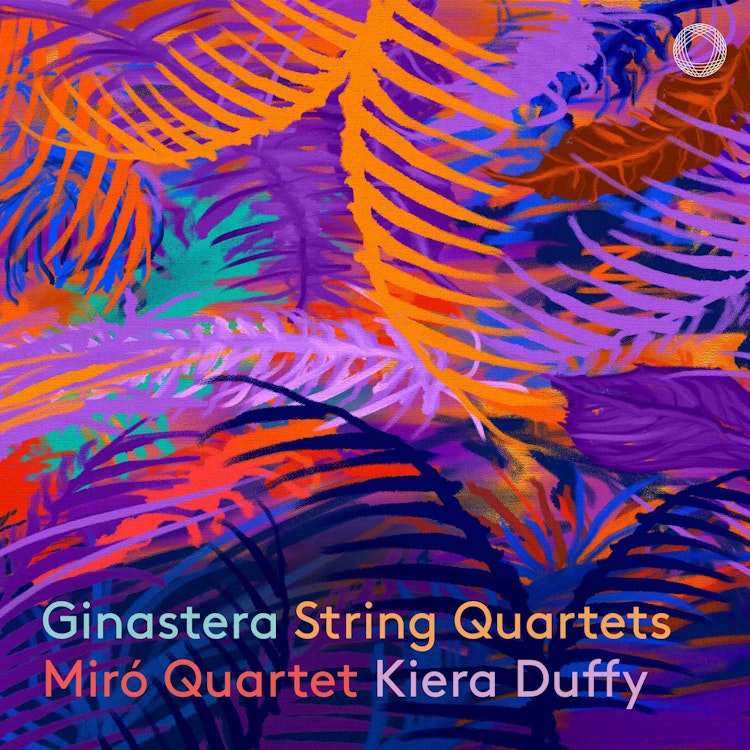
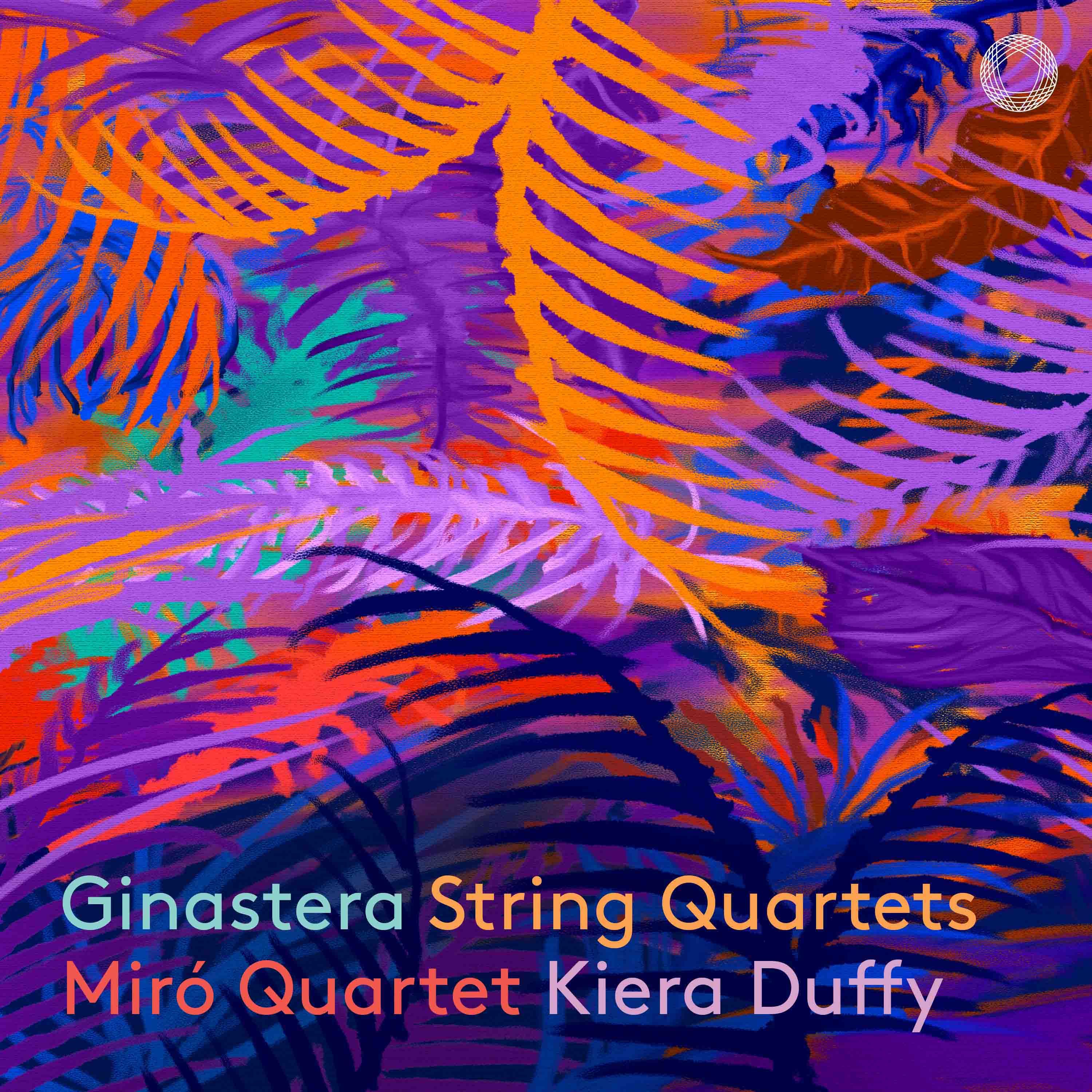
The first is highly rhythmic, and as vividly coloured as Pentatone's booklet cover. Doing from 1948, it celebrates "gauchos," the horsemen of the Argentinian plains. Malambo infuses the work's four movements (the gauchos' own dance), while the hexachordal opening of the third movement implies the sound of the gauchos' guitar. .In a Bartókian way, the music has a "centre" (D) rather than a "key"; and with its date of 1948, this is an example of Ginastera's "Objective Nationalism". The second movement Scherzo is elusive, a will-0'the-wisp set in the Pampas,. It is worthwhile contrasting the dynamism of the first with the expressive solos (and harmonies) of the third (contrasts encapsulated by th indications: "Allegro violento ed agitato" against "Calmo e poetico"):
The Miró Quatet's virtuosity in the finale ie exceptional: "Allegramente rustic" also indicates a folkish, peasant aspect that is certainly here, too:
Th Second Quartet dates from a decade later, and is part of Ginastera's "Subjeciv Nationalism". Argentine music comes though in what the composer describes as "strong, obsessive rhythms; meditative adagios, suggesting the quietness of the pampas".
Although marked "Allegro rustico," the first movement is remarkably varied. The piece is dodecaphonic (twelve-tone) but in Ginastera's own way, which includes identifiable rhythmic repetitions (indeed, this is a core element). The five-movement arch form (around a central "presto magico" scherzo) seems to echo Bartók's preference for formal symmetry (and, indeed, some aspects of the first movement rhythms seem to echo that composer's Fifth String Quartet). Here's the first movement:
Th tissue-delicate organisation of the Adagio angoscioso also holds pronounced dodecaphonic angst. There is no sense of compromise here: the harmonies are red-aw, and the Mirò Quartet's performance is intense, reflecting.the marking of "Adagio angoscioso" (slow and anguished)
That central Scherzo flies through the air its its glissando pizzicato. It is worth looking at the "Libero e rapsodico" in detail as it is a set of variations based a previous piece: but the theme itself is unstated. that piece is the second of the Cinco Canciones Populares Argentinas, of Ginastera's Op. 10 (1943), "Triste":
The movement seems to cite characteristics of the song, which is probably the result of background procedures based on the song's piece's harmonic/melodic structure and rhythms. Individual soloists step forwards:
Th finale is freneticism in sound: the music hurtles forwards in a manic moto perpetuo; the Miró Quartet's virtuosity really is outstanding here, not least in the lead up to the final "cry":
The Third Quartet (1973) comes from Ginastera's Neo-Expressionist period (1958-83). It is one of the few pieces to be written in memory of a critic (!:: John Rosenfield of the Dallas Morning News), It was premiered in 1974 by the Juilliard Quartet (with Benita Valente a vocal soloist).
Directly inspired by Schoenberg's Second Quartet (which also uses a soprano solo to spell it all out with the words "Ich fühle Luft von andere Planeten") Ginastera takes texts by three major Spanish-language poets of the 20th Century: Jiménez, Lorca, Alberti.
It seems as if the opening, echoing Schoenberg, really is sounds from another planet, frozen, emaciated. It is Jiménez's La Musica that furnishes the text. Kiera Duffy is amazing: listen to how he tuning is so spot-on; she has to speak as well as sing, always expressively:
There is much unique about his piece, including insumentally: the strings seem to wail. banshee-like, though the "Fantastica" second movemen; just as amazing is how the voice emerges for the third, "Canción de Belisa").The poem is a sort of latter-day The Sunne Rising (John Donne), railing against the the inevitability of morning.
It's best to hear them on the disc, so they play through, but here are the files:
That sun functions very differently in Rafael Alberti's 'Morir del Sol" (To Die in the Sun"; the parallel I thought of here was the dying soldier at the end of Tolstoy's War and Peace:
The poem is a sort of latter-day The Sunne Rising (John Donne), railing against the the inevitability of morning:
Fom physical death to symbolic death: Sunset (Jiménez), hyper-expressivity at its finest:
This is the Miró Quartet’s third album on Pentatone, following the recording of Beethoven’s Complete String Quartets (2019) and Home (2024). The Ginastera Quartets are available from Amazon at this link.