
More Foerster from Naxos
Fascinating repertoire
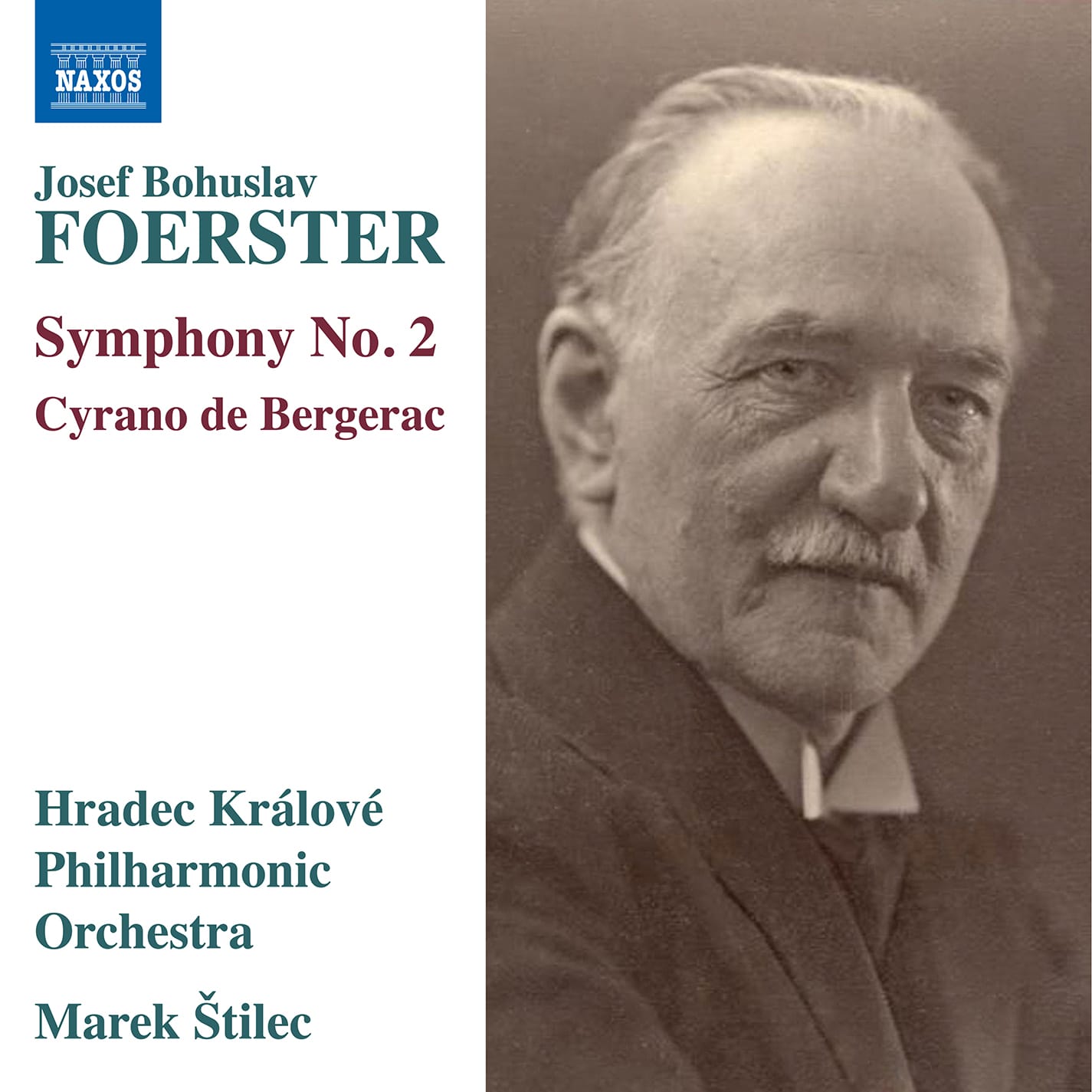
The Hradec Králové Philharmonic takes on Josef Bohuslav Foerster's Second Symphony here: quite the challenge, and one taken with aplomb. We explored Foerster's First Symphony on Naxos here.
Wagner and Debussy are two oft-mentiooed composer influences when it comes to Foerster; to which ally I would add Zemlinsky. Sibelius, too, has been mentioned in the context of the first movement of the Second, too. Here's.video of a snippet:
The Secod Symphony in F major, Op. 29 (1892/3) opens with a sprawling Allegro Moderato. All credit to Marec Štilec for directing a performance of power and of passion, and for giving it sufficient momentum to succeed, all qualities reflected in this eleven-minute movement. Here it is, complete:
How dark the Andane sostenuto, - envitably, in he light of the symphony's dedication to the memory of compose's sister, Marie, There are some remarkable woodwind moments (around the 3-3"30 mark) whee harmonies seem to twist in on themselves in grief.
The Scherzo is kind of a heavy-footed Mendelssohn, with plenty of woodwind action (beautifully done by the Hradec players):
The finale is.a touch sprawling, and Štilec could have made more of the repetitions designed to crate tension in a sort of Brucknerian fashion,
A larger gap between the end the symphony and the peaceful opening of he Andante first movement of Foerster's Cyrano de Bergerac Suite would have been good. His Suite (Op. 55) dates from around a decade later than the symphony, and is, in its first movement, searingly intense. Here, the subtitle "Five Symphonic Images," reflects the almost cinematic qualities, The Andante con moto is a heady love song:
Thee is real power to the Intermezzo Andante sostenuto that follows, which cedes to the graphic Scherzo, the one is in no doubt of the dramatic origins of the music: true, the performance is not of the highest echelon, but Foerster's imagination is vast:
The fourth movement is the longest, portraying the action's denouement. Somewhat discursive, Štilec keeps the music moving nicely towards the heady climax:
Hope does appear in the finale, an Andante sostenuto that seems to exude something of a cumulative glow at times. Again, a touch more attention to performative issues would have sealed he deal:
Having directed you to Classical Explorer's previous review of Foerster on Naxos, it I worth pouting out a cpo disc of the Osnabrück Symphony Orchestra under Hermann Baümer on Dabringhaus und Grimm Scene - this coupled the first and second symphonies in sterling performances, superbly recorded. Whichever you choose, this is fascinating repertoire, though. The Naxos includes musically descriptive, functional booklet notes and is available from Amazon here. Streaming below.

nc