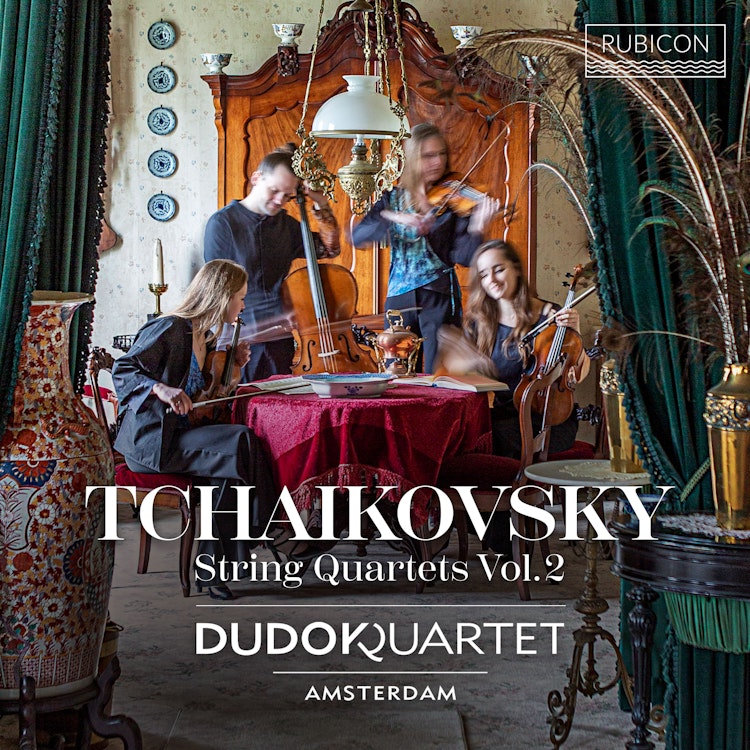
Dudok Quartet Amsterdam, back in Tchaikovsky
The Dudok Quartet Amsterdam remains one of the most vibrant, exciting young ensembles around
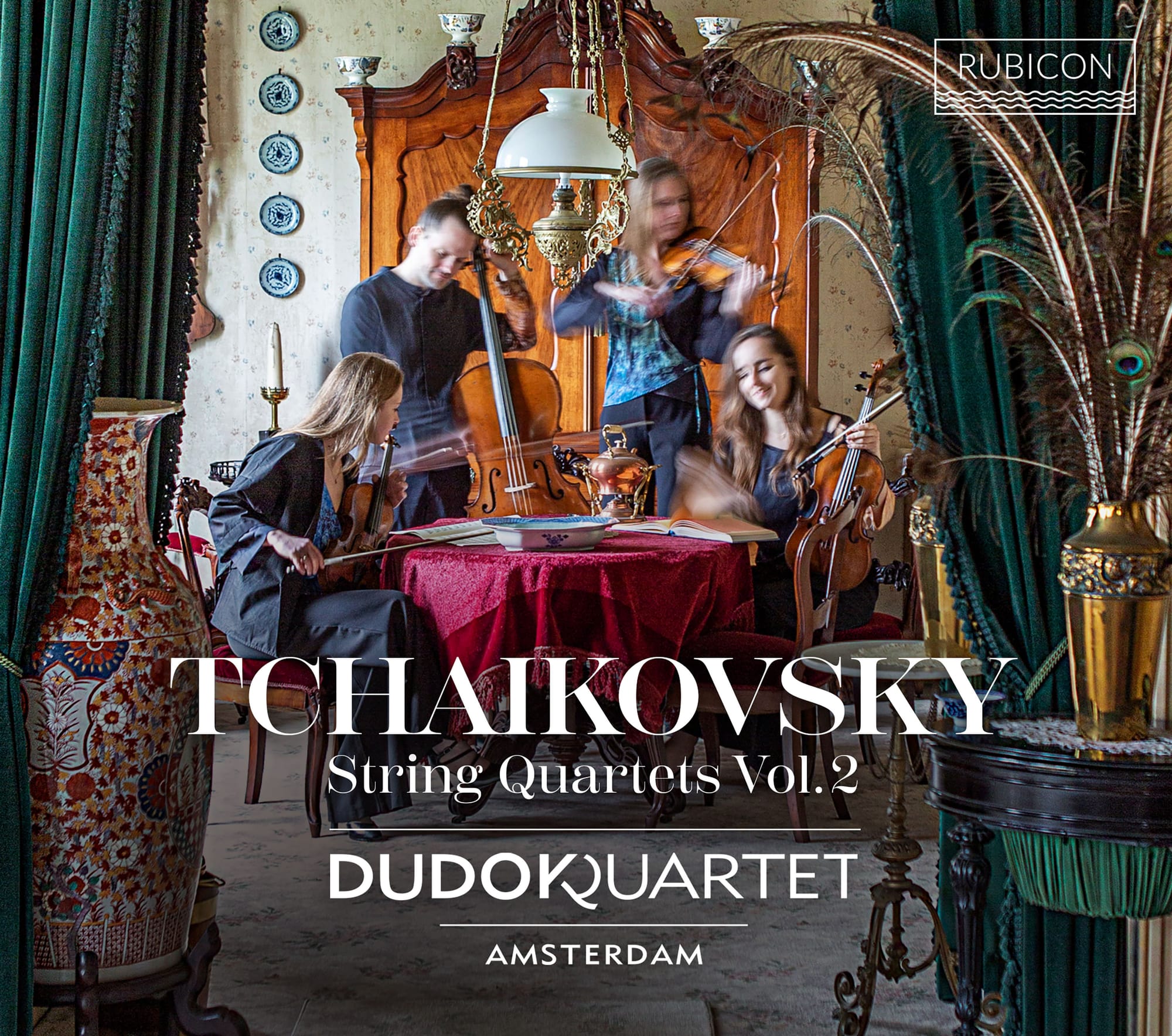
The Dudok Quartet's first volume of Tchaikovsky string quartets, performed on gut strings, was highly impressive. Recently. we also looked a they coupling of Shostakovich and Saariaho, Terra Memoria.
,,, and so to the second and final volume of Tchaikovsky Quartets, the Third (1876), joined by the Quartet Movement in B flat, and more movements from 'The Seasons' in arrangement.
The discovery here for me was the almost late-Beethovenian Quartet Movement, its Adagio misterioso opening long, deep and profound (if not immediately Tchaikovskian). This is thought to be the only surviving movement of what might have been the composer's first attempt in this genre. The Dudok Quartet iive it all: there are recitative-like 'breaks' in the Adagio moserioso that take on huge pathos here. they emerge in.slow cascade from instrument to instrument, mirrored by the somewhat more rapid cascade been instruments in the Allegro con moto. And how the Dudok Quartet finds that "con moto': The music has an inner propulsion, halted by a ghostly choral passage like a chorale or a hymn. This is.a remarkable movement that should be heard more: I, for one, would love to hear it live:
The Third Quartet, completed in 1876, inevitably takes us to deeper territory: as the Dudok's notes say, "two large dramatic movements on an operatic scale" (the first and third) is with"two shorter, lighter movements that evoke his ballet music". The Andante funebre e doloroso this movement was written in memory of violinist Ferdinand Laub.
There is certainly intent aplenty in the long opening Andante sostenuto; and the Allegro moderato that follows only prolongs the sense of compositional concentration. Tchaikovsky wastes not one note. Anguished counterpoint sums up a lot of his movemen. The Dudok's account has somehing of the energy of a live peformancet:
Certainly the "raw" dimension of gut strings gives the Scherzo a real edge; and listen to how tense the contrasting material is:
But it is the anguish of the funeral movement the is so impressive, the first violin's large leaps so expressive (and accurate here, from Judith van Driel). This movement surely stands next to the last movement of the “Pathétique” Symphony:
The finale takes us right back to the stage. This Quartet is a fascinating study in contrasts, two worlds juxtaposed within th same temporal space:
Arrngements from The Seasons againcomplete the disc. I love Judith van Driel's way with the fast ascents in the first, “March: Song of the Lark”:
The dynamic here is vey different: simple movements, their material often folky (“July: Song of the Reaper”) and, given the timescale, very little development; the perfect foil for the symphonic tendencies of a least half of the Third Quartet, therefore. And listen to the git of “September: The Hunt,” followed by a final, gently melancholic “October: Autumn Song”:
The Dudok Quartet Amsterdam remains one of the most vibrant, exciting young ensembles around. This Tchaikovsky disc is available on Amazon here. Streaming below: