
Cosmopoles: Divertimento and Zahia Ziouani in Paris
Over in Bobigny ...
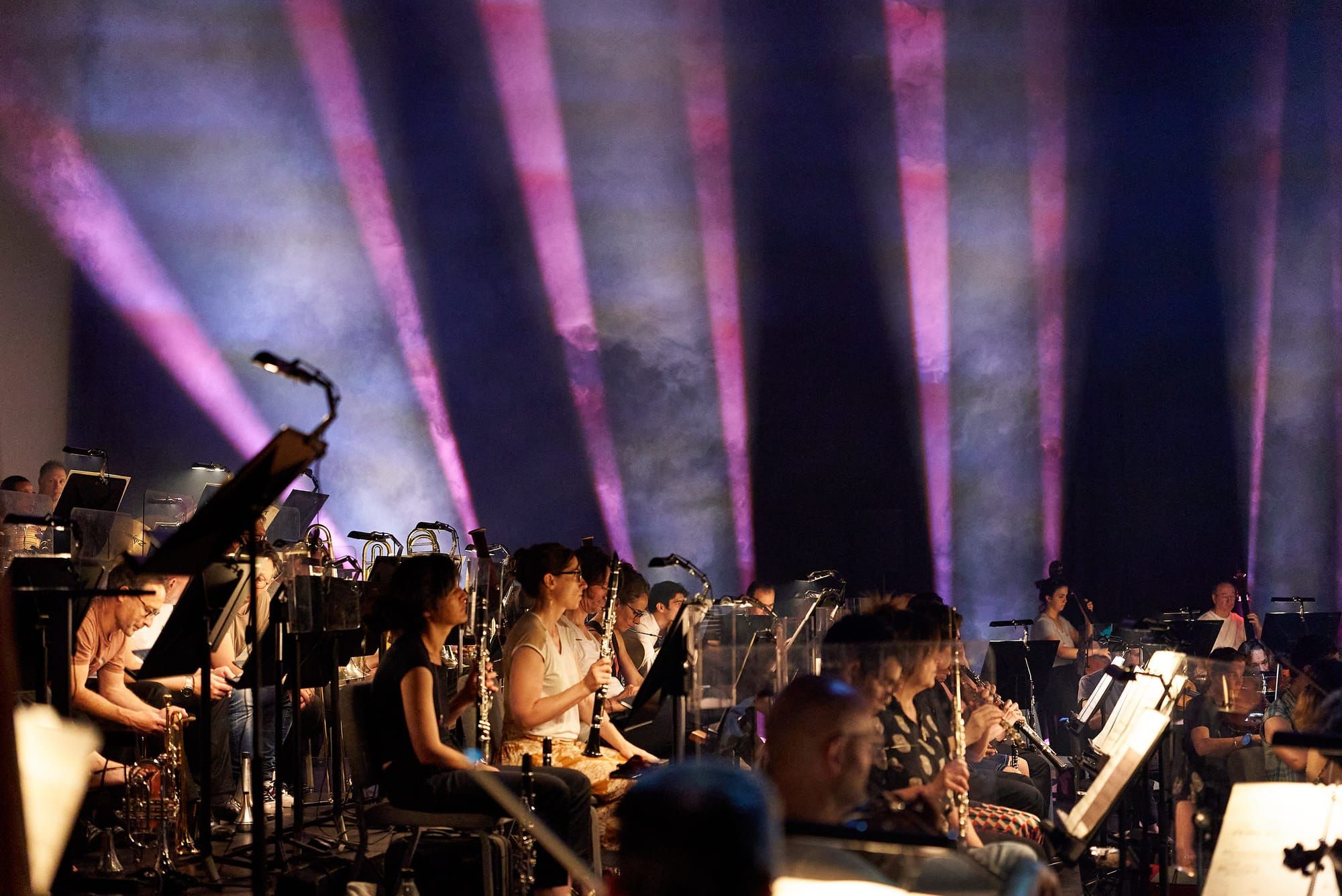
Cosmopoles: de l’aurore au zenith (from dawn to zenith, from zenith to dusk). Divertimento / Zahia Ziouani (conductor/director); Lyès Salem, actor; Clémence Colin (actor in sign language); Elisa Biagi (author); Christophe Naillet (lighting); Alain Blanchot, costumes. Salle Oleg Efremov, MC 93 Maison de la Culture de Seine-Saint-Denis, Bobigny, Paris, 26.09.2026
Work List:
Ravel Miroirs, M 43: No. 4, Alborada del gracioso.
Thodorakis Rhapsody for Cello and Orchestra: Euterpe
Chaminade Calirhoé - Prélude
Rimsky-Korsakov Scheherazade - The Young Prince and Young Princess
Traditional Greek Apano stin Triantafyllia
Debussy La mer: De l’aube à midi sur la mer
Idir (arr. Antonin Mège) Ssendu
Traditional Syrian (arr. Nelson Santoni) Al bint el shalabiya
Turina Sinfonia sevillana: Fiesta en San Juan de Aznalfarache
Traditional Italian (arr. Mège) Tarantellas (Neapolitan and Pizzica)
Respighi Fontane di Roma: La fontane di Valle Giulia all’alba. Pini di Roma: I pini delle Via Appia.
A musical odyssey along the Mediterranean conceived by conductor Zahia Ziouani, Cosmpoles, de l’aurore au zenith takes in music from traditional Greek, Italian and Syrian musics to Ravel, Turina and Respighi. And that’s only the launchpad of the imagination encountered here: the lighting is superb (step forward Christophe Naillet), as are the two protagonists, the French-Algerian actor/narrator Lyès Salem and the lady who takes sign language to an art-form, Clémentine Colin. The event is part of the “Saison Méditerranée 2026” season in France - over 200 events between May 15 and October 31 which beings together a wide array of disciplines to celebrate, and investigate, the Mediterranean and its gifts.
Ziouani’s conception was intriguing: each geographical region with its own musical signature, and yet how they can bleed into each other and even reference one another (Ravel’s Spanish-tinged ‘Alborada del grazioso’ from Miroirs, in its orchestral garb, where France meets Iberia). Mikis Theodorakis certainly has a recognisable sound, here referencing Ancient Greece, while Rimsky-Korsakov’s Sheherazade takes us, viscerally, to the shores of Arabia. The piece moves from France to Turkey via Spain, Italy, Greece and North Africa. The title, ‘Cosmopoles,’ takes the Greek word for the World (Cosmos) and for a city (Polis). Elisa Biagi’s text is incredibly poignant and evocative. As Ziouani herself says, ‘I wanted to tell a musical tale that connects the two shores of the Mediterranean. This sea, so laden with histories and cultures, becomes the thread of a dreamlike, poetic, and accessible journey, where music, words and gestures draw a common world’. There is a ‘wind that travels the Mediterranean, carrying the stories we thought sealed’
That sense of ‘bleeding’ from one area to another worked in a disciplinary sense, too: Clémence Colin, is an actress who not only uses sign language, but elevates it to an art-form in itself. As with ballet, the movement itself becomes art, something which became incredibly powerful over the course of the evening as narrator and signing-actress interacted more and more. When music stops and all we have is movement, we find that movement can itself make sound if we listen hard enough; as can breath.
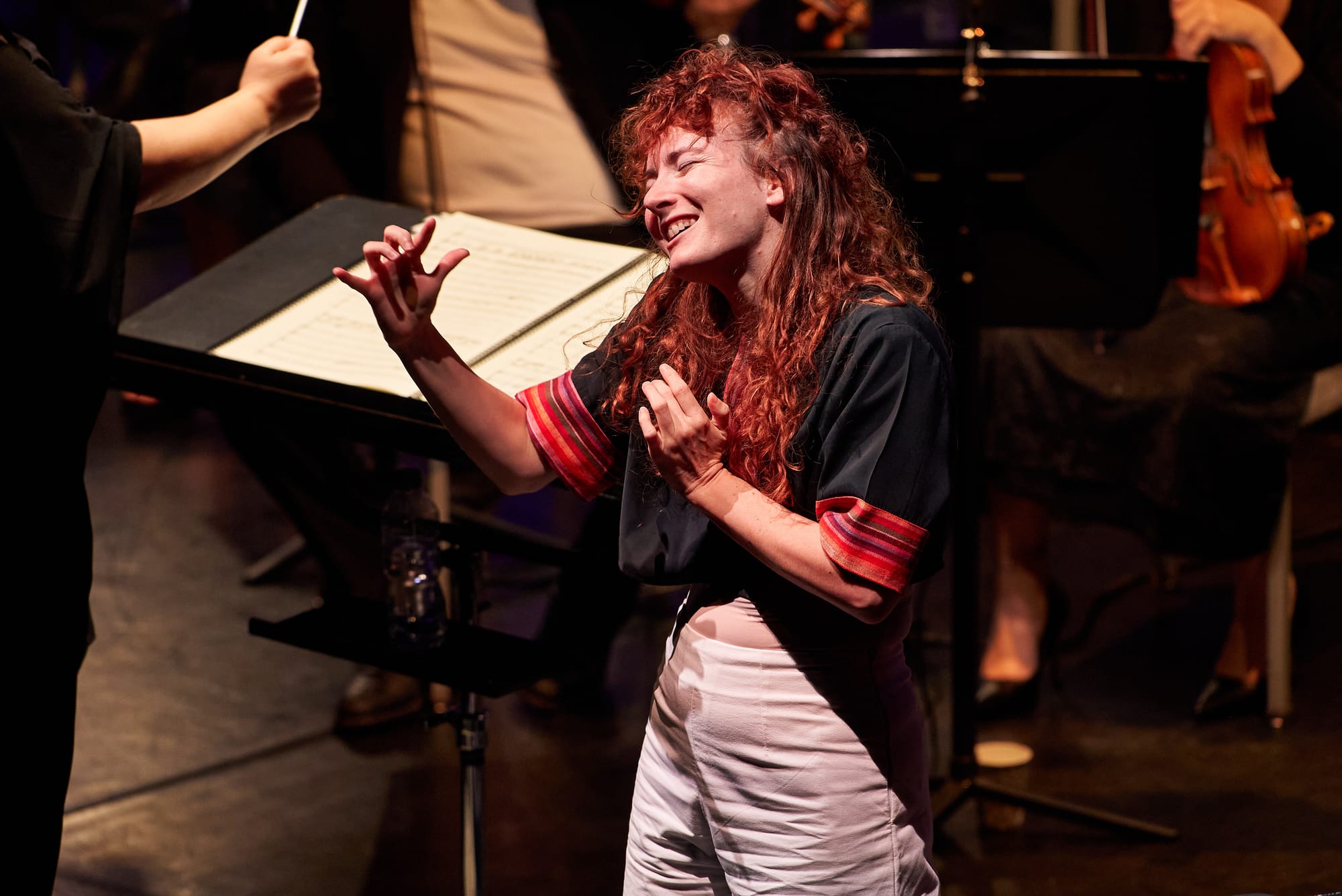
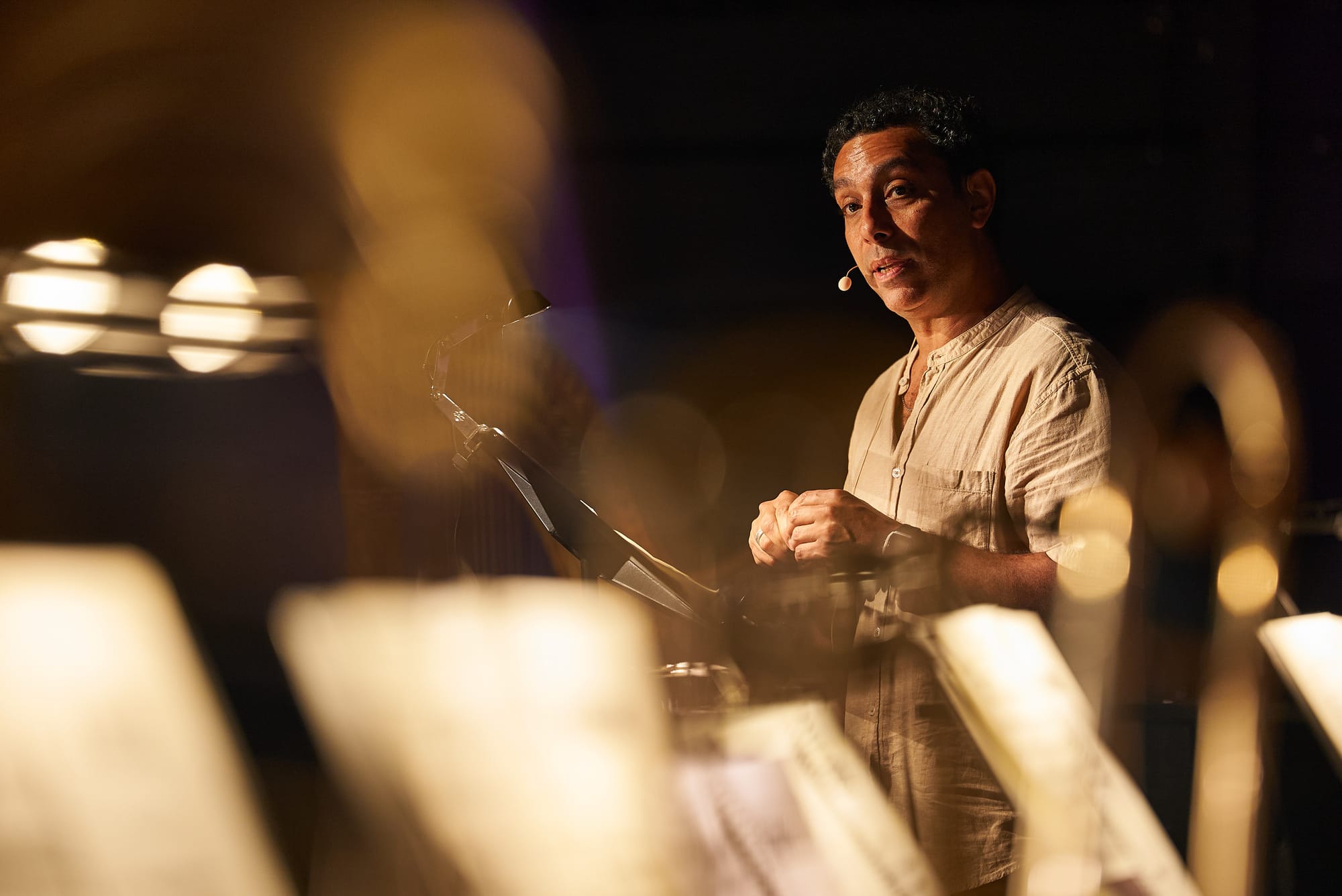
At the beginning, actor and signing actress symbolically enter from different sides, but as the evening progresses they move ever closer together, their differing forms of narration as one. Lyès Salem was superb in his delivery of text, ever authoritative.
Much of the credit for the success, in fact for the evening at all, goes to Zahia Ziouani, who founded Divertimento orchestra in 1998 (she previously studied with Celibidache in Paris). A film has been made, itself called Divertimento, of Ziouani’s story (you can see a short of it here). Whilst not of the highest technical standard, the members of the orchestra give 100% to Ziouani’s vision; and the Ravel ‘Alborada’ glowed with life (pace a few obvious difficulties with those ultra-rapid repeated notes).
After the Ravel, ‘The Wind Awakes’ and rises, a ‘Wind of Freedom’. The Theodorakis excerpts for cello and orchestra, featuring the excellent Fettouma Ziouani (Zahia’s sister) brought about another flavour entirely, Greece with a hint of the filmic. The Muse ‘Euterpe,’ the ‘giver of delight, has a sort of stylised dance, the solo cello’s exposition of the theme taken over enthusiastically by Divertimento. How Fattouma’s cello can sing, though; and sing it did in this first movement of Theodorakis’ Rhapsody for cello and orchestra. The music for ‘Thalie’ (Thalia, muse of comedy and idyllic poetry) is significantly more earthy; Fettouma Ziouani found both primal dance and heart-based lyricism in the score.
We are told of “The Birth of Célirhoe’: larger than a lion, smaller than a giraffe /.. A new creature; Célirhoe is Cécile Chaminade’s only ballet (some may know the name via the opéra by Destouches) and again takes us to Greece, but via France: the ‘Prélude’ is gentle, Impressionistic, a perfect moment of interior relaxation. It is interesting how scene changes were effected as much through the music as via the lighting; Ziouani has a fine grasp of each region’s sound, and each composer’s fingerprint within that. Interesting, too, how in this context “The Young Prince and the Young Princess” from Rimsky’s famous Sheherazade took on a distinctly Gallic aspect in the elegance of Divertimento’s phrasing. That piece initiates the ‘Wind of Passion’ section (... when the wind of passion arises, the stories we thought sealed take flight’).
‘Chansigne’ - sung sign language, or ‘sign singing’ - informed a folk tune from Chalkidiki, Macedonia, Northern Greece, Apano stin Triantafyllia (which translates to ‘Upon the Rosebush’), imbued here with terrific power and poignancy.
The focus changes, from wind to sea, prime inspiration for composers, not least one Claude Debussy and his La mer: ‘De l’aube à midi sur la mer,‘ the tempo perfectly chosen by Ziouani. ‘The sea has no friends, only faithful followers,’ as the text says, a testament to the fascination seas and oceans have on humans, until ‘the sea has no friends left’. There were some lovely violin solos from Christèle Droxier here; and then, a complete change, a song by Idir called Ssendu (arranged by Antonin Mège: you can hear a performance by Idir, appropriately in Paris, at the Théâtre des Hauts-de-Seine, in 2004, in the first example below, or a more ‘sung’ version in the second.) It is a truly lovely song, its melody perfectly fitting in its sense of folkish melancholy:
One of the most deeply touching moments was the reading of the diary of ‘Ziyad’: first when he is16 years old; then, when he is 70 (‘Today I feel the weight of the years on my shoulders’). The music ‘placed’ the text - from Syria, Al bint el shalabiya (Traditional/Faïrouz). It was the ‘Wind of Celebration’ that brought us back to Spain, Turina’s ‘Fiesta en San Juan de Aznalfarache,’ from the Sinfonia sevillana, a sultry festival allowing us to sneak into Italy via a spoken riff on the Tarantella (translated into music via tarantellas - in the form of Napoletana and Pizzica - arranged once more by Antonin Mège).
Here's the Naxos performance of the Turina, the Castile and Leon Symphony Orchestra conducted by Max Bragado Darman:
But what genius to finish with Respighi, to this day a cruelly neglected composer, and one whose operas are well worth hearing, incidentally - try Maria egiziaca, or La bella dormente nel bosco. Here, extracts from the pines and fountains of Rome … and we’re in Rome, for a spoken hymn to Nature and the words, “Before Humanity … after all. Nature.” Quite the way to end - a reminder, as September in Paris exhibits positively Midsummer temperatures, of our collective responsibilities.
That the orchestra conveyed so much emotion through each piece was a marvel. More careful balancing of sections in tuttis would seal the deal, but this remained a powerful evening: this is probably the most intelligent use of excerpting from larger works I have heard. No mere highlights these, each carried a thread, each took the narrative baton, inscribed its signature, before handing the baton to the next short piece. The thread that took us on a voyage across the Mediterranean was compelling.
Divertimento’s season continues in similarly progressive fashion, including an all-Villa-Lobsos evening (Brasileiras), and Titan (Mahler’s First Symphony), both in March 2027, and much more.
Cosmopoles is innovative work, its realisation sometimes a little rough around the edges performatively, but Zahia Ziouani guides her forces surely, her tempos ever carefully considered. Elisa Biagi’s narrative binds the whole together with an underlying sense of beauty and awe.