
The Wonders of Telemann: Florilegium at Wigmore Hall
An evening with Telmann is always an evening well spent
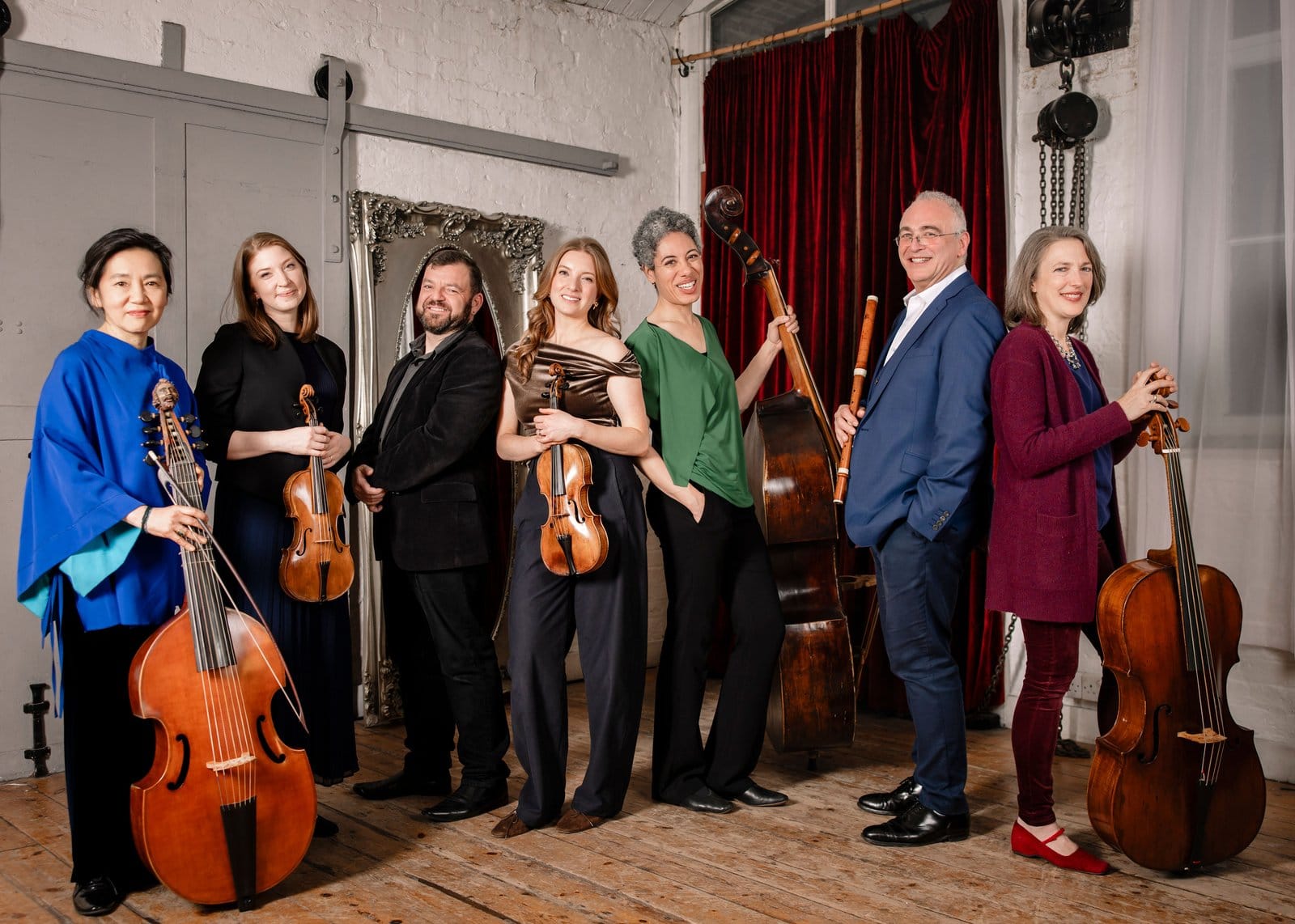
Telemann Old and New
What a treat to hear a full concert of Telemann’s magnificent music. The dates of composition of the pieces span 30 + years: hence, “Telemann Old and New”) with the late cantata, Ino, standing with one foot in the Baroque and another in the Classical.
First, though, the Overture-Suite in F of the mid-1760’s. A late work, it features a pair of horns prominently (one of its dedicatee, Landgrave Ludwig VIII’s favourite activities), rather approximate’ in the opening ‘Overture,’ steadier later. No missing the hunting connection, though, and Florilegium’s strings were exceptional in timbre, tuning, and balance. Bee was the courtly Courante, light and suave, cleanly phased. The Bourée contains some real screamers for first horn, well negotiated, tamed by the gentle caress of the sting and continuo Laure, the three first violins absolutely together, the solo violin, Gabriella Jones, beautifully expensive; and how imaginative Telemann’s use of pizzicato here. The Menuet I & II contains such variety, with horns and bassoons scored as a nicely balanced solo unit. The players picked just the tight tempo for the Forlane (marked ‘Tres vite’) so that every detail revealed itself; the calm before the storm, the latter depicted in ‘La Tempete,’ gritty, visceral and bracing fun.
The Concerto in E minor for flute, recorder and stings, TWV 52:e1 might not get out much, but I do remember a very special performance at Ton Koopman’s festival Itinéraire Baroque in 2017; i was the characterful finale that bought the connection back (Amsterdam Baroque Orchestra under Koopman in the ‘Telemann year’ of 2017). Here, Ashley Solomon played on a flute by Dresden make August Glenser (1720-1807), active in the 1770s; he had founded his woodwind workshop there in 1744, gaining royal appointment in 1753.. Together, Solomon and recorder player Hannah Parry sounded exceptional, exchanges perfect, and when in parallel intervals, ensemble was impeccable. After the expressive opening Largo (the concerto is in four movements), the minor-mode Allegro positively fizzed along, but it is the third movement, another Largo, lies at the emotional heart of the piece, a grazioso of profoundest intent. It requires exceptional chamber abilities from the soloists as the lines intertwine and pass from one to the other; it certainly got that here from Solomon and Parry. It was the drones of the final that made the link for me back in 2017; here the Presto nicely honoured in the scampering passages. I did wonder if the drone could be more emphasised, though.
Here's a wonderful video of the finale perfumed by Anna Besson and Bolette Roed with Orchestra Kore from the Music in Paradise Festival, Poland. The camera work is worth the click alone! The film is directed and edited by Wojciech Zych :
The late cantata Ino is really operatic. Performing without music and acting the emotions with zeal was soprano Elizabeth Watts. Plenty of energy for the opening instrumental sally and ensuing recitative. It was the first aria, ‘Ungöttliche Saturnia’ (Ungodlike Saturn) that introduced Watts’ sheer power, the music fizzing along instrumentally in teh stings. Was’ sack is so accurate (Telemann asks the singer to come in on vowels: th ‘U’ of ‘Ungöttliche’ a case in point). A lovely gentle swaying was accorded to ‘Du hast Dich an Semelen ja’ (You avenged yourself of Semele); there was no dropping of tension in the recitatives, either. Pastoral flutes graced the Arioso, ‘Wo bin ich? O Himmel!’ (Where am I? O Heavens!); how splendid Watts’ delivery of ‘O Wunder!’ (O miracle), how tender her ‘Mileidiger Retter!’ (Merciful saviour!). The band excelled in the ‘Tanz der Tritonen’ (Dance of the Tritons; wouldn’t it be a wonderful moment in Baroque music if this were ‘Dance of the Tritones’?). James Johsone on hapsichod segue perfectly into the gentle ‘Ungwohnt Symphonien’ (Unaccustomed symphonies) before the aria, ‘Meint ihr mich, ihr Nereiden/’ (Do you mean m, you Nereids?) found Was wondrously free of voice; it all sounded so easy, so magical. Watts has a firm lower register, too, head in the ensuing recitative before the final hymn of praise, ‘Tönt in meinen Lobgesang,’ Watts is a virtuosa of the first rank against brilliantly stabbing accents from the tutti.
Here's Forsythe in ‘Tönt in meinen Lobgesang,’:
It was great that Watts returned for an encore after the conclusion (pardon the pun) of the advertised concert: ‘Lascia ch’io pianga’ from Handel’s Rinaldo, HWV 7. Why not more Telemann, I know not (there must be plenty?), but beautiful nonetheless. Finally, Telemann’s own ‘Conclusion’ in E minor, WV 50:5, an Allegro that encapsulates all that is good and great about Telemann in sprightly mode via its infectious scamperings: he reminds us that minor keys need no mean (too) cloudy skies. This piece appeared on Florilegium’s 2002 Telemann disc, Tafelmusik, on Channel Classics. On March 13, just a few days ago, Channel Classics released a Telemann disc by this group including Ino, the double concerto (plus one for violin and flute with Rachel Podger) and a Sonata for Flute and Violin in G (Solomon and Podger: there is no basso continuo in his one!).
An evening with Telmann is always an evening well spent; his, though, was exalted company. Watts’ Ino was the highlight, for sure. But there was so much besides …
Composer: Georg Philipp Telemann
Overture-Suite in F, TWV 55:F16 (c. 1763-66). Concerto in E minor, TWV 52:a1 (c. 1712-21). Cantata, Ino, TWV 20:41. Tafelmusik: Conclusion in E minor, TWV 50:5 (1733)
The Telemann/Forsythe Ino is on this cpo disc, available at Amazon. Spotify and Apple Music below; iDagio here.