
Out of Vienna: the Leonkoro Quartet on Alpha
A superb debut on Alpha for the Leonkoro Quartet

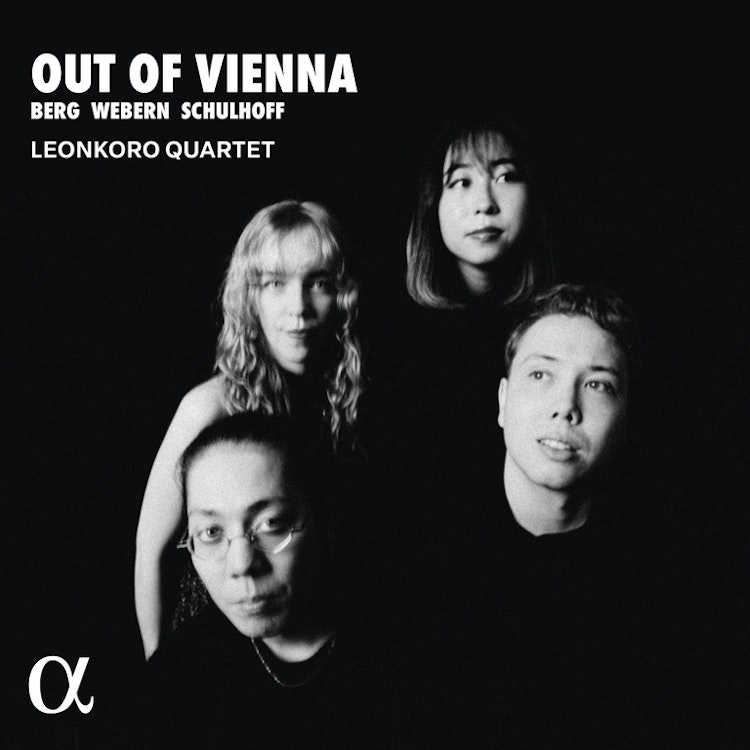
A beautiful mix of Berg, Schulhoff and Webern here. This is the Leonkoro Quartet's debut recoding fo Alpha Classics, offering performances of polish and superb resonance with the music of the Second Viennese School.
Berg's Lyric Suite first (sometimes called his second string quartet; "No. 1" is just called String Quartet, and is Berg's Op. 3). The Lyric Suite is based on the same tone-row as Berg's later setting of Schließe mir die Augen beide: The piece was inspired by Berg's love for Hana Fuchs (sisterhood of Franz Werfel). Her name is part of the music's fabric, as a musical acoustic derived from he lies of he name conveyed into musical notes (remember H = B natual in German). This YouTube interview mentions how the Quartet want to honour the manic basis of his piece:
Out of Vienna focuses on two of the three three most famous members of the Second Viennese School in Vienna, Berg and Webern. Berg's The Lyric Suite is sometimes known as that composer's "String Quartet No. 2" (No. 1 being the Op. 3 String Quatet: note that Berg stopped using opus umbers after his Op. 7, Wozzeck) It is constructed on the same tone row as the song Schließe mi die Augen beide (so, Berg's later setting):
... and here are the same performers presenting both (1907 and 1925) visions of the song, with score:
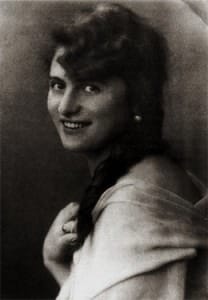
Alban Berg's Lyric Suite is close to the players' hearts, as it wast his piece they worked on immediately post-formation (2019). They studied it with such formidable quartet forces as the Alban Berg Quartet (ABQ) and the Artemis Quartet. Like many of Berg's works, it holds its secrets, transmitted in musical code: his time for Hanna Fuchs (1894-1964, more often seen as Hanna Fuchs-Robettin, sister to playwright, novelist and poet Franz Werfel).
The Leonkoo's accounting is a fine one: here's a video of the first movement:
I like the character of the second movement (Andante amoroso), although I have heard performances with a touch or character in the lighter descending passages. But the "amoroso" aspect is never in doubt. The recoding, too, is exemplary, capturing every nuance, including the "icy" imbues the Leonkoro Quartet finds here (which seem.in retrospect to hint at the amazing effects of the third, the Allegro misterioso - with a "Trio estatico" that becomes the basis of the next movement).
The Leonkoro Quatet has a collective understanding of Berg that is most impressive. They know how to give phrases a Romantic bent, a sort of post-Wagner, Zemlinskian aspect. In fact, Zemlinsky (the Lyric Symphony) is directly referenced in the fourth movement, the lovely Adagio appassionato. The Presto delirando pits manic activity against icy, frozen chords:
The Largo desolato is the ideal close: poignant, emotion-laden, and possessed of finely calibrated pianissimo.
Wunderkind Ervin Scholhoff (1894-1942) was discovered by Dvořák: he need he Prague Cosevaoie aged 10! In the Five Pieces for Sting Quartet, Op. 6, he parodies the Baroque Suite. All movements re headed "Alla" (in the mode of): "Alla Valse viennese" is followed by "Alla Serenata" (muted, ostinato-rich). After an "Alla Czeca," thee is, surprisingly, an "Alla Tamgo milonga"; markedly less Latin American the one might think. Tons of character, though:
The outgoing "Alla Tarantella" is quite the contrast to Webern's Fünf Sätze für Streichquartett. It is significant that the Leonkoro Quartet trained with the ABQ, as the latter's Webern is exquisite (heard live, it can make life-long converts!). The Leonkoro has taken the lesson of clarity and expression, but play with a little less Mittel-Europa warmth than their esteemed teachers, which many will see as a plus: everything is clear here. The fourth movement (Sehr langsam) seems to whisper tenderly, its angularity of gesture here inwardly lyrical, the epitome of their excellence in this composer's music. The respect the Leonkoro pay to this seminal work of the 20th-Century is itself worthy of praise; but it is the expressivity they find that moves the heart.
Finally, a more Romanic side of Webern. His Op. 5 was composed in 1909; Langsamer Satz dates from 1905, and, my, what a difference.couple of years make. It might be at the nice to see the Leonkoro in live pefomance, at the University of Arts in Berlin, May 2023:
Just as Berg's Lyic Suite was inspired by the love fo a lady, so was Webern's (opus-less) Langsamer Satz, here one Wilhemina Mört (unlike Berg, Webern was to marry his beloved, some six yeas later). Based on a triad of times, the piece breathes an air not unlike that of Schoenberg's Verklärte Nacht. The Alpha version is of course of studio origin, but infinity touching.
This recoding is supposed by he Leonkoro's 2024 Boletti-Buitoni Trust (BBT) Award and marks the first of steveral releases, all of which I shall be watching closely.
The disc is available for seeming at Amazon here Streaming below:

.
Ina