
Gambarini: English Impresaria. The AAM at Milton Court
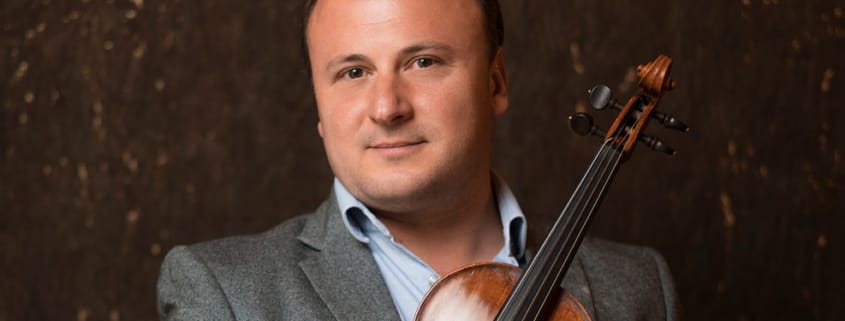
Gambarini: English Impesaria Mhairi Lawson (soprano); Academy of Ancient Music . Bojan Čičić (violin/director). Milton Court Concert Hall, London, 12.03.2026
Handel Judas Maccabeus,HWV 63 (1746): Overture; Pious Orgies; Come, ever-smiling liberty; March
Gambarini Music from Six Sets of Lessons, Op. 1 (c. 1747, arr. Rachel Stroud)
Geminiani Concerto grosso, Op. 7/6 , H 120 (1746).
Tessarini Overture in D, Op. 4, ‘La Stravaganza’ (1736)
Handel An Occasional Oratorio, HWV 62 (1746): O Liberty
Tessarini Violin Concerto in A minor, Op. 1/7 (c. 1716)
Gambarini Lessons and Songs, Op. 2 (1748): Behold and Listen (Song I); Canzonetta, Se mai fosse la mia forte (Song IV). Minuet in A Major.
Handel Joseph and his Brethren, HWV 59 (1744): Prophetic Raptures
Daughter of international opera singer Giovanna Stradiotti (d. 1774), Elisabetta de Gambarini was probably taught by Geminiani, one of whose Concerti grossi appeared on this concert programme. Later, aged 16, Gambarini came into Handle’s orbit, as in the 1746/7 season she sang in the premieres of An Occasional Oratorio and Judas Maccabeus. Not backward about coming forward, Gambarini put her music personally as well as via public advertisement; one such advert shows the first known occurrence of a lady playing organ in public in Britain. She was the first woman in Britain to publish her own music (by subscription); both Handel and Geminiani subscribed, as well as Tessarini. Organising her own concerts, Gambarini gained a high reputation:; but when she married Etienne Chazell, Master of the Horse o he French Ambassador, in 1764, her life darkened. Following a scandal, Chazell was forced to flee to France; Gambarini died the very next year, aged only 35.
The sum total of Gambarini’s music we know is what she published herself: Philippe Gouin’s editions, published in Montreal in 2018, some 270 years after Gambarini’s own editions. I was with Handel the concert began, however: the Overture and ‘Pious orgies’ from Judas Maccabeus, terrific gravity to h opening, violins so together at the Allegro (the whole heard with organ continuo (Chistopher Bucknall played both harpsichord and organ during the course of the evening). The performance was perfectly thought-through: fabulous terracing of dynamics to create a serrated diminuendo at one point, for example. And every strand was audible. Mhairi Lawson’s account of ‘Pious orgies’ was not quite as fine, her use of vibrato a touch anachronistic, and her very rolled ‘r’s rather affected. Incidentally, in this context (here via Thomas Morell’s libretto), an ‘orgy’ is a ritual act of worship or a sacred ceremony; in the oratorio, it is followed by the chorus, ‘O Father, whose almighty pow’r’.
While there is a complete recording of Gambarini’s works (on Piano Classics, by Margherita Torretta; rather Romanticised performances there, however), we heard orchestral arrangements by Rachel Stroud that was certainly lively (overly raucous horns included) in the opening March, the second movement of the Sonata I in D. A definitely earthy performance that acted as contrast to the Grazioso first movement from the Sonata II in D. Listen to a performance of this, or even play it, and Gasparini's use of two-part exudes becomes obvious (it recalls many Haydn Keyboard Sonata movements in this respect). A gift to Stroud, of course; and how beautiful her realisation, offered in a light as a souffle performance from the AAM, with fabulous violin 1 and 2 interchanges (the two sections were not only antiphonally placed, but really quite far apart, enabling the effect to make its mark nicely). An Andante ‘Siciliana’ (in its feminine form) from the A-Minor Sonata, Op. 1/5, found Čičić’s solo violin against basso continuo, a beautiful mirroring of the music’s textural fragility; a fine bass trill at the end!. Finally for this tranche of Gasparini, the second and last movement of the Sonata II in D, which has no tempo indication, full of hunting horns paired, in positively Handelian fashion with a pair of oboe (nice lip tills from first hornist Gavin Edwards later on).
Here's Gambarini's complete keyboard output on YouTube video (that Piano Classics recording referenced above):
A punctuating Judas excerpt next: ‘Come, every-smiling liberty,’ Lawson nicely free of voice in this jaunty air (O liberty, thou choicest treasure,’ are the words).
Finally for the first half, a Concerto grosso by Geminiani (very difficult to untangle the many movements from the programme listing, incidentally). More than his Concerti grossi, Opp. 2 and 3, Op. 7 is indeed quirky. It also includes many solo violin passages, a pre-echo of the Tessarini concerto in the second half. The piece is indeed sectional, as if we are granted genius snippets in need of glorification elsewhere: the bassoon solo (so beautifully played by Philip Turbett) for example. The use of an organ continuo here felt strange, though, despite its smooth links between tutti phrases. Sudden chromaticisms do colour the palette, as do some arresting scorings. There is a distinctly schizophrenic edge to his particular slice of the Baroque; but maybe that’s not a bad thing.
Here's Concerto Köln in that very Concerto grosso; lovely frontispiece as well! (Capriccio with St. Paul's and Old London Bridge by Antonio Joli. 1748):
Köln [00:00] I. Allegro moderato - Adagio - Andante - Andante [02:47] II. Adagio - Presto [04:47] III. Affettuoso - Andante [07:29] IV. Allegro moderato [08:59] V. Andante [11:54] VI. Adagio - Allegro assai - Adagio [13:02] VII. Presto
From a surfeit of tempo indications for the Geminiani, the booklet failed to mention the Tessarini Overture, ‘La Stravaganza,’ Op. 4 is in three movements (Allegro assai; Largo sempre piano; Presto). The Overture is actually the first of six parts of Op. 4 (it is succeeded by a Partita, a Sinfonia, and Concertos I-III). The title is meant to reflect an intent to bust musical moms, and the music is certainly extravagant in reach. The first movement bursts with energy (again, a maximally tight of ensemble performance on this occasion helped); i seems to stop, but then restarts with extra vigour. The slow movement is beautiful (perhaps some Vivaldian tendencies here?) before that Presto - more Presto furioso here, and all the more bracing for it.
Here's a performance by Georg Kallweit, solo violin & concertmaster with the
Akademie für Alte Musik Berlin:
00:00: Allegro assai 01:48 - Largo sempre piano 04:15 - Presto
So to Tessaini’s Violin Concerto in A minor, Op. 1/7. A composer I confess to only previously knowing via a Tactus recording of his Op. 14 Sonatas, the music of this late-Baroque composer is fascinating in its unpredictability. It is identifiably Baroque, but parallels are difficult because of Tessaini’s signature. Again, though, an organ continuo was used, which here served to ether the music somewhat when it wanted to fly. The central Largo (for such it is) is lovely; and this AAM performance, in terms of the tutti violins’ superlative playing, so together, is a marked improvement on the Ensemble Guidanus’ recoding, the only performance I had heard, part of their complete set with Marco Pedona as soloist. Čičić was brilliant here, the ornamental line glorious, the music flowing well, Tessani’s sly harmonic slips relished. Finally, an energetic finale, very definitely cast in minor mode, Čičić in fine fettle, digging in in the lower registers, flitting between middle and high with ease.
Here' Marco Pedrono, who has made something of a speciality of Tessarini, recoding the couple Violin Concertos and Violin Sonatas. He performs with Ensemble Guidantus:
Strangely, though, I had come across Gambarini’s air, ‘Behold and Listen’ (from the Op. 2 Lessons and Songs, as were all the offerings in his second half) on a disc by the ensemble Galliarda, An Enlightened Heart. That is for soprano and basso continuo; here it was with expanded sound canvas (and the sections of the song were more delineated though tempo contrast, too). It is an absolutely charming song which reflects Gambarini’s evident facility of invention; as does the Canzonetta, ‘Se main fosse la mia forte’ (with its, here, forthright bassoon part). Stroud’s imaginings are perfectly judged.
Here's that Galliarda performance:
... and here'a performance from Vache Baroque's 2022 Showcase; you might remember Vache Baroque via hir performance of Campra's Le Carnaval de Venise.
Jasmine Flicker, soprano; Asako Ogawa, harpsichord, Jenny Bullock, Baroque cello and Elspeth Robertson, recorder.
The full title of Gambarini’s Op. 2 is, ‘Lessons for the Hapsichord Intermix’d with Italian and English Songs’. Lovely to finish with a harpsichord rendition from Bucknall of the Minuet in A major (from Lesson III): a minuet with three variations. Very much again in two parts, this is a splendid piece, the second variation playing with rhythm, the third more active (albeit not much).
It was Handel who had the last word, though, the rousing March from Judas Maccabeus (horns a bit on the rough side again, unfortunately) followed by ‘Prophetic raptures’ - a nice balancing of ‘Pious orgies’ - from the Occasional Oratorio, a virtuoso piece all round, performed with irrepressible vivacity here, Loawson’s sustained notes with crescendo as impressive as her rapid roulades and cadenzas.
The evening was perfectly in line with AAM’s core values: programmes with an educational value, reminding us of lesser-known composers and/or works, performed with the highest musicological integrity and a sense of energy and discovery that can only be of the now.