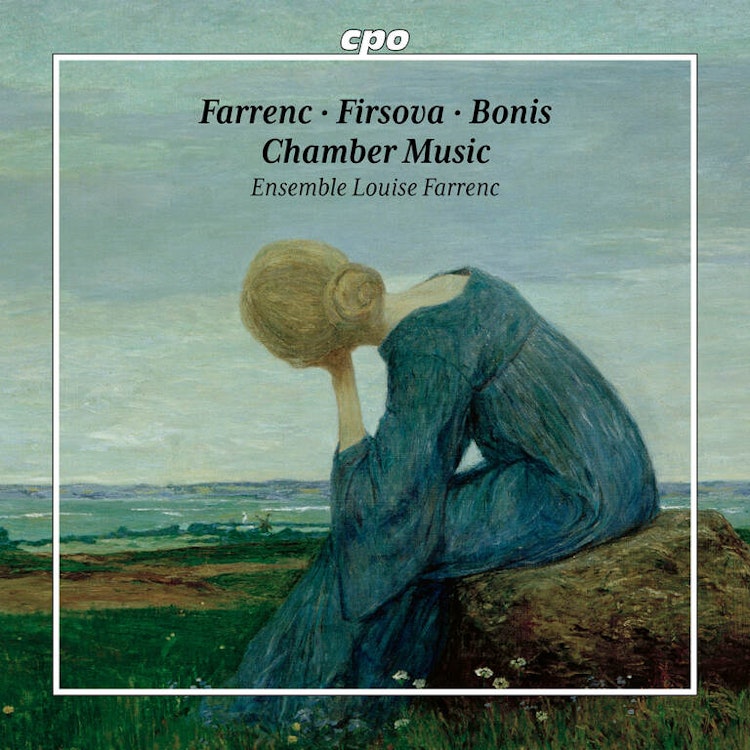
Farrenc, Firsova, Bonis: Chamber Music
A superb recording; Let's hope for many more recordings by the Ensemble Louise Farrenc
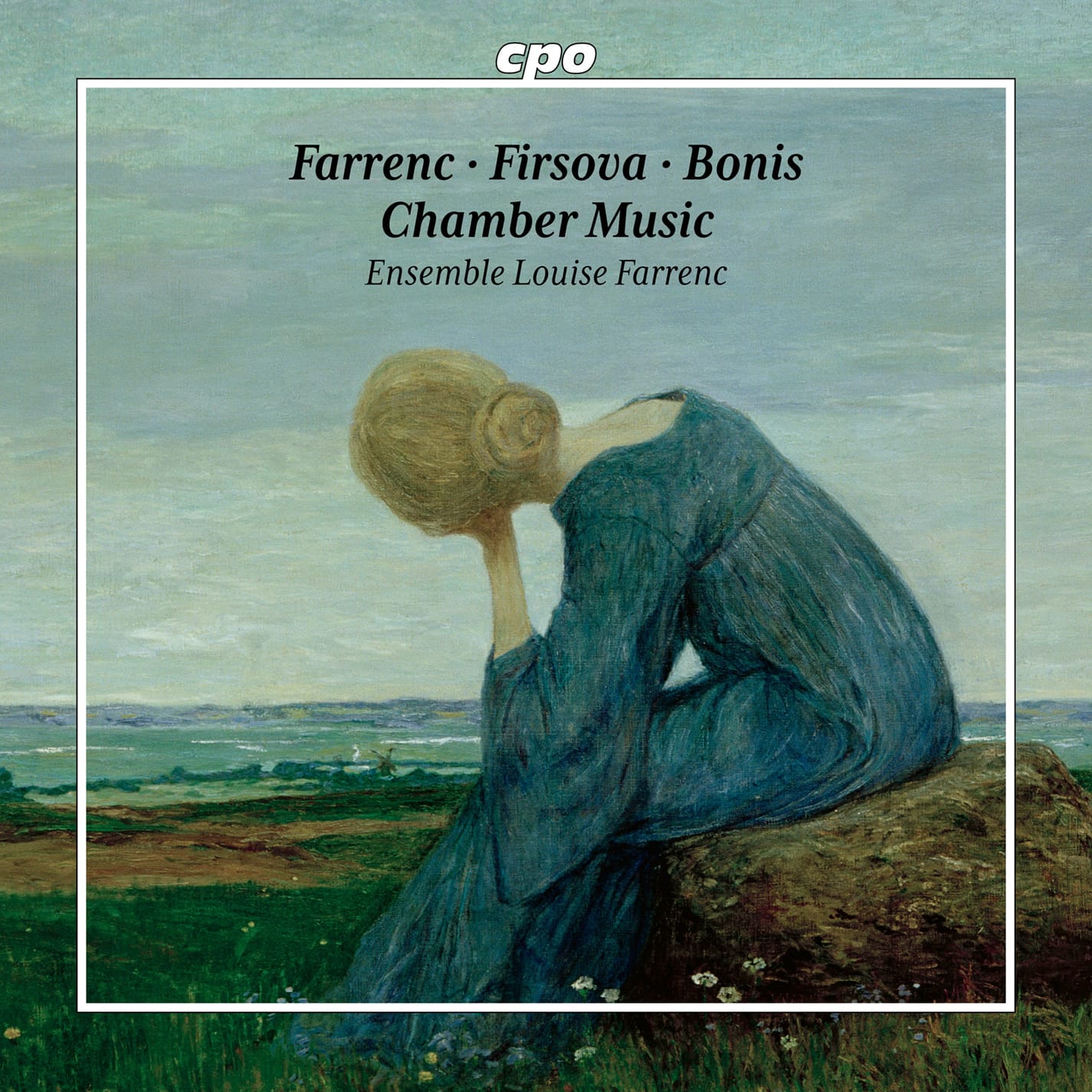
Two anniversaries hee—the 150th anniversary of the death of French composer Louise Farrenc, who died in September 1875 after a successful career in Paris, and the 75th birthday of her Russian colleague Elena Firsowa, who was born in March 1950 in Leningrad in late-Stalinist Soviet Union.
The first thing to strike me, though, was the generous nature of the acoustic. The disc was recoded in December 2021 in Hohenems, Austria; the second thing is the sparkling piano playing in the first movement of Louise Farrenc's Piano Quintet in A-Minor, Op. 70. A glance at he line-up of Ensemble Louise Farrenc shows it is Katya Apekisheva, best known (to me, a least) for her excellent recitals at the London Piano Festival, which she co-=creates with Charles Owen. Her characteristic musical intelligence and variety of touch shine through here: and her colleagues, Mayumi Kanagawa on violin, Klaus Christa on viola, Mathias Johansen on cello and Dominik Wgner on double-bass, respond in kind. There is a sense of mellifluous flow to the first movement. Marked simply "Allegro," this is one long outpouring of inspiration, and importently, melody, on the part of Farrenc:
The slow movement is transfixing: gone is the legerdemain, and here is a sense of exquisite lyricism. The importance of Farrenc in music history is duly writ large here:
There is something distinctly Mendelssohnian about the Scherzo, a Presto,which dances in the half-light here. The finale is bigger-boned, its drama stark:
As a supplement, given Tabea Zaommemann's activities evenly at the Geneva Competition (it was viola this year), here's a performance from the Kronberg Academy Festival. The full line-up is Eva Zavaro, violin; Tabea Zimmermann, viola; Manuel Lipstein, cello; Dušan Kostić, double bass; and Julia Hamos, piano.
00:00 I. Allegro 11:35 II. Adagio non troppo 17:54 III. Scherzo (Presto) 21:32 IV. Finale (Allegro)
Commissioned by the chamber music concert series "Pforte," and written in 2016, Elena Firsova's Op. 146 Piano Quartet is the major centrepiece of this disc. Here's what the composer has to say about music itself:
Art - for me above all in the form of music - and love represent the most essential and perhaps ultimate ingredients for the meaning of life. And I consider the creation of music simultaneously as the love of music.
Fine words. I should also, as background, mention an OUR Recordings disc which includes Fisova's Piano Quartet No. 2, “Four Seasons,” alongside music by her husband, the composer Dmitri Smirnov (Rudersdal Chamber Players).
A Misterioso, sparse first movement leads to a spikier Scherzo. Both of these movements are short (the first, though, paradoxically timeless); the Adagio finale, though, is over 7 minutes. The control of the string players at the opening is phenomenal, while the piano offers flecks of sound, and small Modernist arpeggiations. There is real beauty to this, of music suspended in time. But as the pitch spills upwards, angst enter the equation. Echoes of Romanticism emerge later, framed as memories. :
This is.terrific piece of music, and the perfect contrast to the more melodic Farrenc. The final piece is by Mel Bonis (1858-1937).
Born in Paris, Bonis was accepted into the Paris Conservatoire in 1876, around the time Chausson, Debussy, and Pierné were also students; she studied piano with Franck. Marriage and children interrupted her compositional flow; she only resumed her musically creative activities in 1894. She received further tutelage in 1908–09, now from Charles Koechlin in orchestration. Bnnis' piano music has been featured on the ever-enterprising Toccata Classics label: than-born Mengyiyi Chen's first volume is a corker (and includes Bonis' transition for piano of Fauré's Clair de lune.
The Piano Quartet dates for Bonis' return to composition after a particularly dramatic period. It is infused with depth of feeling, but also breathes a wispy transparency. The Ensemble Louise Farrenc traces the contours of the first movement superbly: listen to how violins Mayumi Kanegawa hands over phrases seamlessly to Apekisheva:
The second movement, an Intermezzo, does indeed, as the booklet notes suggest, show an affinity to Debussy, but subsumed into Bonis' own individuality. Twilight, yes, but a sparkling one, and Apekisehva's fingerwork and light tone is a delight:
The Andante third movement is full of sweet melody, cadences beautifully crafted. It is the finale that is truly extraordinary, though, a sort of glowering offspring of Brahms and Franck:
A superb recording; Let's hope for many more recordings by the Ensemble Louise Farrenc. The disc may be purchased at Amazon here. You can also smell Firsova's “Four Seasons” Quartet here.