
Dixit Dominus, Sacred Concertos: The Music of Johann Rosenmüller
More superb Rosenmüller from cpo
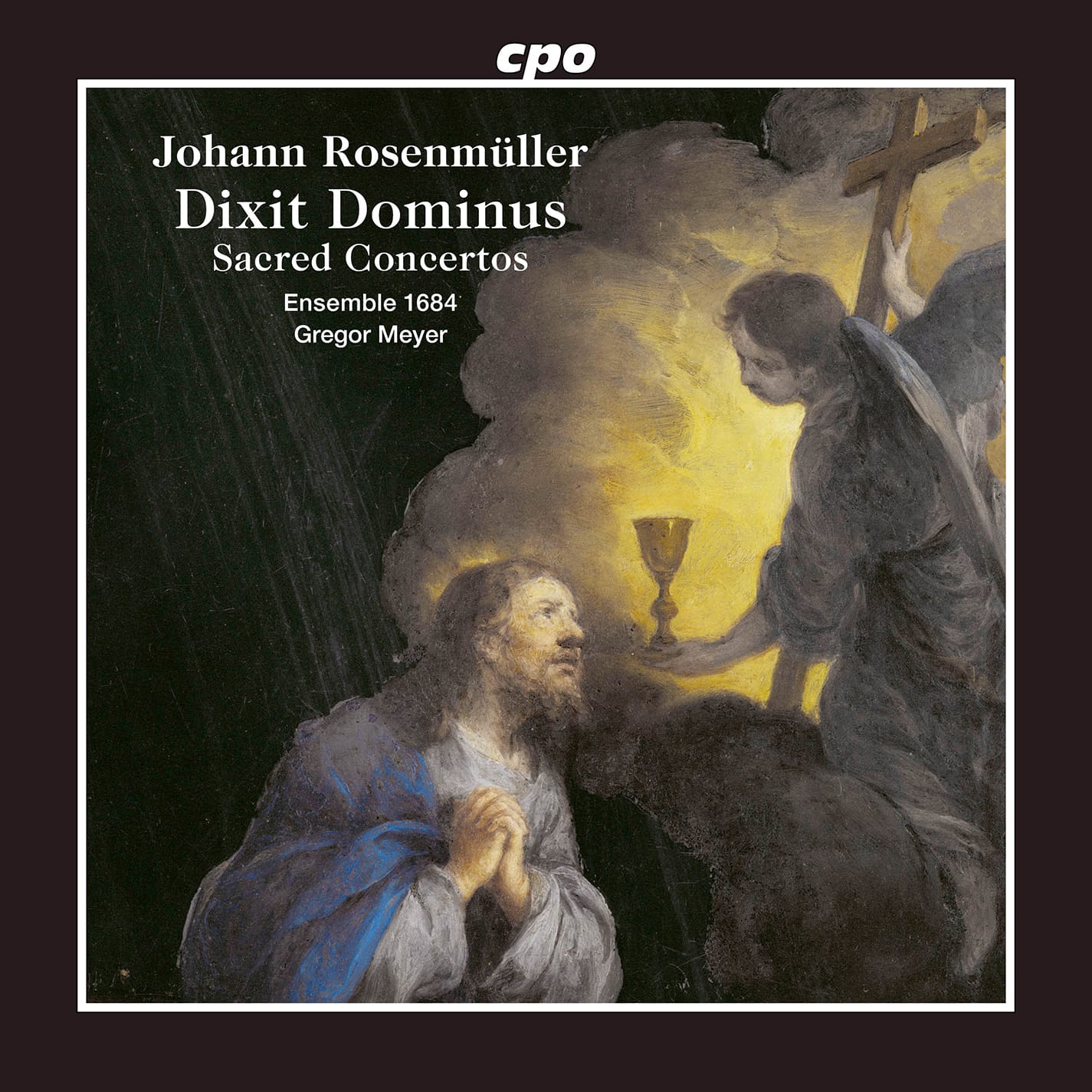
While some might point you in the direction of the ensemble canzona when it comes to the music of Johann Rosenmüller (1619-84), the composer who so nearly became Thomaskantor in Leipzig - a scandal scuppered his chances, and he move to Venice, where the music of Monteverdi echoed everywhere - his choral music is exceptional.
It is the music of Monteverdi that seems to underpin the first piece here, Preise, Jerusalem, den Herren (Praise the Lord, Jerusalem; Psalm 147). There is effusive imitation, both between vocal parts, and between vocalists and instrumental group:
The solo voices are perfectly pure, especially the upper ones; the instrumentalists are faultless (as date and venue of the video above correspond to that of the recording, one can see them as broadly equivalent).
The brief Surgamus ad laudes (Let us arise to praises) stands in maximal contest, scored for just two sopranos and basso continuo. Again, thee is.dance-like element present (that seems to my was close to Monteverdi); beware, as Easter approaches, this contains references to Christmas! (282 days away from the day of this post's publication!). The effusive 'Alleluia" is magnificently joyous:
The next major piece is the Marian Dixit Dominus (Psalms 109 & 110), a masterclass in counterpoint and exuberant vocal exchanges. The use of double choir marries well to Rosenmüller's activities at St Mark's, Venice, where polychoralism was most definitely a thing. Solo voices can fly in extravagant melisma; choral responses are full-voiced. And, my, how, when the ext dans, so does the music. And what an extravagant "Sicut erat in principio' as the music heads towards its closing 'Amen' (NB the German and English translations are included, but not the Latin texts)
Here's a performance video recorded at the time of recording:
Recorded Marienkirche Rötha, August 2023; Emilian Tsubaki | Video and Editing
The instrumental Sonata Ottava (published 1682 in Nuremberg by Chrisopher Endtner as part of Sonatæ à 2, 3, 4, e 5 stromnti da Arco et altri) acts as musical balm after that; it wears its counterpoint lightly, It is not to be dismissed, however; this publication was highly seemed in is day, and the piece is decidedly not monochromatic in timbre or mood. It is scored for two violins, viola, violin and basso continuo and is in B flat-Major. Listen out for some deliciously chromatic descents:
Back to full-blooded choral works in Ersezte dich, Natur (Be shaken, Nature), like the Dixit Dominus beginning with choral instrumental statements, beautifully balanced here. And listen to the scampering violins in response, so perfectly articulated. The music is a stophic sting of Ziegler's text, concentrating on concertante elements. First performed at the Christmas service in 1649 in Leipzig, both music and text are remarkable, the text celebrating the birth of Jesus in the wonderful statement the "The Greatest God has forgotten to be God". Secional the piece may be, but is s magnificently so. Here's another video performance by these forces:
Recorded Marienkirche Rötha, August 2023; Emilian Tsubaki | Video and Editing
The (unseasonal) Christmas then continues with Kündlich groß isn die gottselige Geheimnis (Profoundly great is the godly mystery), short but compact, the countepoint blossoming both from the separated statements of "Kündlich groß". Gesture is foregrounded, therefore:
The instrumental opening of Laetatus sum (I was glad) gives the impassion we've entered another insrtimntal interlude. Not so: this is the gathering of the nations in the Holy City of Jerusalem and a plea for peace. Double choir and fluidity of writing characterise this piece, but there are oases of calm, too. What is so impressive about the performances, generally over the disc but particularly in the two outer pieces, is the she equality of solo voices; the composer uses many combinations, and each is as strong as the next, always. And listen to the combined sopranos opening the fugue, so perfectly together:
This post supplements our previous coverage of Rosenmüller on cpo (Magnificat). I hope for much more Rosenmüller from this source ... and that lovely cover? "Christ on the Mount of Olives", 1665-70, by Batolome Esteban Murillo.
The more academically-minded might wish to explore Paul Walker's article Johann Rosenmüller and the Rehabilitation of Vocal Fugue in the Second Half of the Seventeenth Century (link is to the full text).
The cpo disc is available on Amazon here. Spotify below; iDagio here.