
Ballo this time: at Opera Holland Park
A terrific revival
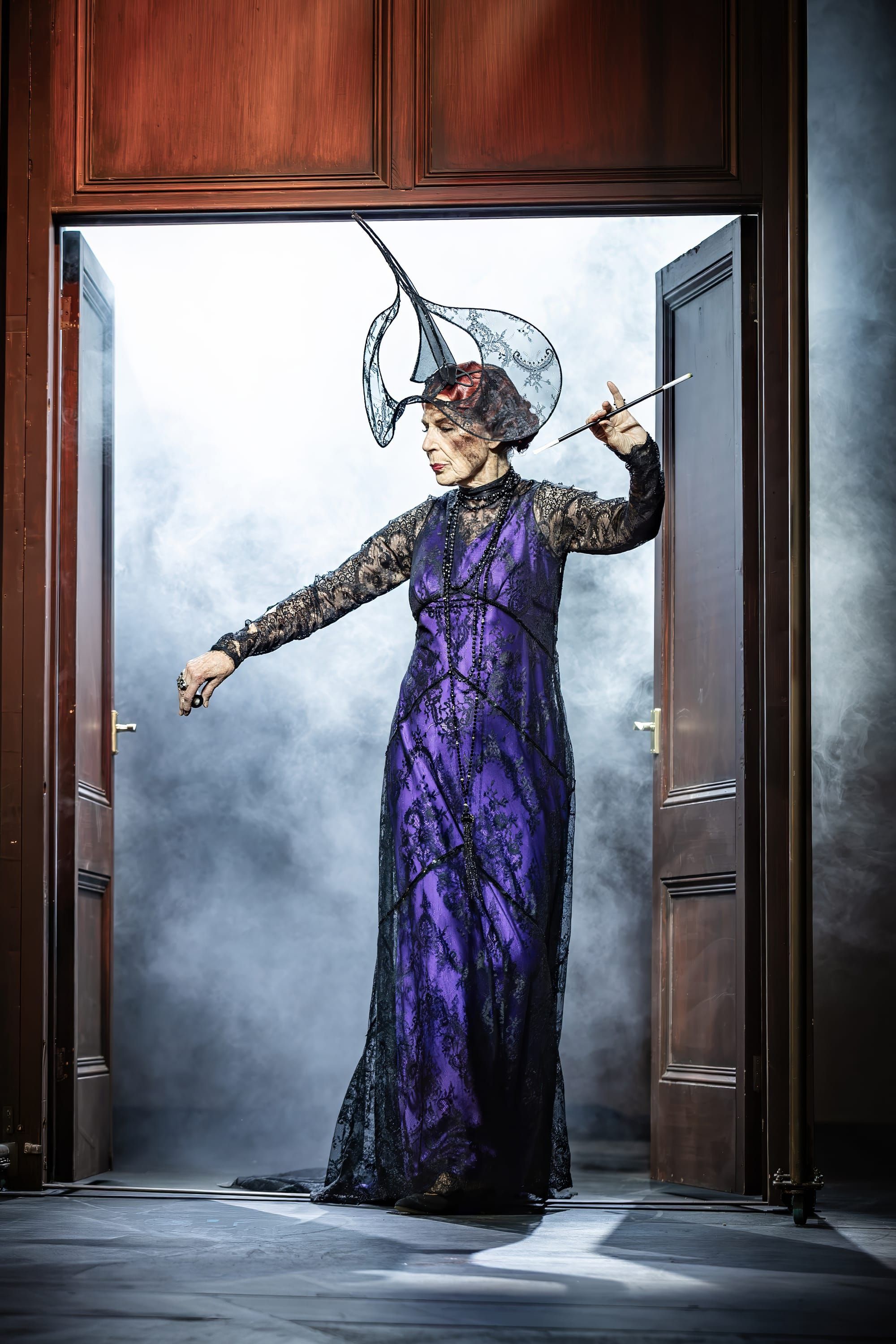
Verdi (arr. Burke) Un ballo in maschera Cast; Opera Holland Park Chorus; City of London Sinfonia / Michael Papadopoulos. Opera Holland Park, Kensington, London, 25.08.2026
Production:
Director - Rodula Gaitanou
Designer - takis
Lighting Designer - Simon Corder
Choreographer - Steve Elias
Fight Director - Bret Yount
Cast:
Gustavo III - Matteo Desole
Amelia - Elin Pritchard
Count Anckarström - Dario Solari
Oscar - Rhian Lois
Madame Arvidson - Rosalind Plowright, OBE
Count Ribbing - Jihoom Kim
Count Horn - Duncan Stenhouse
Cristiano - Benson Wilson
Madame Arvidson’s Helper - Robert Jenkins
Un Giudice - Ian Messa-Harris-McFeely
After last week's "Gustavo III," the Un ballo im maschera we all know and love, from Opera Holland Park.
This is the first revival of the 2019 production, which I reviewed on this site at the time. The relocation of the drama from Sweden in 1792 to modern(-ish) time still works well, although the (mental?) hospital bed in the second act (instead of outside the city gates with a giblet on which criminals are hung), while still making an impression, feels somewhat forced on repetition. There is also the opening fencing class, where the clank of swords was far more distracting than I remember the first time around.
Against that is careful and effective use of colour (no-one is directly credited with “costume designer,” but I imagine takis had more than a hand in it). Stage space too, is carefully considered for maximal effect (the idea of the ring around the orchestra standard OHP practice, is beautifully utilised). Placement was all, and expert. And no inclement weather this time around, either (ha, perish the thought in 2026!).
The orchestra, the City of London Sinfonia, played superbly under Michael Papadopoulos’ direction (this production has lucked out, with the excellent Matthew Kofi Waldren seven years ago). Tony Burke’s reduction inevitably takes an edge off Verdi’s massive moments, but there seemed no loss of dramatic import to the City of London Sinfonia’s contributions, and there was a real increase in audible detail, including string linearity. Papadopoulos also hears on the larger scale, which gave the entire opera shape (it’s not short - and neither was the interval , for that matter…).
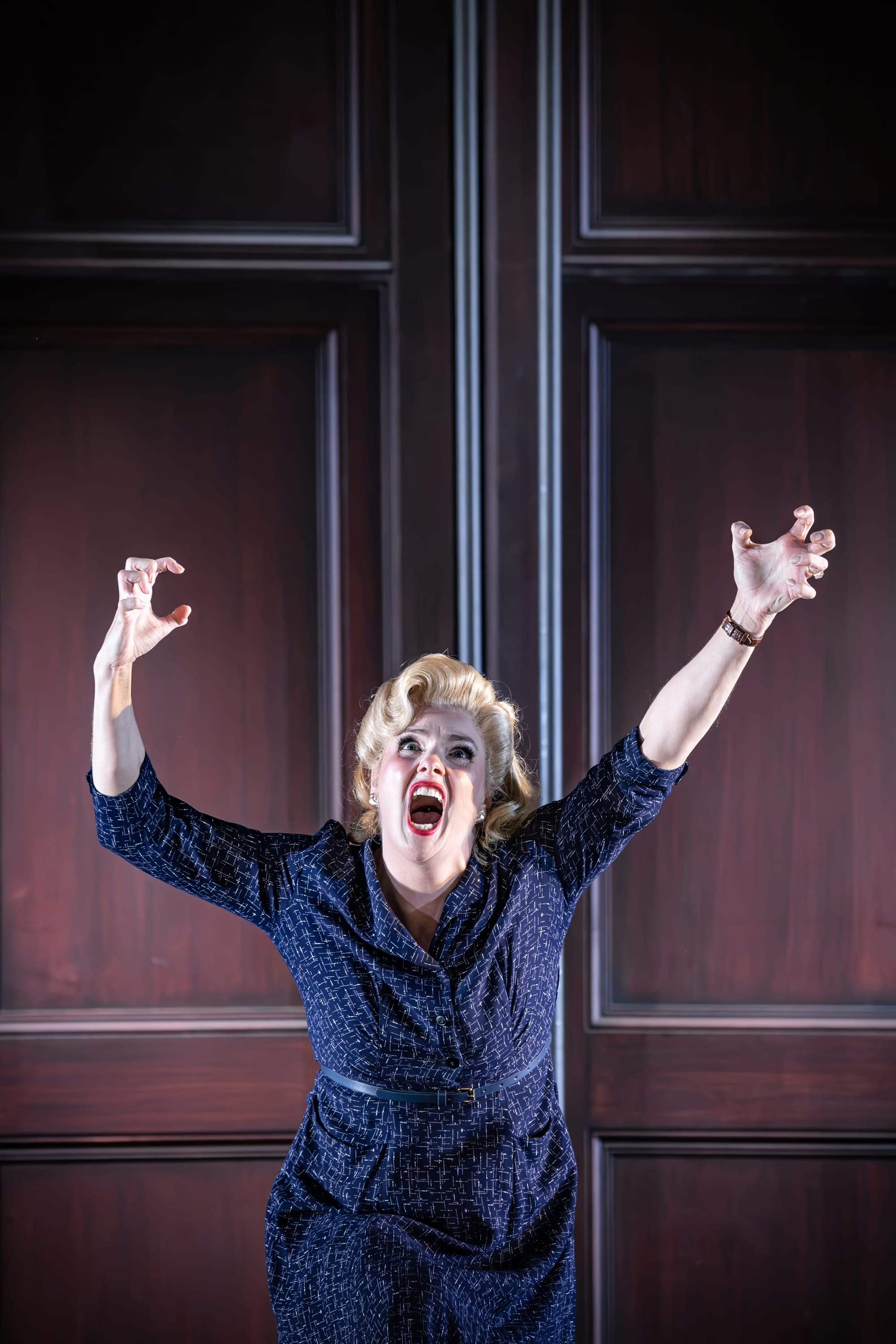
While Sophie Duprels had given us a brilliant Amelia previously, Elin Pritchard took it up a notch - quite an achievement. Against a superb cello solo (Rachel van der Tang), Elin Pritchard gave one of the finest accounts of her dark, shadowy aria “Morrò, ma prima in grazia” I have heard, impeccably concentrated, Pritchard indwelling Amelia. Elin Pritchard is a major singer, and well-known to OHP (starting with Stella in Il gioelli della Madonna in 2013, via a Miss Jessel, Nella Gianni Schicchi and Musetta).
But this is Italian opera, and one of Verdi’s finest “middle-period” operas at that: there must be a tenor. There was, one under the weather apparently, or so it was announced: Matteo Desole, valiantly singing on with a replacement (on the way as the opera started) just in case. As it was, Desole more than succeeded, with just the odd moment where, if one strained, one could tell this was not absolutely full voice. But it was all there, the passion, enough strength up top, and nuance. Nature can compromise the voice, but not the singer’s inherent musicality. This repertoire is presumably Desole’s meat and two veg: his previous OHP appearances have both been Alfredo Traviata.
Almost matching Pritchard in excellence was the Count Anckarstrȏm of Dario Solari, making an OHP debut that will live long in the memory. Full-voiced, assured, burnished, the Uraguayan baritone is superb. His career focus is on Verdi and bel canto, and how it shows; another assumption of complete immersion.
The trouser role of Oscar seems to luck out in Kensington: last time Alison Langer, now the impossible vocal agility of Rhian Lois. Small wonder she also sings Zerninetta. Her voice projects perfectly, and is the very definition of an “instrument” that Lois can use as she pleases.
As in 2019, the “psychic” Madame Arvidson is taken by the extraordinary Rosalind Plowright, a living legend who carries huge gravitas, her performance here imperious and vocally strong throughout the range. The smaller roles were consistently well taken: Jihoon Kim, familiar from RBO, owned the stage as Count Ribbing, with Duncan Stenhouse (a Resident Artist at Gelimmerglass 2025) made a fine showing as Count Horn. Benson Wilson rarely disappoints, and his engaged Cristiano was no exception.
The strength of this performance though, is linked to Papadoloulos’ structurally-founded conception: the ensemble of soloists and (absolutely faultless) chorus acted as one unit towards a common goal. There seemed a unified belief not just in the music and its direction on the night, but also of the staging. We critics can whinge about hospital beds all we like, but sheer conviction carried the day. All of this meant that Verdi’s many mood changes (the emotional spectrum of this piece is as vast as that of Traviata) registered viscerally, offering a multi-coloured Verdian vista.
For various reasons, this is the only Opera Holland Park I will see this season, but what a memorable evening this was. While I miss the old prevailing verismo wind, there is no denying the continued, and seemingly rising, excellence here. Long may it continue.
All photos, including for social media for this post, © Craig Fuller