
An "authentic" Rigoletto in Paris: Le Cercle d'Harmonie triumphs
Rhorer cut to the heart of Verdi.
Rigoletto
Music: Giuseppe Verdi
Libretto: Francesco Maria Piave
Cast:
Rigoletto - Leonardo Lee; Gilda - Mei Gui Zhang; Duke of Mantua - Andrei Danilov; Sparafucile - Alexander Tsymbalyuk; Maddalena - Victoria Karkacheva; Count Monterone - Oleg Volkov; Marullo - Dominic Sedgwick; Matteo Borsa - Yu Shao; Count Ceprano - Louis de Lavignère; Countess Ceprano - Valentina Stadler.
Conductor - Jérémie Rhorer; Chɶur Orféon Donostiarra; Le Cercle de l’Harmonie
Philharmonie, Paris, France, March 20, 2026
Concert performances are often seen as pale imitations of the real thing, only one short step behind that oh-so-nebulous term, ‘semi-staged’. And yet, sometimes they remain memorable in their own right: this Rigoletto from Le Cercle d’Harmonie under Jérémie Rhorer was one such. Performed with a smaller complement of strings than usual (10:8:6:5:4) with natural horns, period wind and, rather deliciously, listing one ‘cimbasso’ in the personnel, purely on a level of orchestration, revelation followed revelation. Individual instruments gain hugely in character this way, particularly woodwind. There may be elements of risk (the very opening, which did not quite come off, for example) but this was, sonically, a treat. Rarely has the storm in act 3 sounded so Modernist: the truest parallel seemed to be Berlioz, but it also felt at the time of performance like Verdi out-Berliozed Berlioz. The 'reduced' forces meant the orchestra, on the same level as the singers, rarely overwhelmed them. And what accuracy in the strings at the opening of the second act: the setting up of atmosphere was immediate.
The sheer dynamic range of this Rigoletto was astonishing: from the stalls, fortissimos could set the heart racing in their pure physicality; at the other end of the spectrum, pianissimos became intimate whispers. Detail kept on revealing itself, a constant source of joy; and against this foreground musical activity clearly ran a clear sense of overall conception, both of individual acts, and of the opera in its entirety. Astonishingly mature conducting. One example: the arrival of Monterone, the chorus incredible (more on them later).
Rhorer’s tempi mirrored an overall sense of purity of musicological intent coupled with dramatic thrust. This was swift (we finished 13 minutes earlier than the programme estimate of 1040 pm), but never rushed. Rhorer has impressed on multiple occasions, whether on disc (his Missa solemnis on Alpha) or in person (Brahms Alto Rhapsody and Mozart Requiem at this same venue last November). But this was his finest achievement - so far.
The stage space was intelligently used, including placing singers behind various parts of the orchestra. But the drama all came from the conducting, and his handling of the orchestra: he is exceptional when it comes to working with, or following, his singers. This, coupled with a sure sense of the work’s structure, reminded us that this is one of Verdi’s greatest opera. It is also one of the more excerpted: but with a reading like this, it seemed inconceivable to miss a note. The sense of through-conceived drama was palpable.
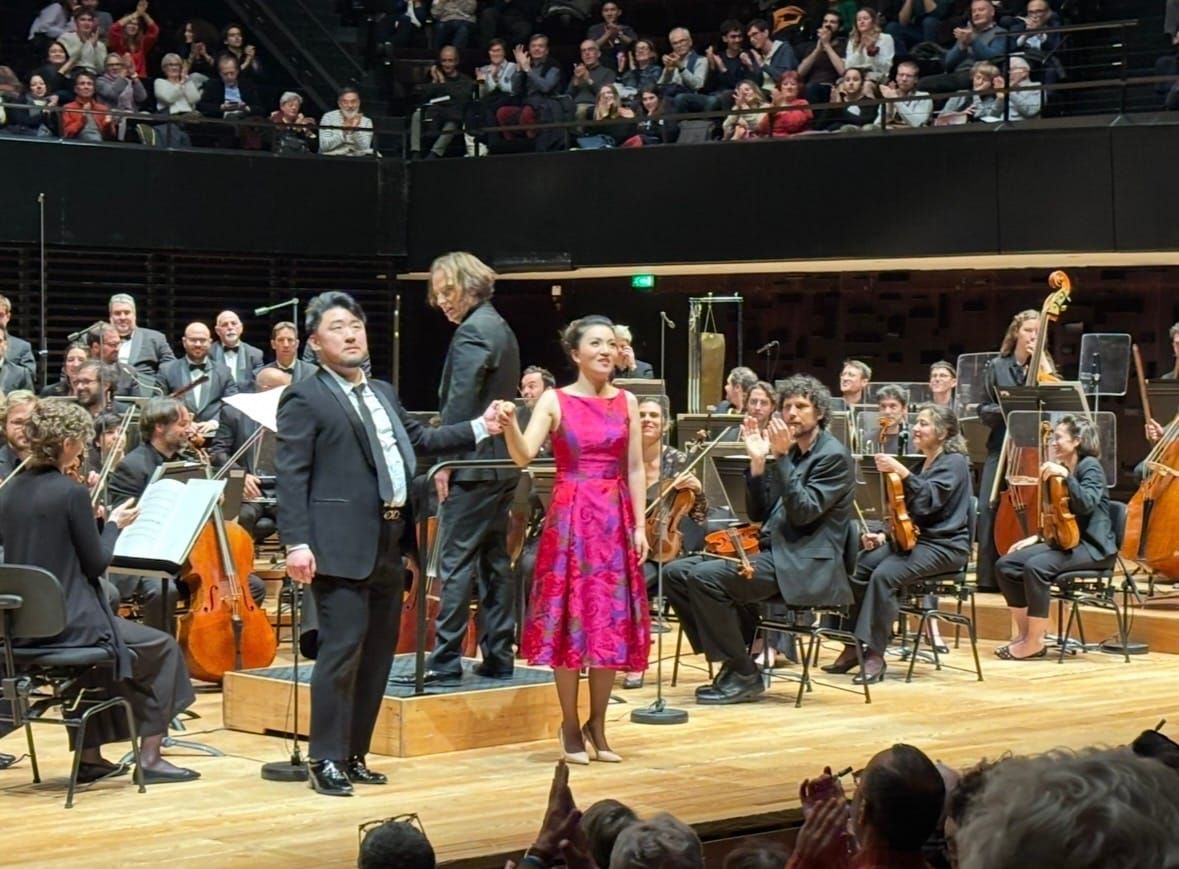
I am not privy to how the singers were chosen, but the remarkably International cast worked beautifully together: South Korea, China, the Ukraine, Spain and Britain are just a few. The smaller roles were definitely not minor here, with Céleste Pinel a superbly toned, if slightly quiet, Giovanna (Gilda’s maid), offering real stage presence as well as vocal accuracy; her voice complemented Gilda’s, too. Talking of whom, US-based Chinese soprano Mei Gui Zhang was a superb Gilda, pure of voice and absolutely possessed of the technique required of her. This is a lyric coloratura soprano role, and Zhang has both elements, a gleaming upper register, and agility to spare; but how we were moved by her demise, shorn of props but not shorn of emotion. Most notable, on a technical level, was Zhang’s trill, so under control, so utterly perfect in its oscillation, a reflection in microcosm of her unfailing accuracy. Of all the characters, Zhang’s Gilda was easily the most believable.
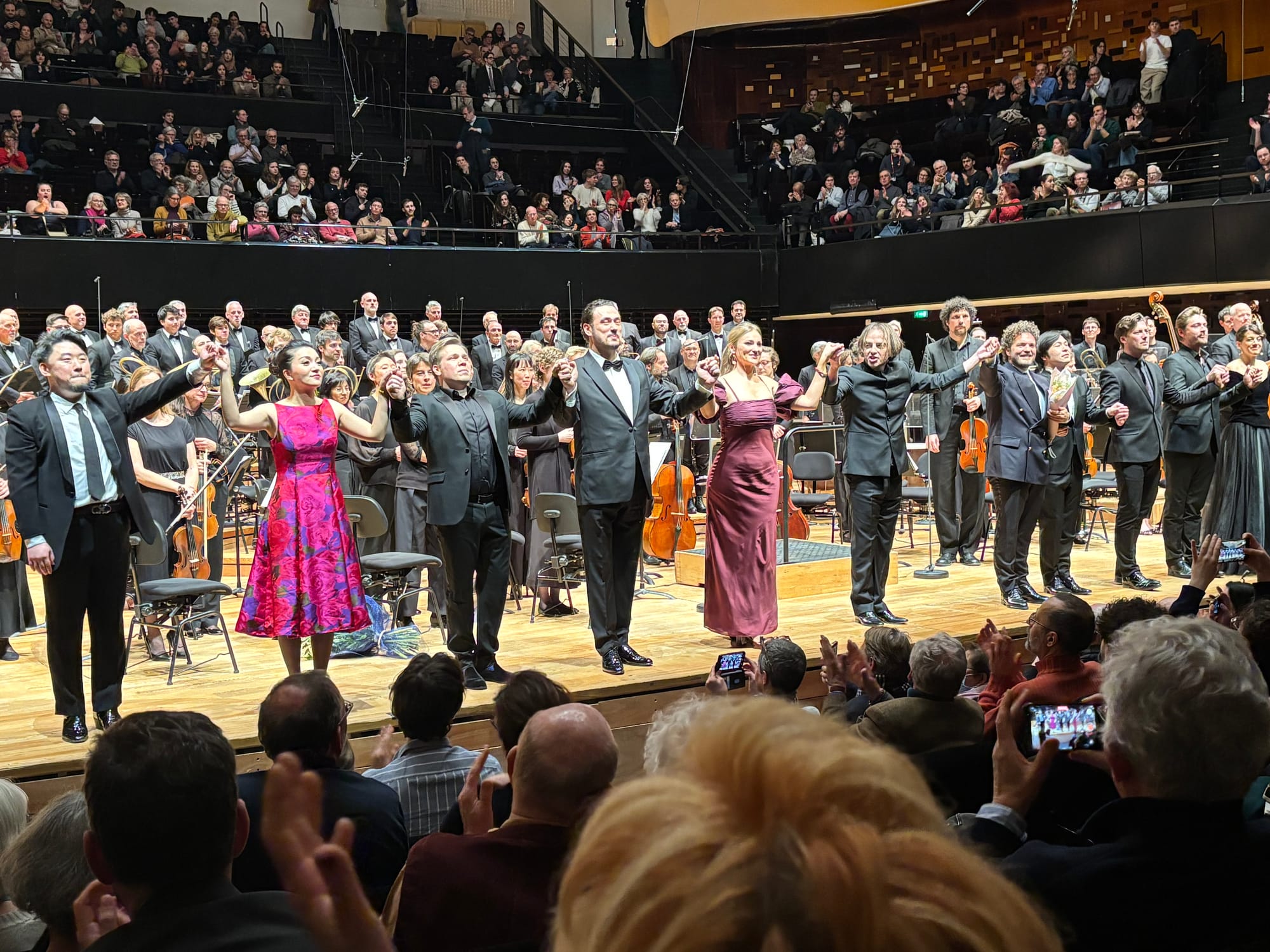
Perhaps the more notable moment of singers gelling was the famous quartet, ‘Bella figlia dell’amore’ (the Duke, Rigoletto, Gilda, Maddelena); each voice individual, and yet heard with a linear clarity that would grace Monteverdi.
Rigoletto himself was Leonardo Lee, who seemed absolutely immersed in his role, arguably a touch too much so when it came to facial expressions. The voice carried it all, anyway, and his upper register is particularly impressive.
The part of the Duke of Mantua, taken by Russian tenor Andrei Danilov, was nicely nuanced: ‘Ella mi fu raita’ seemed to show all elements of his craft in a short space of time, but particularly his sense of line.
Ukrainian bass Alexander Tsembalyuk made for a creditable Sparafucile. It is a role that requires heft and authority, and while memories of Brindley Sherratt at ENO in the early 2000s are hard to erase, Tsembalyuk has the lower register and the breath control for this part. HIs daughter, Maddalena, was the superb Victoria Karkacheva, imposing in stature and possessed of a lovely, full-voiced mezzo.
For all of its rightly famous solo numbers, Rigoletto is far more than that. The subdivisions are interesting: this performance, in its placing of singers, ensured we were aware of the grouping of the courtiers Marullo, Monterone and Borsa. That careful casting was once more on display in the choice of this particular trio of courtesans: Monterone, Marullo, and Borsa. Chinese tenor Yu Shao, who trained also in France at Aubervilliers, was a Matteo Borsa of huge energy; British baritone Dominic Sedgewick as Marullo exuded youthful confidence and bravado, while bass-baritone Oleg Volkov’s Monterone was of great strength. But the point is, they were so much more than the sum of their parts. With Valentina Stadler and Louis de Lavignère excellent as Countess and Count Ceprano, this was a Rigoletto cast - intelligently - from strength.
Which leaves the chorus, the Choeur Orféon Donostiarra, as well-drilled a group as one could hope for (their contribution to the Missa Solemnis recording mentioned above further attests to that).
It is testament to Rhorer’s conception that, despite fine singing and playing, it was Verdi’s magnificent score that was the star of the night. So much was revealed; and the result was so emotionally satisfying overall, and ultimately devastating. Rigoletto, for all of its big tunes, is a dark opera, and it should leave us in no doubt of that. Rhorer cut to the heart of Verdi, while removing encrustations of tradition and defying expectations.
A wonderful evening, Verdi at his most visceral.
Photos © Bruno Serrou