
A mini Italian Festival at the Proms
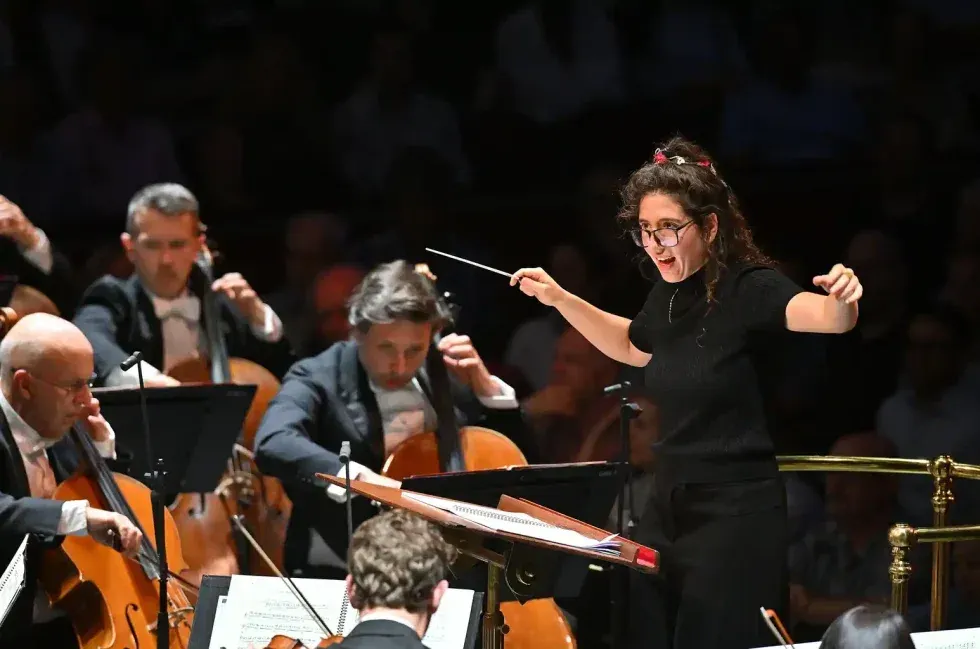
Respighi - Church Windows. Rossini - Stabat mater.
Federica Lombardi - soprano; Chiara Amarù - mezzo; Dave Monaco - tenor; Nicola Ulivieri - bass; Epiphoni Consort; BBC Chorus & Symphony Orchestra; Nil Venditti - conductor.
Royal Albert Hall, London, 7 August 2026
An Italian-Turkish conductor, Nil Venditti, led the BBC Symphony Chorus and Orchestra alongside the vocal Epiphoni Consort in an all-Italian programme for this Prom (I see numbers seem to have been jettisoned in the documentation). It was a triumph - to an extent, in adversity, as tenor Dave Monaco took over from an indisposed René Barbara at short notice, and brilliantly.
But first, the real shocker: Respighi’s mid-1920s masterpiece Vetrate di chiesa (Church Windows) was receiving its first Proms performance, 100 years since its composition. How this can be, I have no idea, but it does underline the fact that Respighi’s music remains criminally undervalued with a couple of notable exceptions. The Guildhall School’s staging of the ‘opera’ double-bill Maria Egiziaca and La bella dormente bel bosco (The Sleeping Beauty) in November 2023 was a step in the right direction surely - as was this. You can see my review of the Guildhall on the Opera Now website.
Church Windows takes music from a set of earlier piano pieces based on Gregorian chant, a vital part of Respighi’s aesthetic. The four windows here each are described by the individual titles: ‘La fuga in Egitto’ (The Flight into Egypt); San Michele Arcangelo’ (St Michael the Archangel); Il mattutino di Santa Chiara’ (The Matins of St Clare); and ‘San Gregorio Magno’ (St Gregory the Great).
All credit to principal clarinet Adam Lee for his mellifluous, silken contributions to this melodious movement, and for Vendetti’s appreciation of the long legato line. The BBC Symphony Orchestra sounded at their very best here, without a trace of shrillness to the upper strings and with beautifully balanced brass. Most of all it was that Venditti teased out the most magical pianissimo at the movement’s end. Modal colouring, so vital of the story of the caravan intoEgypt, was nicely underlines. The battle of St Michael and a dragon is unabashedly gestural and stands in high contrast to the silken first panel. The off-stage trumpet was perfectly judged; as was teh sense of a brightly colourful tapestry (perhaps splashed with blood reds). Contrasting melodies made full impact - Respighi was a born melodist. And how the gong strike at the end made its impact - no doubting how this movement ends.
‘The Matins of St Clare’ moves to a more woodwind-based timbre, The sound, in the baking heat of the Albert Hall in August, strangely made me think of Christmas - there are distinct parallels in harmonies to the composer’s Lauda per la Natività del Signor (composed around five years later). It was absolutely magical; the final ‘St Gregory the Great’, a fantasia on the Gloria from Missa de Angelis, opens with orchestral imitations of bells, furtive, mysterious. How brilliant Respoighi’s scoring is; how well delineated here. In fact that was a constant of Venditti’s performance - Resighi’s orchestration, and the audibility of lines, was paramount. The only exception was the arrival of the monumental Albert Hall organ: one could see rather than hear violins playing. Much more important was Venditti’s awareness of Respighi’s harmonies - modulations always made perfect sense. A terrific performance.
As was that of the Rossini Stabat Mater of 1832 (revised 1841). The Proms performance history here dates back to 1901 (excerpts), but he most recent performance was in 200 under Pappano; Giulini conducted it in 1961 with the Philharmonia (the first complete performance at the Proms). Although the booklet notes claim that ‘not a single number in the Stabat mater could ever have been part of a Rossini opera,” there are distinct parallels (with Glyndebourne’s Il Turco in Italia still ringing in my ears, just, surely the opening of the tenor ‘Cujus animam’ would not be out of place in an opera house; neither would the opening of the ‘Pro peccatis,’ surely a storm somewhere).
The original version shared the music between Rossini and Giuseppe Tadolini; the 1941 version is all Rossini, composed in full after the shared score was published in Paris. And Venditti clearly considers it a masterpiece: the way she had the BBC players shape the initial ascent and cadence was proof positive of that, as was the barely-audible (but so together pizzicati thereafter, The faster, slightly agitated violin section was perfectly judged, woodwind growing naturally out of the texture; the BBC Symphony Chorus launched their contribution as they continued, faultlessly.
Of course the Albert Hall is the perfect venue for this piece, with the combined choirs in astonishing and imposing form. And what a pleasure to hear Dave Monaco in the ‘Cujus aniimam,’ strong across his range (and very strong up high, in the manner of a true Rossini tenor). His attacks at phrase beginnings, too, offered bull’s eye after bull’s eye.
The orchestra, too, was on fire: the horn quartet at the opening of ‘Quis est homo,’ where the well-known Federica Lombardi excelled in her fluid legato; mezzo Chiara Amarù, entering later, complemented her superbly. If there was a weak link in among the soloists, it was bass Nicola Ulivieri, admirably velvety of sound but not quite as confident of delivery as his colleagues. The basses of the chorus, however, were very much on form - exceptional, even - in their shaping of phrases in the next movement, ‘Eja, mater’.
In the ‘Sancta mater,’ Rossini allows us to hear various combinations of soloists, led initially by tenor; soprano and tenor (Lombardi and Monaco) seemed a combination dropped in straight from Heaven for the ‘Tui nati vilnerati,’ though - very much firsts among equals.
Mezzo Chiara Amarù, another experienced Rossinian, came absolutely into her own in the ‘Fac, ut portem Christi mortem’ - and Venditti was careful to balance so we heard every nuance of Amarù’s delivery. She relished the contrasts between the text’s two verses; she did lose a little tone up top, but her contribution remains very much noteworthy and I hope to hear her again soon.
Lombardi can soar over any texture, as she proved in the ‘Inflammatus’; but it was when we heard the solo quartet alone (with Venditti turning with back to orchestra to conduct) that what might have originally been a careful hiring but was not subject to chance came into its own as a beautifully balanced unit of four.
The return to the opening music at the end made full impact, as did the timpani-punctuated drama of the opening of the final ‘In sempiterna saecula: Venditti has full structural understanding of Rossini (and, it would appear, Respighi). She also brings out the ebay in all of her players and singers - in fact she conducted the choir so well I wondered if choral conducting is part of her history (her operatic and orchestral activities are listed in her bio, but not this).
A terrific evening.